 English
 русский
 Español
 عربى
عربىSilent, Open Frame & Containerized Diesel Generator Sets Guide
Diesel generator sets are available in three principal configurations — silent (canopy-enclosed), open frame, and containerized — and the difference between them goes well beyond aesthetics. The right configuration directly affects installation cost, noise compliance, weather protection, mobility, and total cost of ownership over the generator's working life. Open frame sets offer the lowest upfront cost and easiest maintenance access, making them the practical choice for controlled indoor environments. Silent generator sets reduce noise output to levels acceptable in residential and commercial zones. Containerized sets are engineered for large-scale power output, remote deployment, and long-term outdoor operation where infrastructure is limited. This guide breaks down each type in practical terms so you can match the generator configuration to your actual site and operational requirements.
Open Frame Diesel Generator Sets: Maximum Accessibility at Minimum Cost
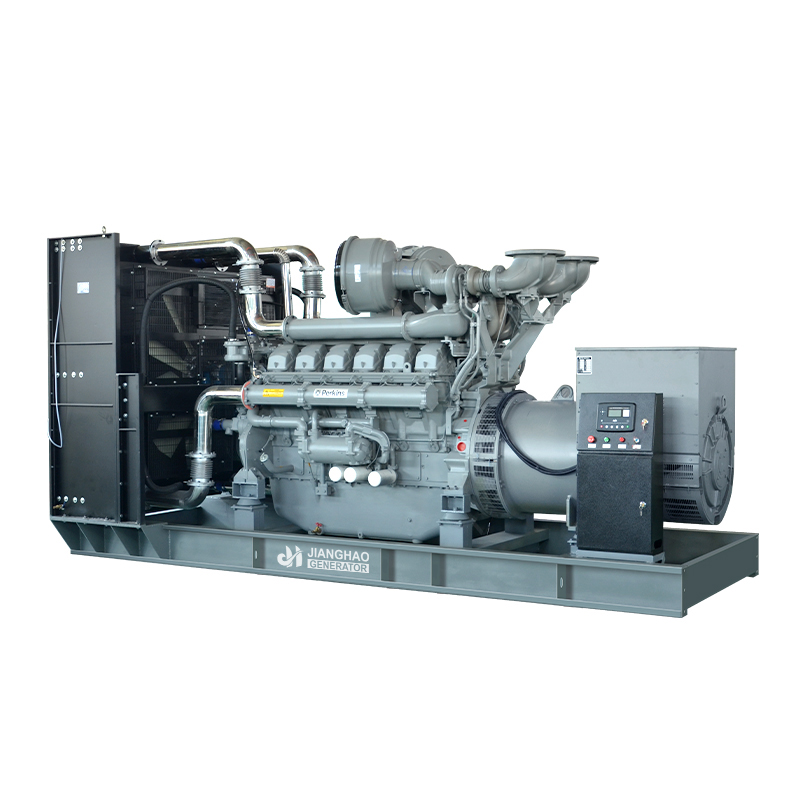
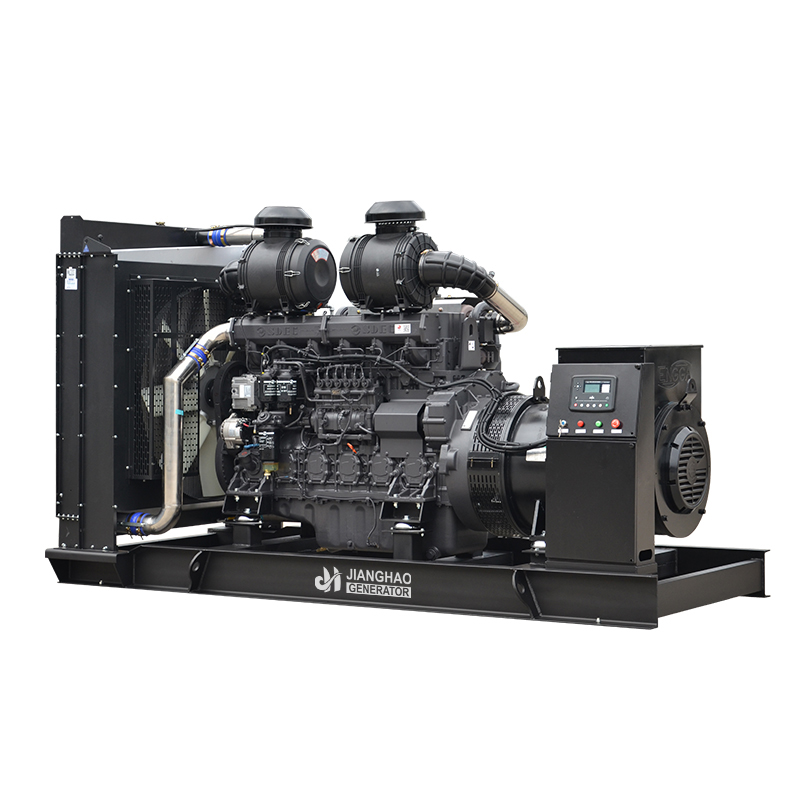
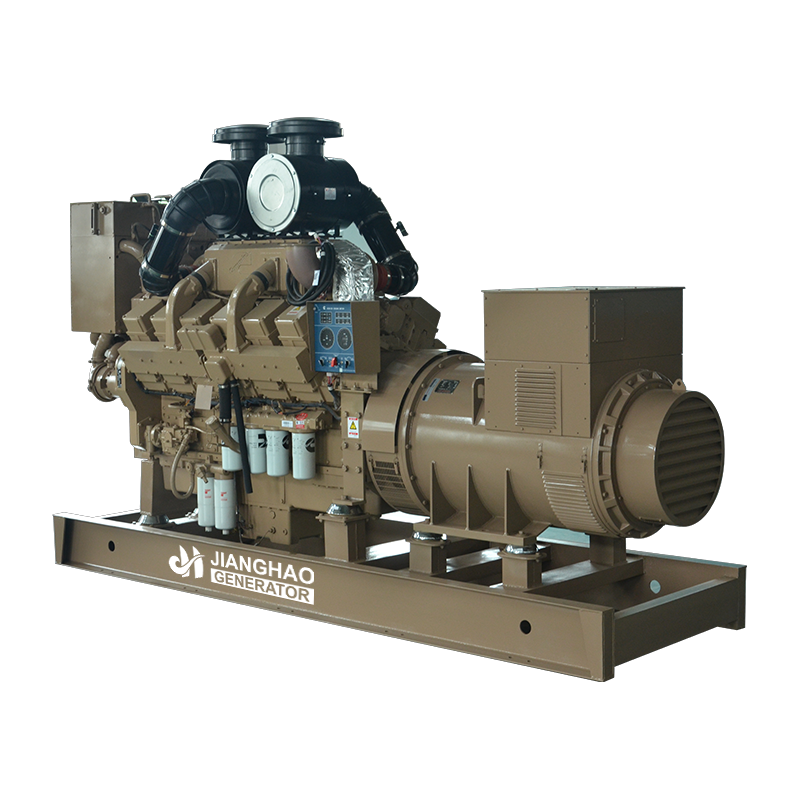
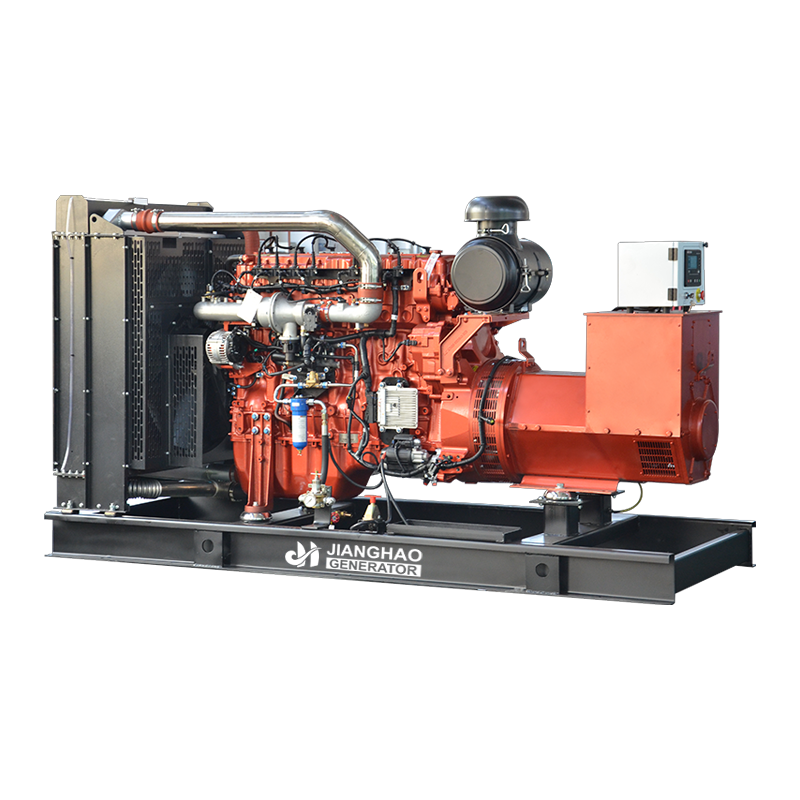
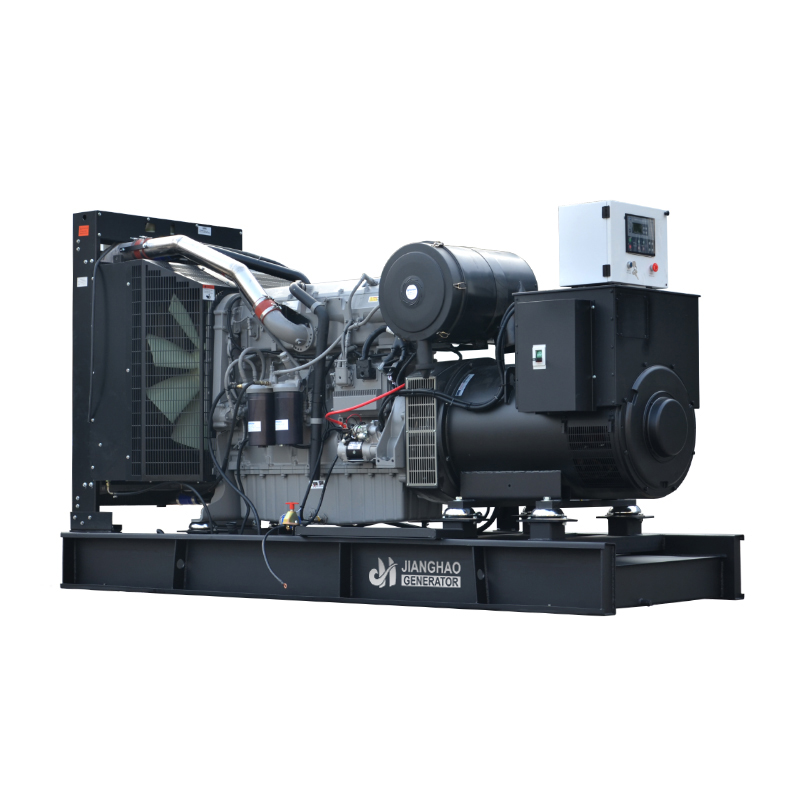
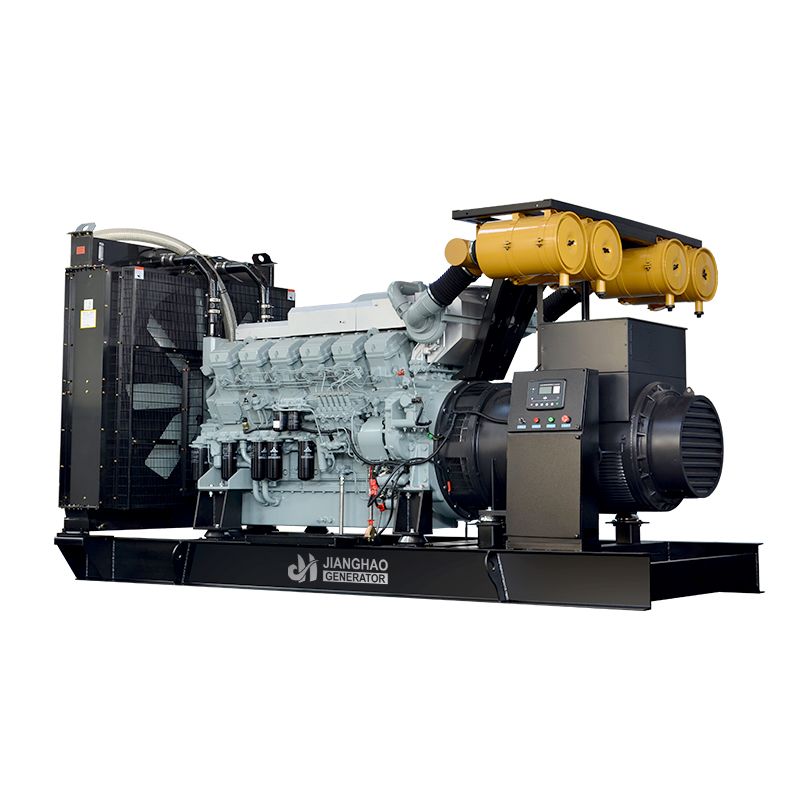
An open frame diesel generator set consists of the engine, alternator, base frame, control panel, and fuel system fully exposed — no enclosure of any kind. This configuration is the baseline from which silent and containerized variants are derived, and it remains the most widely used format for indoor installations, temporary power applications, and environments where noise is not a constraint.
Why Open Frame Remains the Default for Indoor and Industrial Use
The absence of an enclosure provides three tangible advantages. First, cooling airflow is unrestricted — there are no duct losses, no hot air recirculation risks, and no enclosure thermal management requirements. This makes open frame sets easier to install and operate at rated capacity without derating concerns in warm ambient conditions. Second, maintenance access is unrestricted — every component is visible and reachable without opening panels, loosening acoustic foam, or navigating canopy geometry. Third, the manufacturing cost is lower: open frame sets of equivalent power output typically cost 15–30% less than canopy-enclosed equivalents, making them the default choice where the installation environment provides shelter and noise is managed separately.
Noise Output and Site Suitability
Open frame diesel generators produce noise levels typically in the range of 95–110 dB(A) at 1 meter from the set, depending on engine size and rpm. This is well above the noise thresholds for residential areas (typically 55–65 dB(A) during daytime) and most commercial settings. Open frame sets are therefore suitable only for:
- Generator rooms with acoustic treatment (concrete walls, anti-vibration mounts, acoustic doors)
- Construction sites and mining operations where ambient noise levels are already elevated
- Remote industrial facilities, pump stations, and agricultural installations with no residential neighbors
- Temporary standby applications where operation duration is short and infrequent
Typical Power Range and Available Sizes
Open frame sets are produced across the full commercial power range, from portable 2 kVA units for small job sites up to 2,500 kVA and beyond for industrial prime power applications. At smaller ratings (below 100 kVA), open frame is the most common configuration globally. Above 500 kVA, open frame sets begin to be displaced by canopy or containerized formats in most professional applications, primarily due to weather protection and acoustic requirements at large installation sites.
Silent Diesel Generator Sets: Noise Reduction for Occupied Environments
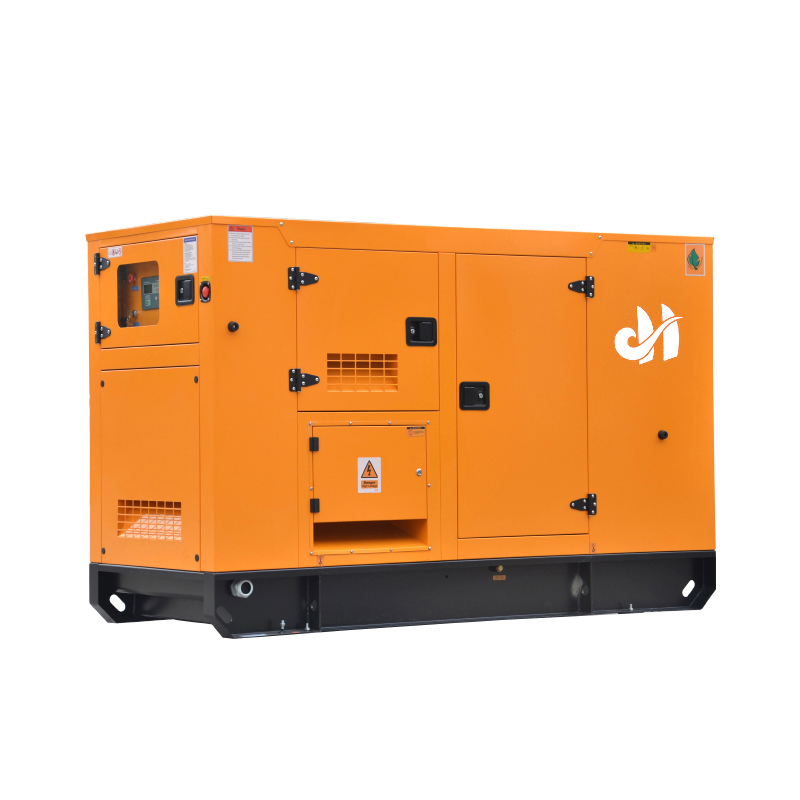
A silent diesel generator set — also referred to as a canopy generator, acoustic generator, or super-silent generator — is an open frame set enclosed within a purpose-designed acoustic canopy. The canopy uses a combination of steel outer panels, internal acoustic foam lining, anti-vibration mounts, and engineered air inlet/outlet baffles to attenuate noise transmission. The result is a self-contained unit that can be installed outdoors or in locations adjacent to occupied buildings where noise compliance is mandatory.
How Much Noise Reduction Does a Canopy Provide
The noise attenuation delivered by a quality acoustic canopy depends on its design and the generator's power rating. Standard silent canopies reduce noise output to 65–75 dB(A) at 1 meter for generators in the 20–500 kVA range — a reduction of approximately 20–35 dB compared to the open frame equivalent. Super-silent or ultra-silent canopy designs, using additional foam layers, larger-volume enclosures, and more sophisticated inlet/outlet baffling, can achieve 55–65 dB(A) at 1 meter on sets up to 300 kVA. At 7 meters distance — a typical residential boundary setback — a standard silent generator rated at 70 dB(A)/1m typically measures approximately 52–55 dB(A), generally within daytime residential noise limits in most jurisdictions.
Design Features That Distinguish Quality Canopies
- Acoustic foam density and thickness: Higher-quality canopies use mineral wool or high-density melamine foam at 50–100 mm thickness rather than thin polyurethane foam, providing broader frequency absorption and greater longevity
- Labyrinthine air intake and exhaust baffles: Simple louvered openings allow noise to escape with the airflow. Baffled or labyrinthine designs force airflow through multiple direction changes, attenuating sound transmission while maintaining adequate cooling airflow
- Anti-vibration isolation between engine/alternator and canopy frame: Structural vibration transmitted from the engine to the canopy panels converts to radiated noise. Quality designs use rubber anti-vibration mounts at all engine-to-frame contact points
- Weather protection rating: Most commercial silent canopies are rated to IP23 or IP44, suitable for rain protection. Coastal and severe environment applications require higher-specification surface treatments and IP54 or better sealing
- Large-access service doors: Full-height lockable service doors on multiple sides allow complete maintenance access without compromising the canopy's structural and acoustic integrity
Common Applications for Silent Diesel Generator Sets
- Hospitals, hotels, and data centers requiring standby power adjacent to occupied spaces
- Residential and commercial developments where local authority noise permits specify dB(A) limits
- Outdoor events and film/television productions requiring reliable power without noise interference
- Telecom base stations and remote communication infrastructure with no generator room available
- Schools, office campuses, and retail centers where generator operation during business hours must not disturb occupants
Containerized Diesel Generator Sets: Large-Scale Power in a Deployable Package
A containerized diesel generator set houses one or more generator sets — along with fuel storage, control systems, switchgear, and ancillaries — inside a modified ISO shipping container, most commonly a 20-foot (6.1 m) or 40-foot (12.2 m) standard container. The container structure provides physical protection, weather resistance, security, and a self-contained power module that can be transported by road, rail, or sea and commissioned at a new location with minimal site preparation.
What a Containerized Generator Set Typically Contains
Beyond the generator set itself, a fully specified containerized system typically integrates:
- Base fuel tank: Typically 500–3,000 liters built into the container floor, providing days of autonomous operation without external fuel supply
- Acoustic lining: Container walls lined with acoustic foam and mineral wool, achieving noise levels comparable to or better than standard silent canopy sets
- Forced ventilation system: Powered radiator fans and thermostatically controlled louvres manage internal temperature, critical for continuous operation in high-ambient-temperature locations
- Integrated switchgear and automatic transfer switch (ATS): Allows the containerized unit to function as a complete power node without requiring separate switchroom construction
- Parallel operation capability: Multiple containerized sets can be synchronized and run in parallel, enabling modular power capacity scaling — add another container to double output
- Remote monitoring interface: GSM/GPRS or satellite telematics modules for remote performance monitoring, fuel level tracking, and alarm notification
Power Range and Configuration Options
Containerized sets are most commonly specified in the 200 kVA to 3,000 kVA range for single-container units. A standard 20-foot container comfortably accommodates generator sets up to approximately 800–1,000 kVA. A 40-foot container can house sets up to 2,000–2,500 kVA, or twin parallel sets of smaller rating with full switchgear. For projects requiring power beyond what a single container can deliver, multiple containerized sets are deployed in parallel — large mining, oil and gas, and disaster relief operations routinely deploy 5 to 20 containerized units operating as a synchronized power plant delivering 10–50 MW of output.
Primary Deployment Scenarios
- Remote mining and oil field operations: No grid connection, extreme weather, security requirements — containerized sets deliver prime power with minimal site civil works
- Disaster relief and military forward operating bases: Rapid deployment, standardized logistics (ISO container dimensions compatible with all major freight systems), and self-contained operation
- Temporary power plants for grid support: Utilities and IPPs deploy containerized fleets to cover grid shortfalls, peak demand periods, or transmission emergencies — often dispatched within days of contract award
- Industrial construction projects: Large infrastructure projects (dams, LNG terminals, ports) requiring multi-megawatt temporary power during construction before permanent grid connection
- Permanent off-grid community power supply: Island grids, rural electrification projects, and isolated industrial parks where containerized diesel generation provides the baseload while renewable sources are integrated
Direct Comparison: Silent vs Open Frame vs Containerized
| Attribute | Open Frame | Silent (Canopy) | Containerized |
|---|---|---|---|
| Typical Noise Level | 95–110 dB(A) @ 1m | 55–75 dB(A) @ 1m | 65–75 dB(A) @ 1m (varies) |
| Weather Protection | None — indoor only | IP23–IP54 (outdoor rated) | Full (IP55+ equivalent) |
| Typical Power Range | 2 kVA – 2,500+ kVA | 10 kVA – 1,500 kVA | 200 kVA – 3,000+ kVA |
| Relative Unit Cost | Lowest | 15–30% above open frame | Highest (includes integration) |
| Mobility / Redeployment | Moderate (forklift/crane) | Good (crane lifts) | Excellent (ISO standard transport) |
| Fuel Storage | Base tank only (typically 8–24 hrs) | Base tank (8–24 hrs) | Integrated tank (24–96+ hrs) |
| Security | None (requires external room) | Lockable canopy panels | Full container security with lockbox |
| Site Civil Works Required | Generator room needed | Concrete pad or hardstanding | Minimal (level hardstanding only) |
Engine and Alternator Brands: What to Specify
Across all three generator set configurations, the engine and alternator are the components that most directly determine reliability, fuel efficiency, parts availability, and service network coverage. The generator set manufacturer's (OEM's) role is to integrate these components into a reliable package — but the underlying engine brand often carries more long-term weight than the OEM brand itself.
Widely Specified Diesel Engines
- Cummins: Dominant in the 100–2,000 kVA range. Excellent global service network, strong parts availability, and well-documented fuel consumption data. The QSB, QSL, QSX, and K-series cover the full commercial generator range.
- Perkins (a Caterpillar company): The most specified engine in the 10–400 kVA range globally. The 1100, 1200, and 2200 series are engineered specifically for generator set duty with extended service intervals of up to 500 hours.
- MTU (Rolls-Royce Power Systems): Premium specification for large containerized and data center applications. MTU Series 1600 and 4000 cover 500–3,250 kVA with class-leading fuel efficiency and low-emissions compliance.
- Volvo Penta: Strong in the 100–800 kVA range; widely specified in European projects with stage V emissions compliance requirements.
- Doosan (Bobcat): Competitive in the 100–500 kVA range, particularly in Asian and Middle Eastern markets.
Alternator Brands
For alternators, Stamford (Cummins Generator Technologies), Leroy-Somer (Nidec), and Mecc Alte are the three most specified brands in commercial generator sets globally. Stamford's HC and HCI series and Leroy-Somer's LSA series are found across all three generator set configurations from 10 kVA to 3,000 kVA and above. Specifying a recognized alternator brand is particularly important for containerized sets used in parallel operation, as the voltage regulation and harmonic distortion characteristics of the alternator directly affect parallel synchronization stability.
Emissions Standards and Compliance Across Configurations
Emissions compliance requirements apply to the engine regardless of the generator set's physical configuration — whether the engine is in an open frame, canopy, or container, the same emissions certification applies. However, the configuration choice affects where and how the set can be installed, which in turn determines which regional emissions standard applies.
| Region | Current Standard | Key Requirement | Applies From |
|---|---|---|---|
| European Union | Stage V (EU 2016/1628) | Particulate number limit + DPF for most power bands | 2019–2021 |
| United States | EPA Tier 4 Final | Near-zero NOx and PM via DPF + SCR | 2015 |
| China | China Stage IV (GB20891) | NOx and PM limits aligned with EU Stage IIIB | 2022 |
| India | CPCB IV+ | Stricter NOx, HC, PM limits for gensets | 2023 |
| Rest of World | Varies (often EU Stage II/III equivalent) | Country-specific; verify before export | Ongoing |
For containerized sets deployed internationally — particularly across multiple jurisdictions — it is worth specifying EPA Tier 4 Final or EU Stage V compliant engines as the baseline, since these represent the most stringent available standards and ensure the set can operate without compliance issues across nearly all regulated markets.
Selecting the Right Configuration: A Practical Decision Framework
The following decision criteria cover the factors that most consistently determine which configuration is appropriate for a given project:
- Is there an existing generator room or enclosed plant space? If yes, an open frame set is the most cost-effective choice — the room provides weather and noise containment without the premium of a canopy or container.
- Will the set be installed outdoors adjacent to an occupied building? If yes, a silent canopy set rated at the appropriate dB(A) level for your local noise ordinance is required. Obtain the local authority's noise limit for the relevant time period (day/night) before specifying canopy performance.
- Is the site remote, temporary, or subject to redeployment? If any of these apply, a containerized set delivers the lowest total cost when civil work, logistics, and redeployment costs are factored in over the project life.
- What is the required power output? Below 200 kVA — open frame or silent canopy. 200–800 kVA — all three configurations are viable; configuration choice is driven by site factors. Above 800 kVA — containerized becomes the most practical format, particularly for outdoor and remote applications.
- How long is the autonomy requirement between refueling? Standard base tanks on open frame and canopy sets provide 8–24 hours at full load. If 48 hours or more of autonomous operation is required without a fuel delivery infrastructure, a containerized set with an integrated large-volume fuel tank is the appropriate specification.
- What are the security requirements? In high-theft-risk environments, an open frame set in an unsecured space is vulnerable. A silent canopy with lockable panels or a containerized set with a security lockbox and perimeter lock significantly reduces theft and vandalism exposure.
For most commercial and industrial standby applications in urban or suburban settings, a silent diesel generator set represents the best balance of cost, noise compliance, weather protection, and maintenance accessibility. Open frame sets remain the optimal choice where a proper generator room is already available or budgeted. Containerized sets deliver unmatched value in large-scale, remote, or mobile power applications where their higher initial cost is justified by dramatically reduced civil and logistics costs over the project lifecycle.