 English
 русский
 Español
 عربى
عربىHow Do Cummins Diesel Generators Compare to Perkins Diesel Generators?
Cummins Diesel Generator Sets: Industrial Strength and Global Scale
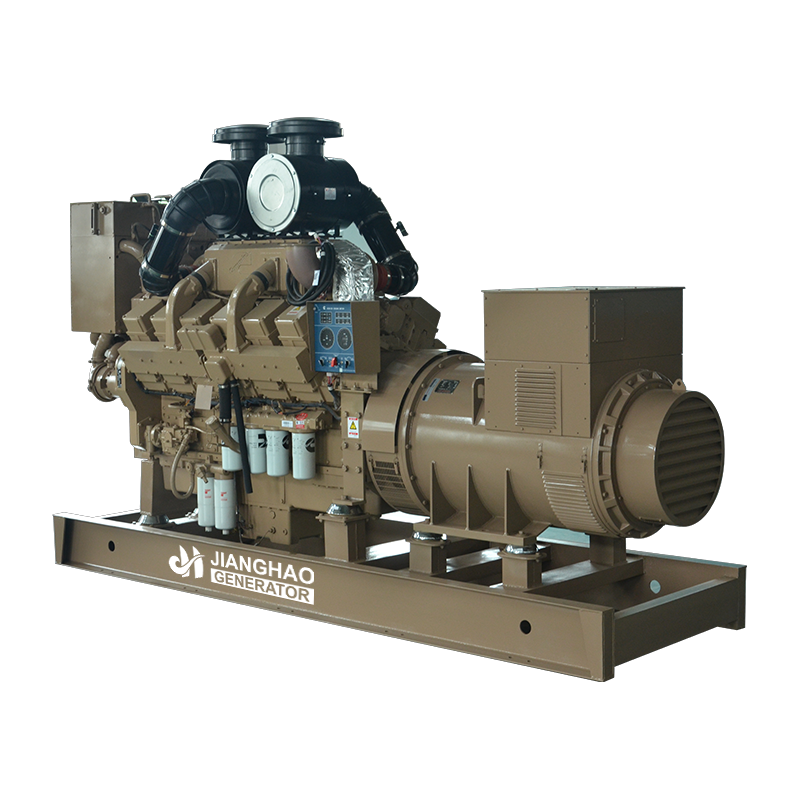
Cummins Inc., founded in Columbus, Indiana in 1919, is the world's largest independent manufacturer of diesel and natural gas engines for industrial and commercial applications. The Cummins generator set product line spans from 7.5 kVA residential standby units to 3,500 kVA industrial paralleling systems, serving every segment of the market from small commercial premises to the largest data centers, hospitals, and utility scale power installations. This breadth of product range, backed by a global service network of more than 8,000 authorized dealer and distributor locations in 190 countries, is the primary structural advantage of the Cummins platform for large scale and multi site deployments.
The core of Cummins diesel generator set performance is the proprietary diesel engine, produced in Cummins owned manufacturing facilities to integrated quality standards that cover the complete engine assembly from component manufacture through final test. Cummins QSK series engines used in large industrial generator sets achieve power outputs up to 2,500 kW per engine, with mean time between overhaul (MTBO) ratings of 20,000 to 30,000 hours under continuous load conditions, making them one of the most proven high output prime power platforms in the industry. The B series engines used in smaller generator sets in the 30 to 275 kW range have accumulated billions of operating hours across truck, industrial, and generator applications, and the manufacturing consistency and field proven reliability of these engines is a major factor in specifiers choosing Cummins for critical standby applications where reliability is non negotiable.
Why Choose Cummins Diesel Generators for Industrial Use
The decision to specify Cummins diesel generators for industrial applications is supported by several performance and practical advantages that differentiate the brand in the high demand segment of the market:
- Power density: Cummins engines deliver high kilowatt output per unit of engine displacement and per unit of generator set physical footprint, which matters in installations where space is limited and output must be maximized. The QSB7 engine, for example, produces 200 kW from a 6.7 liter displacement, a power to displacement ratio that reflects the advanced combustion management and turbocharging technology incorporated in the modern Cummins engine family.
- Integrated electronic control: Cummins engines incorporate the proprietary CMCIII (Cummins Marine and Commercial III) electronic control module and the INSITE diagnostic software platform, providing real time monitoring of over 100 engine parameters and enabling remote diagnostics that significantly reduce unscheduled maintenance events. The electronic control system also manages fuel injection timing, air to fuel ratio, and load response with precision that mechanical injection systems cannot match, contributing to fuel efficiency improvements of 5 to 15 percent compared to equivalent output mechanical injection engines.
- Emissions compliance: Cummins generator sets are available in configurations meeting EPA Tier 4 Final, EU Stage V, and equivalent national emissions standards in all major markets. The selective catalytic reduction (SCR) and diesel particulate filter (DPF) aftertreatment systems used on Tier 4 Final Cummins engines have been refined over more than a decade of field deployment, producing reliable emissions compliance with low aftertreatment maintenance burden relative to first generation Tier 4 systems from competitors.
- Paralleling and load management capability: Cummins PowerCommand control systems support paralleling of multiple generator sets with automatic load sharing and power management, allowing large facilities to build scalable power systems from standard generator set modules rather than specifying single large units. This modularity reduces the single point of failure risk and allows incremental capacity expansion without replacing the installed base.
- Long term OEM support: Cummins commits to spare parts availability and technical support for engines for a minimum of 20 years after production ends, a commitment backed by the company's scale and financial stability. This long term support commitment reduces the lifecycle risk of specifying Cummins for permanent installations where the generator set may remain in service for 25 to 40 years.
Perkins Diesel Generator Sets: Value, Efficiency, and Broad Market Reach
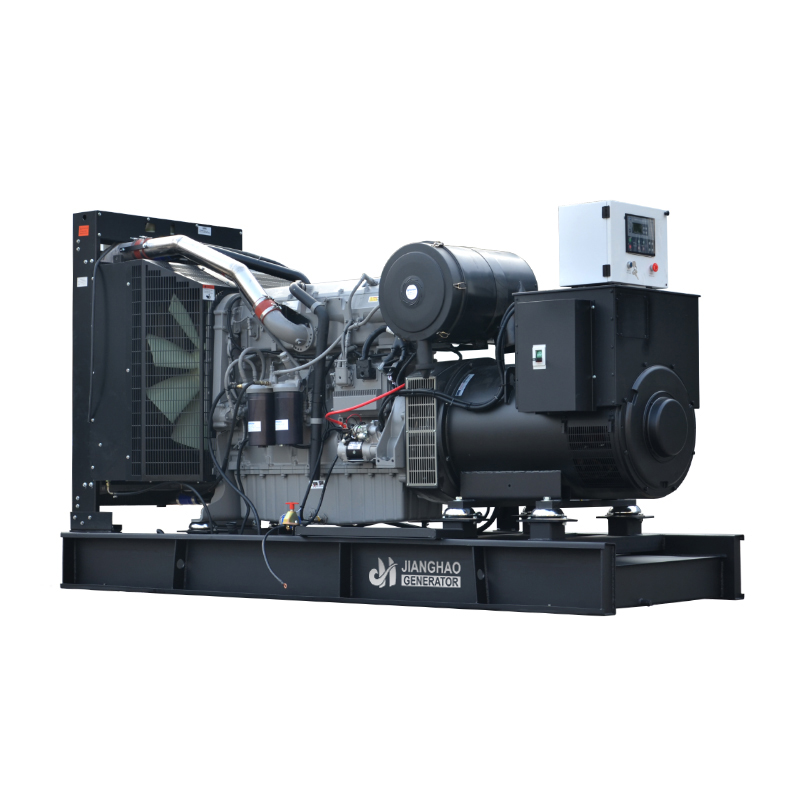
Perkins Engines Company, based in Peterborough, United Kingdom and now a wholly owned subsidiary of Caterpillar Inc., has been manufacturing diesel engines since 1932 and is one of the most widely deployed diesel engine brands in generator set applications globally, particularly in the 10 to 500 kW output range that covers the large majority of commercial, light industrial, and telecommunications power applications. Perkins' global presence includes licensed manufacturing in multiple countries, a dealer network in over 180 countries, and an installed base estimated at more than 20,000 Perkins engines entering service every week across all applications including agricultural, construction, materials handling, and power generation.
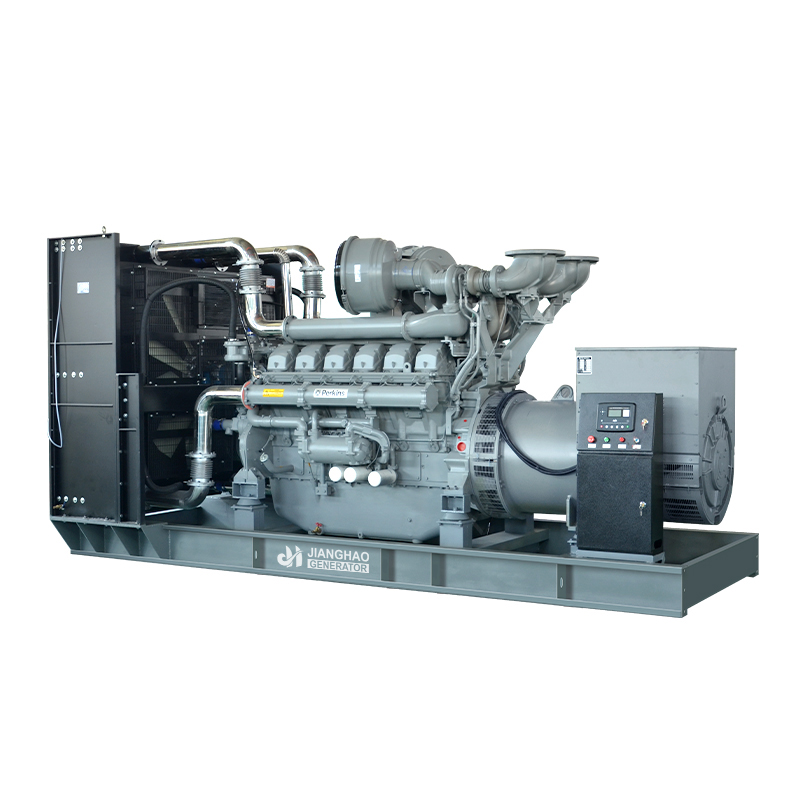
The Perkins diesel generator set engine range includes the 400 series for outputs up to 30 kW, the 1100 and 1200 series covering 30 to 200 kW, and the 2000 and 4000 series for outputs from 200 kW to 2,250 kVA, covering virtually every generator set application below the very largest utility scale installations. The Perkins 4000 series V16 engine, producing up to 2,250 kVA at 1,500 RPM for 50 Hz generation, is the brand's flagship power generation product and is deployed in major data centers and industrial facilities worldwide.
Core Strengths of Perkins Generator Sets
Perkins generator sets are characterized by specific performance and practical advantages that make them the preferred choice in their strongest market segments:
- Fuel efficiency at partial load: Perkins engines are optimized for the light and medium load conditions that characterize many real world standby and prime power applications, where generator sets often run at 50 to 75 percent of rated load rather than at full output. The Perkins 1200 series achieves specific fuel consumption of 195 to 205 grams per kilowatt hour at 75 percent rated load, competitive with the best results from equivalent output Cummins engines and significantly better than older generation engines of comparable output in this load range.
- Compact dimensions: Perkins engines have historically been designed with compact overall dimensions relative to their output, which reduces the physical footprint of completed generator sets and simplifies installation in constrained spaces such as rooftop plant rooms, basement generator rooms, and mobile power units. The 1204 series 4 cylinder engine, producing outputs up to 100 kW, has an overall length of approximately 900 millimeters, enabling generator set packages significantly shorter and lighter than equivalent output multi cylinder configurations from some competitors.
- Proven reliability in developing market conditions: Perkins engines have a strong record of reliable operation in environments with less consistent fuel quality, higher ambient temperatures, and less frequent professional servicing than the controlled conditions assumed in developed market reliability specifications. The engine's mechanical robustness and tolerance for fuel quality variation below the strict limits of advanced common rail injection systems makes it a practical choice for deployment in markets and environments where supply chain and service infrastructure are less developed.
- Generator set package cost: Perkins powered generator sets are typically priced 10 to 25 percent below equivalent output Cummins powered sets in competitive market comparisons, reflecting differences in manufacturing base, overhead structure, and the competitive dynamic between the two brands in contested market segments. For applications where first cost is a primary procurement criterion and the premium performance of Cummins is not required by the application specification, Perkins offers strong value.
Head to Head Comparison: Cummins vs Perkins Across Key Factors
The most useful format for comparing these two platforms is a direct, factor by factor evaluation that addresses the criteria most relevant to the generator set selection decision. The following table summarizes the comparison across ten key factors, followed by detailed discussion of the factors most critical to industrial and commercial procurement decisions.
| Factor | Cummins | Perkins |
|---|---|---|
| Power range (generator sets) | 7.5 kVA to 3,500 kVA | 8 kVA to 2,250 kVA |
| Service network reach | 8,000+ locations, 190 countries | 3,500+ locations, 180+ countries |
| Typical MTBO (large industrial) | 20,000 to 30,000 hours | 15,000 to 25,000 hours |
| Fuel consumption at 75% load | 190 to 210 g per kWh | 195 to 215 g per kWh |
| Emissions compliance range | EPA Tier 4 Final, EU Stage V | EPA Tier 4 Final, EU Stage V |
| Electronic diagnostics | INSITE, PowerCommand | EST (Electronic Service Tool) |
| Generator set package cost (relative) | Higher (15 to 25% premium) | Lower (competitive reference) |
| Parts availability (local market) | Excellent in developed markets | Very broad, including developing markets |
| OEM parts support commitment | Minimum 20 years post production | 15 to 20 years (Caterpillar backed) |
| Best fit application | Large industrial, data centers, critical standby | Commercial, light industrial, telecoms, developing markets |
Where to Find Perkins Diesel Generator Parts
Parts availability is one of the most operationally important factors in diesel generator set ownership, because a generator set that cannot be repaired quickly due to unavailable parts provides no value during the period it is out of service. Perkins has invested significantly in its parts distribution infrastructure, and the result is one of the most accessible parts supply networks in the power generation industry across both established and developing markets.
Official Perkins Parts Sources
The primary source for genuine Perkins parts is the authorized Perkins dealer and distributor network, accessible through the Perkins global dealer locator at the brand's official website. Perkins distributors maintain local inventory of high turnover parts including filters, belts, gaskets, water pumps, fuel injection components, and starting motors for the most common engine families. For less common parts or components specific to older engine generations, Perkins operates a central parts distribution system with warehouses in the UK, USA, and Asia that can supply any genuine part in the Perkins catalog to any authorized dealer globally within defined lead times.
Perkins maintains parts availability for current and legacy engine models through its "Powered by Perkins" program, with genuine parts available for engines produced in the past 20 years through the authorized dealer network, and for older engines through Caterpillar's classic parts program that covers engines up to 30 years from production date. This depth of historic parts coverage is a significant operational advantage for owners of older Perkins powered generator sets that are still providing reliable service but have passed the age at which many independent parts suppliers stop stocking the relevant components.
Alternative Parts Sources and Quality Considerations
The high installed base of Perkins engines globally has generated a substantial aftermarket parts supply from both reputable approved suppliers and from lower quality copy parts manufacturers. Understanding the quality spectrum of available parts is essential for purchasing decisions:
- Genuine Perkins (OEM) parts: Manufactured to Perkins engineering specifications in authorized facilities, with full quality control, dimensional accuracy, and material specification compliance. These parts carry the Perkins warranty and are the only parts category that maintains the original engine warranty where applicable. They are typically priced 20 to 50 percent above equivalent aftermarket alternatives, but the price differential is justified for critical engine components including injectors, fuel pumps, piston rings, and valve train components where dimensional precision directly affects engine performance and longevity.
- OE equivalent or branded aftermarket parts: Supplied by reputable component manufacturers who also supply the original equipment manufacturers. Filter manufacturers such as Fleetguard (a Cummins company), Mahle, and Mann supply filters to Perkins OEM specifications under their own brands at prices typically 15 to 30 percent below OEM list price. These parts are technically equivalent to genuine Perkins branded parts for filtration and service components, though they do not carry Perkins warranty coverage.
- Generic copy parts: The lowest cost category, typically produced in markets with minimal quality control oversight and sold primarily on price. For non critical service consumables such as air filters used in clean environments, generic alternatives may provide adequate short term performance, but for fuel system components, seals, and bearings, the dimensional and material specification failures common in copy parts can cause accelerated engine wear, fuel system contamination, and premature failure that costs far more to remedy than the initial parts cost saving. Avoid generic copy parts for all fuel system, lubrication system, and precision mechanical components.
Identifying Perkins Parts by Engine Serial Number
All Perkins engines carry a unique engine serial number stamped on the engine identification plate, located on the left side of the engine block in most engine families. This serial number encodes the engine build specification and provides the key to identifying the correct parts for that specific engine. When ordering parts from any source, always provide the complete engine serial number rather than relying on visual identification or nominal engine model description alone. Perkins engines of the same nominal model designation may have been built to different specifications at different production dates, and components that are visually similar or nominally described as equivalent may not be physically interchangeable. The parts identification system accessible through authorized Perkins dealers uses the engine serial number to confirm the exact correct part number for every component in the engine assembly.
How to Troubleshoot a Perkins Diesel Generator
Systematic troubleshooting of Perkins diesel generator sets follows a logical diagnostic sequence that moves from the most accessible and common cause checks through to more invasive and time consuming investigations. The following troubleshooting framework covers the most common fault categories encountered in field operation of Perkins generator sets, including failure to start, low power output, excessive fuel consumption, unusual noise or vibration, and cooling system issues.
Generator Fails to Start or Starts Poorly
Failure to start or difficult starting is the most frequently reported fault in diesel generator operation, and the majority of cases are caused by factors that can be identified and resolved without specialist tools or disassembly of major engine components. Work through the following checks in sequence before concluding that an internal engine fault is present:
- Battery and starting system: Measure the battery terminal voltage with a multimeter under load (during a start attempt). A fully charged 12 volt battery should maintain above 9.6 volts during cranking; a 24 volt system should maintain above 19.2 volts. Voltage below these values indicates a discharged, failing, or undersized battery. Also check battery terminal connections for corrosion and tightness; a loose or corroded connection creates resistance that prevents adequate current delivery to the starter motor even when the battery itself has adequate charge.
- Fuel supply: Verify that the fuel tank contains adequate fuel, that the fuel shutoff valve is open, that the fuel filter is not clogged, and that air has not entered the fuel system (air in the fuel lines is a common cause of difficult starting after the generator has been idle for extended periods or after fuel system maintenance). Bleed the fuel system by opening the bleed screws on the fuel filter housing and injection pump until fuel without air bubbles flows from the bleed points.
- Glow plugs (cold starting): On Perkins engines below approximately 100 kW without air intake heating, glow plugs are the primary cold start aid. A failed glow plug in one or more cylinders significantly degrades cold start performance, particularly at ambient temperatures below 10 degrees Celsius. Test each glow plug individually using a continuity tester or by measuring resistance; a failed glow plug shows open circuit (infinite resistance) or very high resistance compared to the 0.5 to 1.0 ohm resistance of a serviceable glow plug.
- Air intake restriction: A blocked air filter or restricted air intake path reduces the air available for compression, lowering compression temperature and preventing the air charge from reaching the temperature needed for fuel ignition at cranking speed. Inspect the air filter element and replace it if it is visibly contaminated; also check the air intake path for blockages from debris, pest nesting, or collapsed flexible ductwork that may not be apparent without removing the filter element.
- Electronic fault codes: On Perkins engines with electronic engine management (most engines produced after 2000), connect the Perkins EST (Electronic Service Tool) or a compatible diagnostic tool to the engine's data link connector and read any stored fault codes. Active or pending fault codes that have caused the engine protection system to disable starting should be identified and resolved before further investigation of mechanical causes.
Low Power Output or Excessive Black Smoke
Low power output combined with black exhaust smoke indicates incomplete combustion caused by either insufficient air supply, excess fuel delivery, or both. The diagnostic approach addresses both sides of the air to fuel ratio:
- Air restriction check: Measure the intake air restriction using a water manometer or vacuum gauge at the air filter outlet connection. Maximum permissible restriction is typically 4 to 6 kPa for Perkins engines under full load; restriction above this value requires immediate air filter replacement and inspection of the complete intake path for additional restrictions.
- Turbocharger performance: On turbocharged Perkins engines, inspect the turbocharger for shaft bearing wear (excessive radial play, oil leakage from the compressor or turbine seals, or visible blade damage), which reduces boost pressure and air delivery to the engine. Measure actual boost pressure at full load with a boost gauge and compare against the specification in the Perkins service manual for the engine model.
- Injection timing: Incorrect fuel injection timing is a common cause of low power and smoke, particularly on older Perkins mechanical injection engines where the injection timing can drift from specification due to injection pump wear or incorrect setting after service. Verify injection timing against the service manual specification and adjust as required.
- Injector condition: Worn or contaminated fuel injectors produce a poor spray pattern that results in incomplete combustion, low power, and heavy smoke. Injector testing requires a dedicated injector test bench or specialist service, but preliminary assessment can be made by comparing individual cylinder contributions by briefly cutting each injector in turn while the engine is running at low load: a cylinder that does not cause a noticeable change in engine smoothness when its injector is cut is not contributing normally and warrants individual injector testing.
Cooling System Overheating
Diesel generator overheating is a potentially damaging condition that triggers engine protection shutdown on properly maintained modern units but can cause serious internal damage if protection systems fail or are overridden. When an overheating condition is detected, shut down the engine immediately and allow it to cool before investigating. Do not remove the cooling system pressure cap from a hot engine; the pressurized coolant will flash to steam and cause burns. After the engine has cooled to ambient temperature, investigate the following probable causes in order of frequency: low coolant level from a leak or evaporation loss, a blocked or fouled radiator core restricting airflow, a failed thermostat stuck in the closed position, a failed coolant pump with reduced flow rate, or a blocked cooling passage in the cylinder block from scale or corrosion deposit accumulation.
How to Extend the Lifespan of a Perkins Diesel Generator
A well maintained Perkins diesel generator set can achieve a service life of 30,000 to 50,000 operating hours before requiring a major overhaul, and generator sets that spend most of their life on standby duty with infrequent operation can remain mechanically serviceable for 20 to 30 years with appropriate care. Achieving these service life outcomes requires adherence to a systematic maintenance program, correct operating practices, and the use of specified fluids and filter components that protect the engine's internal clearances and surfaces from the degradation mechanisms that limit service life.
The Scheduled Maintenance Program
The Perkins recommended maintenance schedule forms the foundation of effective engine life management. The schedule is structured around operating hours (for engines in regular service) and calendar periods (for standby units that accumulate few operating hours annually), with different maintenance intervals for different component classes:
- Every 250 to 500 hours or 12 months (whichever comes first): Engine oil and oil filter change. This is the single most impactful maintenance action for engine longevity, as degraded lubricating oil loses its viscosity stability, oxidation resistance, and detergency, allowing acid and sludge accumulation that damages bearing surfaces and accelerates wear across all lubricated engine components. Using an engine oil meeting the API CK4 or CJ4 specification, or the equivalent ACEA E6 or E9 standard for European markets, is specified for current Perkins engine families, and using oil below this specification shortens oil change intervals and increases the risk of deposit formation in precision engine components.
- Every 500 to 1,000 hours or 12 months: Fuel filter replacement. The fuel filter is the primary barrier protecting the precision fuel injection system from contamination. A clogged fuel filter starves the engine of fuel at high load, and a failed fuel filter allows contaminant particles to enter the injection pump and injectors, causing wear and blockage that results in costly fuel system replacement. Replace the fuel filter on schedule without exception; the cost of a fuel filter is negligible compared to the cost of injection system repair.
- Every 500 to 1,000 hours: Air filter inspection and replacement as required. Inspect the air filter restriction indicator if fitted; replace the filter element at the indicator's maximum restriction mark or on the schedule, whichever comes first.
- Every 1,000 to 2,000 hours: Cooling system inspection including coolant concentration test (refractometer test for freeze protection level), visual inspection of coolant hoses for cracks and swelling, and radiator core inspection and cleaning if air side contamination is visible. Change the coolant at the interval specified in the service manual (typically every 2 years or 2,000 hours) to maintain the inhibitor concentration that prevents corrosion and scale formation in the cooling system passages.
- Every 2,000 hours or at major service intervals: Valve clearance inspection and adjustment. Valve clearances that have moved outside the specified range reduce engine efficiency and can cause valve damage from contact with the piston crown (too little clearance) or from impact fatigue at the valve seat due to valve float at high speed (too much clearance). Checking and correcting valve clearances at the recommended interval is a low cost preventive maintenance action that protects expensive cylinder head components.
Operating Practices That Extend Engine Life
In addition to the scheduled maintenance program, the operating conditions and habits under which the generator set is used significantly influence how rapidly the engine accumulates wear and approaches the end of its service life:
- Avoid extended operation at very low loads: Operating a diesel generator at less than 30 percent of its rated load for sustained periods causes a condition called wet stacking, where unburned fuel and combustion byproducts accumulate in the exhaust system and cylinder walls. This deposits a layer of carbon and fuel residue in the exhaust ports and manifold, reduces engine efficiency, and can cause piston ring sticking that leads to oil consumption and accelerated cylinder wear. For standby generator sets that run primarily at light load during test runs, schedule periodic full load exercising of at least 2 hours at 60 to 80 percent of rated load every month to clean the combustion deposits accumulated during lighter operation.
- Allow proper warm up before full load application: Applying full rated load to a cold engine before it has reached normal operating temperature increases wear on cold metal surfaces where the lubricating oil film is thinner and less stable than at operating temperature. Allow the engine to idle or run at partial load for 3 to 5 minutes after starting from cold before applying full load, giving the oil time to circulate to all bearing surfaces and reach its optimal operating viscosity.
- Allow a cool down period before shutdown: After sustained operation at high load, allow the engine to run at idle or light load for 3 to 5 minutes before shutdown to allow turbocharger bearing temperatures to fall before oil circulation stops. Shutting a turbocharged engine down immediately from full load traps heat at the turbocharger bearings, which can cook the bearing lubricant and accelerate turbocharger bearing failure. This cool down is particularly important for Perkins turbocharged engines in the 1200 series and above.
- Use clean, quality specified diesel fuel: Diesel fuel quality has a direct and significant impact on injection system component life. Water contaminated diesel accelerates corrosion in the injection pump and injector components; particulate contaminated fuel causes abrasive wear in precision fuel metering components that can reduce fuel system life from its expected 15,000 to 25,000 hours to as few as 3,000 to 5,000 hours if contamination is severe. Store diesel fuel in covered, sealed tanks; replace the fuel if the generator set has been idle for more than 12 months without fuel stabilizer treatment; and drain any water accumulation from the fuel tank and fuel water separator bowl at every service interval.
Lifespan Extension: Perkins vs Cummins Maintenance Comparison
| Maintenance Item | Perkins Interval | Cummins Interval | Notes |
|---|---|---|---|
| Engine oil and filter | 250 to 500 hr / 12 months | 500 hr / 12 months | Use API CK4 or CJ4 minimum |
| Fuel filter | 500 to 1,000 hr / 12 months | 500 hr / 12 months | Critical for injection system protection |
| Air filter | Inspect 500 hr, replace as required | Inspect 500 hr, replace as required | Restriction indicator guides timing |
| Coolant change | 2 years or 2,000 hr | 2 years or 2,000 hr (ELC: 6,000 hr) | Cummins ELC extends interval significantly |
| Valve clearance check | 2,000 hr | 2,000 to 3,000 hr | Cummins electronic models have longer interval |
| Belt inspection and replacement | 1,000 hr or annually | 1,000 hr or annually | Replace belts showing cracking or wear |
Choosing Between Cummins and Perkins: Application Based Decision Framework
Neither Cummins nor Perkins is universally the better choice across all generator set applications. The rational selection decision depends on matching the specific strengths of each platform to the requirements of the application in question. The following framework addresses the most common application categories and provides a clear recommendation for each:
Applications Where Cummins Is the Stronger Choice
- Large data centers and mission critical facilities: Data centers requiring 500 kW to 3,500 kW of generator backup capacity, with strict requirements for reliability, automatic paralleling capability, and the ability to integrate with sophisticated building management systems, are best served by Cummins generator sets with PowerCommand control systems. The proven reliability of Cummins QSK series engines, the depth of the Cummins technical support network, and the long term OEM support commitment justify the premium over Perkins in applications where a generator failure causes revenue losses or safety risks measured in thousands of dollars per minute of downtime.
- Industrial prime power applications: Mining, oil and gas, and large manufacturing facilities operating generator sets as primary power sources rather than backup power benefit from Cummins' higher MTBO ratings and more extensive global industrial service network. A Cummins QSK50 engine in continuous prime power service in a remote mining operation has a demonstrated maintenance free run capability of 5,000 hours between scheduled major service events, reducing the frequency and cost of planned maintenance shutdowns that are particularly costly when they require specialist technicians to travel to remote sites.
- Markets with very strict emissions compliance requirements: In markets where the most stringent EPA Tier 4 Final or EU Stage V emissions standards are required, Cummins' more mature and refined aftertreatment system experience gives it an advantage in installation simplicity and operational reliability of the aftertreatment system, reducing the compliance risk associated with aftertreatment system malfunction.
Applications Where Perkins Is the Stronger Choice
- Telecommunications tower backup power: Telecom tower sites requiring 20 to 100 kW of backup power, often in remote or semi urban locations in developing markets, are well served by Perkins powered generator sets. Perkins' broader parts availability in developing market locations, the competitive price point of Perkins generator sets, and the proven reliability of the 1100 series in field conditions with variable fuel quality make it the dominant choice for telecom tower operators managing large tower portfolios in Africa, South Asia, and Southeast Asia.
- Commercial buildings and light industrial facilities: Hotels, hospitals, office buildings, and light manufacturing facilities requiring 30 to 300 kW of standby power represent the core of the Perkins generator set market. In this segment, the difference in performance between Perkins and Cummins is minimal in practice for typical standby duty cycles, and the lower initial cost of Perkins powered generator sets provides a genuine economic advantage that accumulates to significant savings across a portfolio of multiple sites.
- Budget constrained deployments with short payback requirements: In applications where the generator set budget is tightly constrained and the operational requirements do not demand the premium performance of Cummins, Perkins delivers technically sound, commercially well supported generator sets at a price point that enables more sites or higher installed capacity for the same total budget.
Total Cost of Ownership: The Complete Financial Picture
The initial purchase price comparison between Cummins and Perkins generator sets does not capture the complete financial picture of ownership over a 15 to 25 year service life. A comprehensive total cost of ownership (TCO) analysis should include the initial capital cost, installation costs, fuel consumption over the planned operating hours, scheduled maintenance material and labor costs, unscheduled repair costs (estimated from reliability data), and residual value at end of planned service life. When these factors are included, the TCO difference between Cummins and Perkins narrows considerably for most applications compared to the initial price difference alone, and for applications where the higher reliability and longer MTBO of Cummins translates into measurably fewer unscheduled service events and lower downtime costs, the Cummins premium over the service life may be fully recovered or even produce net savings. For applications where both brands deliver equivalent reliability in practice, the Perkins lower initial cost advantage is maintained throughout the analysis.
The practical recommendation for any significant generator set procurement is to build a project specific TCO model using the actual operating hours and load profile for the application, the actual fuel price and maintenance labor rates in the deployment location, and the actual price and maintenance cost data from competitive quotations for both platforms. This analysis, rather than brand preference or initial price comparison alone, produces the most defensible and economically rational selection decision for generator set investments that will influence the facility's energy security and operating cost profile for the next two to three decades.