 English
 русский
 Español
 عربى
عربىNatural Gas vs Diesel Generators for Manufacturing: Real Cost, Load, and Reliability
For a manufacturing plant, the real question is not which fuel sounds better in a product brochure. The question is which generator will keep production running when the grid fails, when a process requires continuous power, or when a utility outage turns into a multi-hour event. In most cases, the answer depends on three variables: how often the generator runs, how quickly the load changes, and what fuel supply is physically available on the site. A diesel generator set is usually the safer choice for standby and variable-load backup. A natural gas generator set can be the better choice for continuous baseload generation when a utility gas line is available and air emissions are part of the site permit.
This article is written for plant engineers, facility managers, and project buyers who need to compare the two options with real-world manufacturing conditions in mind. The goal is not to crown a universal winner. The goal is to give you a decision framework that reduces procurement risk, avoids costly fuel mismatches, and helps you talk to a generator supplier with confidence. Many manufacturing facilities end up selecting diesel because it is easier to justify for emergency power. But if your production line runs 24 hours a day and your gas supply is reliable, natural gas can produce a lower cost per kilowatt-hour over the life of the asset. The choice is not about fuel preference; it is about matching the generator to your production profile, site constraints, and long-term maintenance budget.
The Decision Starts With Your Load Profile, Not the Fuel Label
Manufacturing loads are not uniform. A metal stamping shop may have a few large pressing machines that start and stop in cycles. A food processing plant may run refrigeration, pumps, and conveyors steadily for hours. A chemical plant may have critical motors that must never lose power, even for a few cycles. Diesel and natural gas generators perform differently across these load patterns.
Diesel engines are established in applications where aggressive block loading happens. When a large motor starts, the generator must maintain voltage and frequency within acceptable limits. Diesel generator sets are usually capable of accepting a high percentage of rated load in a single step. For industrial applications, a diesel generator can handle sudden load changes with less voltage dip and faster frequency recovery. The mechanical design of a diesel engine and its turbocharged air system provides a more direct response to sudden increases in torque demand.
Natural gas generators, especially lean-burn industrial gas engines, often have less aggressive block load acceptance. A gas engine may require a staged loading sequence to allow the air-fuel ratio to adjust. If your manufacturing process has large induction motors that start simultaneously, the gas generator may need to be oversized or paired with a motor-starting study. That changes the capital cost and may undermine the fuel savings.
This is why load profile should come before fuel economics. If you have a long, steady baseload, natural gas may deliver excellent efficiency and lower operating cost. If you have a backup generator that will run 50 to 100 hours per year for emergency standby, diesel remains the more practical, lower-cost choice. The generator must be matched to the actual load every time, and the fuel choice is only one part of that matching process.
What Diesel Generators Do Well in a Manufacturing Environment
Diesel generators have a long history in industrial power. The principle is simple: diesel fuel has a high energy density, is easy to store on site, and delivers strong acceleration from no-load to full-load. For manufacturing, these are not just technical details; they directly affect whether a plant can recover from a utility outage without losing product, damaging equipment, or delaying shipments.
One of the most important diesel advantages is fuel independence. A diesel generator only needs a fuel tank, a transfer pump, and a supply contract. The fuel can be delivered by truck and stored in a bunded tank. There is no dependence on a pipeline that may or may not be present at the site boundary. This makes diesel attractive for isolated factories, secondary sites, and existing plants where a natural gas pipeline is not available or where gas supply is not guaranteed.
Diesel sets are also easier to find in a wide range of power ratings. From a 100 kVA backup unit to a multi-megawatt standby block, manufacturers offer complete diesel packages with control panels, switchgear, and synchronization systems. For a manufacturing plant that wants a proven solution with a short lead time, diesel is often the path of least resistance.
The fuel efficiency of a diesel engine is also generally higher than that of a natural gas engine at equivalent power output. A diesel engine can operate at a lower brake-specific fuel consumption across a broader load range. This means that even if diesel fuel costs more per MMBtu than natural gas, the diesel generator may consume fewer Btu per kilowatt-hour. The net operating cost is therefore not determined by fuel price alone; it is determined by the product of fuel price and fuel consumption per kWh.
For plants that already have diesel storage for fleet vehicles or mobile equipment, adding a diesel generator creates a common fuel system. That reduces procurement complexity and ensures that the fuel is already being managed for other assets. When a generator is subject to state or local fire codes, diesel tank design, containment, and ventilation are familiar to most engineering firms and inspectors.
Diesel equipment is also flexible for temporary expansion. A plant can specify an open-frame diesel unit initially and later add a sound-attenuated container if noise becomes a concern. Because the standard diesel product market is mature, custom modifications such as high-voltage output, paralleling, and remote monitoring are readily available. A manufacturer can offer a diesel generator set portfolio that spans from small backup units to large standby systems, giving a plant one supplier for many power requirements.
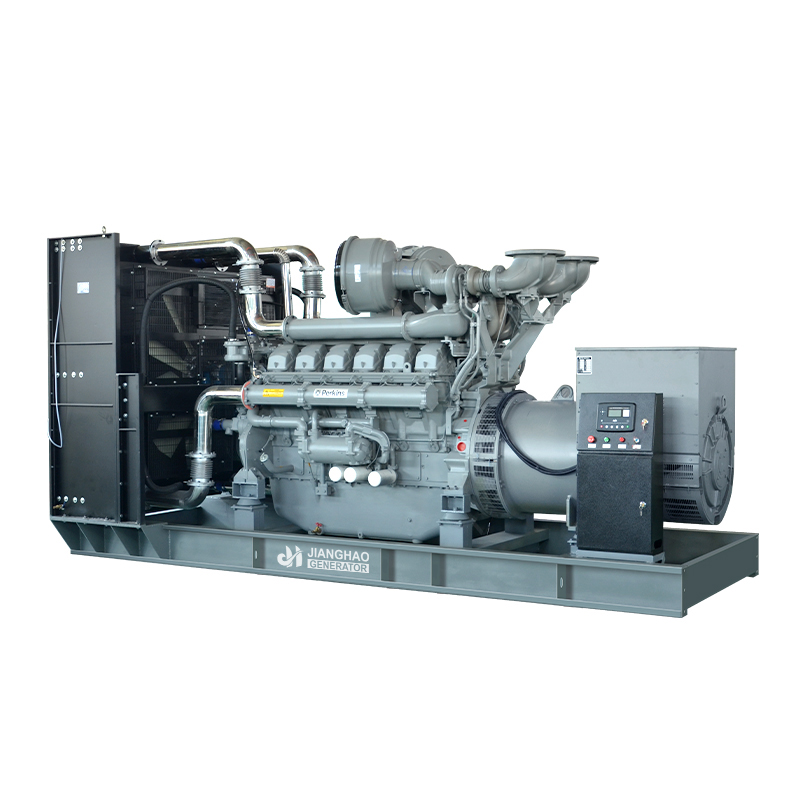
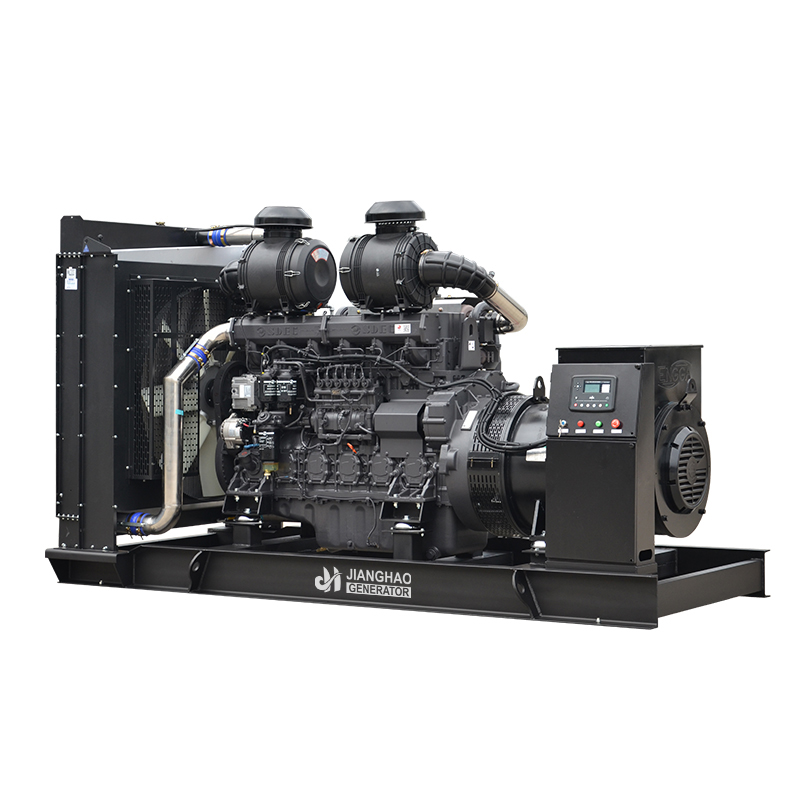
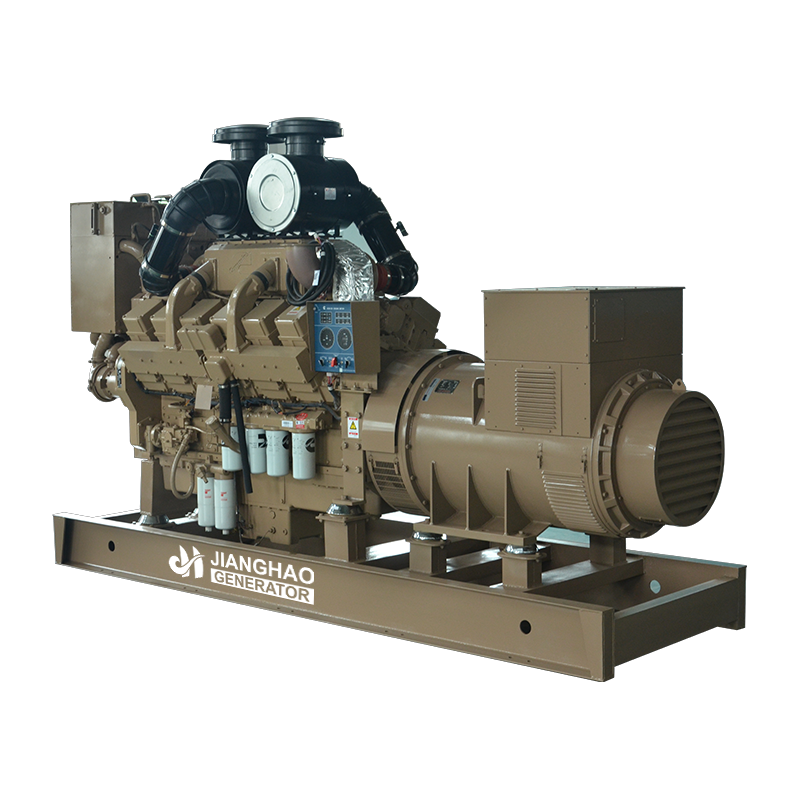
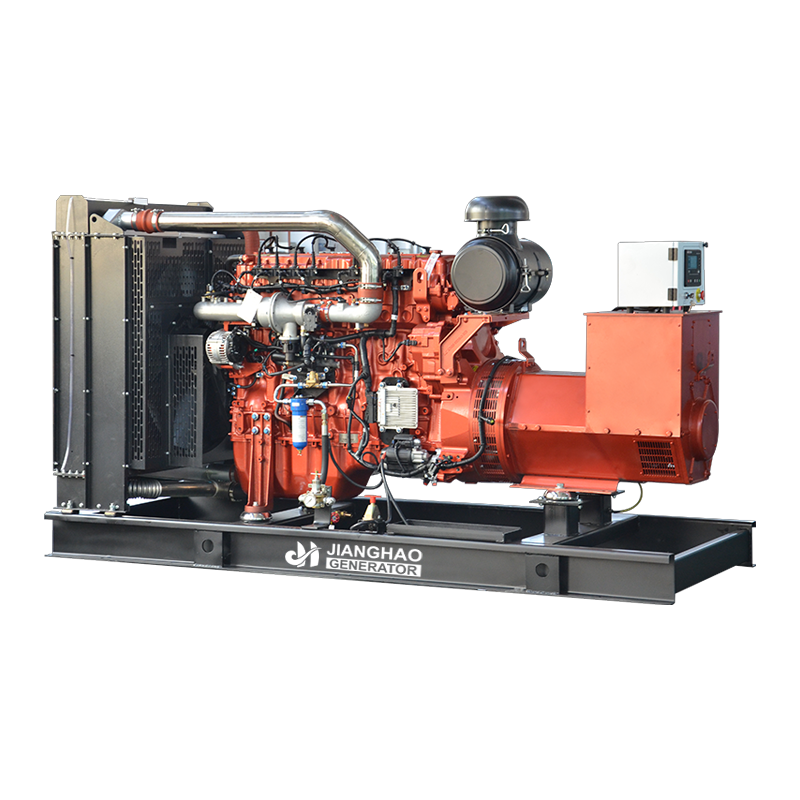
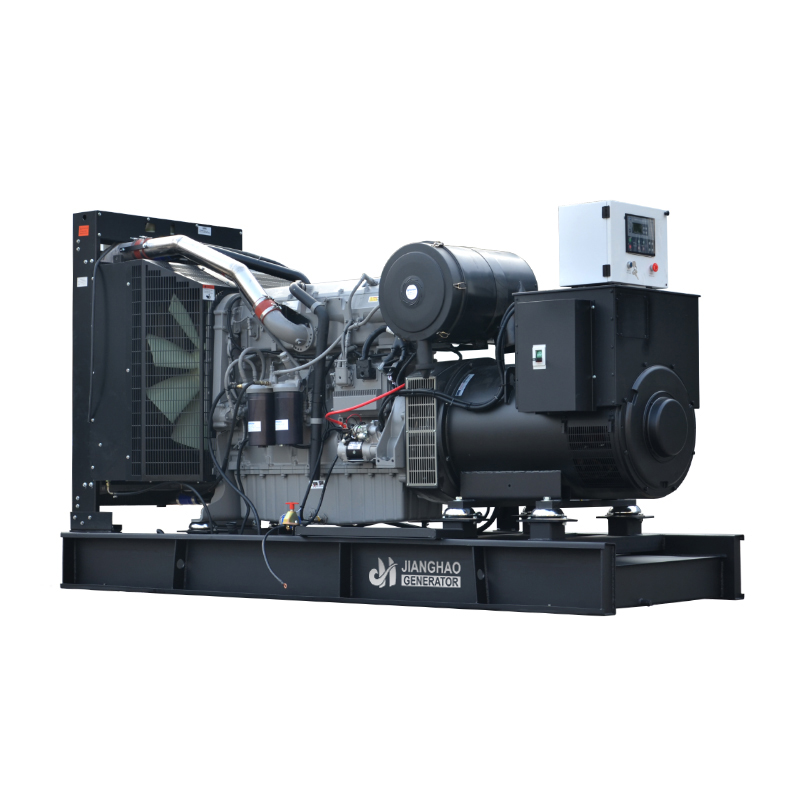
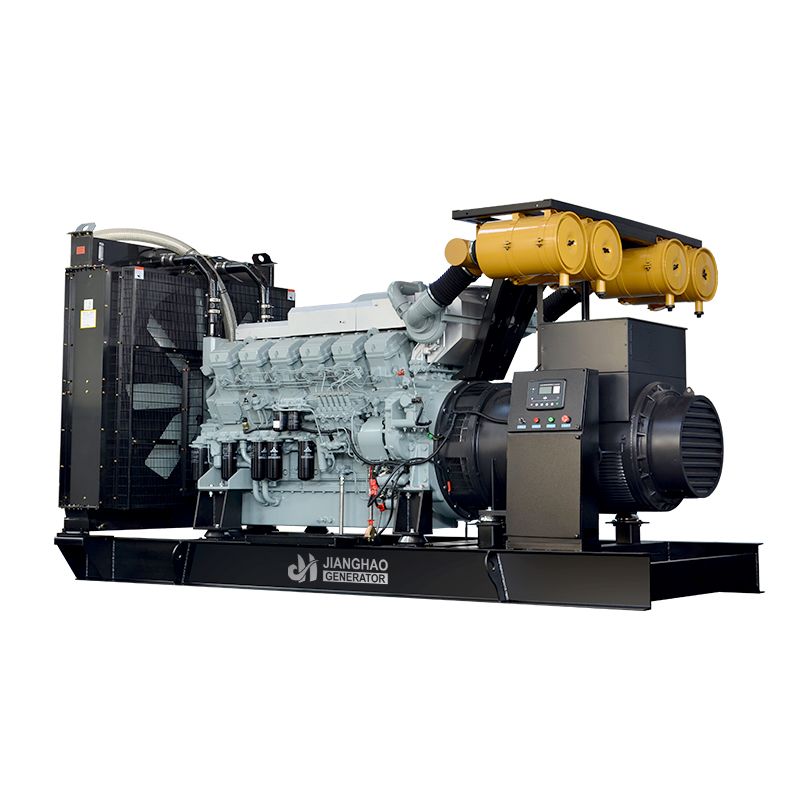
 Diesel Generator Sets from Jianghao with Wide Power RangeJianghao offers diesel gensets from 3kW to 3000kW in various configurations, including silent and container types, using trusted engines, suitable for industrial backup and mobile power needs.View Product →
The practical tradeoff is that diesel combustion produces particulate matter and nitrogen oxides. In nonattainment areas, diesel generators may require aftertreatment equipment or may be limited to emergency use. That is not a small issue for factories that must renew air permits or are located near residential boundaries. But from a pure reliability and load response perspective, diesel remains the default industrial choice.
When Natural Gas Should Be on Your Shortlist
Natural gas generators are not an exotic alternative anymore. They are common in industries where gas is already used for boilers, kilns, dryers, or process heating. If a factory has a utility gas line and the site permits a generator to consume gas on a continuous basis, a natural gas set can reduce operating cost and improve the environmental profile of the facility.
The biggest benefit of natural gas is fuel availability. A pipeline connection eliminates the need for on-site fuel storage, which reduces the risk of fuel contamination, water ingress, and diesel theft. Fuel delivery is automatic once the gas meter is installed. This matters for a plant that wants to avoid the operational burden of managing fuel inventory. It also matters when a factory is running for many hours per day, because a small diesel tank can be exhausted quickly during a prolonged grid outage.
Natural gas also delivers cleaner combustion in terms of particulates. There is no soot, no black diesel exhaust, and no fuel residue on equipment. For a manufacturing campus near a residential area or in a region with strict particulate limits, the visual and regulatory benefits can be significant. Natural gas equipment can be installed in an enclosed package with lower air permit requirements, but you still have to account for NOx emissions and methane slip depending on the engine design and local rules.
In a continuous production environment, a natural gas generator can be used as a primary power source rather than a backup. Some manufacturers use gas sets to run in parallel with the grid and take advantage of lower gas prices. This is called a demand charge application or distributed generation. The generator supplies a portion of the load, reduces utility import, and can be dispatched during peak tariff hours. The economics can be attractive if the gas tariff is low and the local utility allows parallel operation.
A natural gas set is also quieter in some cases because the combustion process is generally smoother at steady state. However, noise is more often determined by the enclosure than by the fuel. A well-designed sound-attenuated enclosure can bring both diesel and gas units to similar noise levels. If your manufacturing site requires a quiet solution for shift changes or night operations, consider a silent type generator set rather than choosing a fuel only for noise reasons.
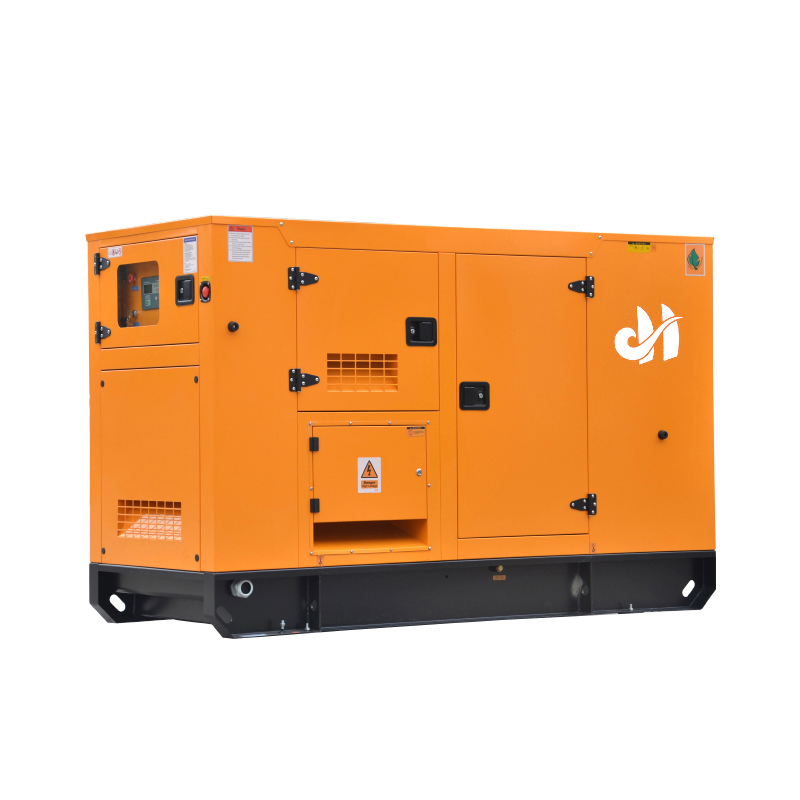
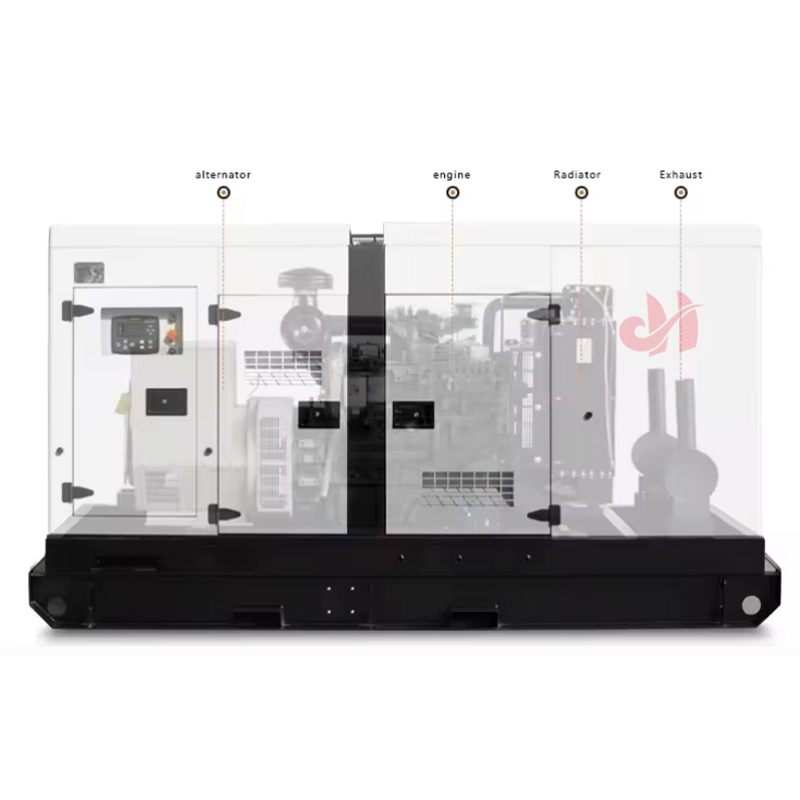 Silent Generator Sets with Soundproof EnclosureJianghao's silent type generator sets feature a robust 2mm steel enclosure with multi-layer soundproofing, providing noise levels as low as 70-75dB at 1 meter, ideal for noise-sensitive environments.View Product →
The risk with natural gas is that the utility line may not be sized for a generator, especially if the existing gas service is only for a smaller heater. The generator will have a high gas demand, and the utility needs to confirm that the pressure and flow are adequate. If the available gas pressure is too low, you need a gas booster or a different gas engine configuration. That adds equipment and complexity to the project.
When the decision is made to use natural gas, the product range is still broad. A manufacturer that offers natural gas generator sets can supply a unit rated for the site's voltage and control requirements. The key is to select a gas engine that matches the speed, load step, and altitude conditions of your factory. Gas engines are not all the same; some are built for continuous baseload, while others are less tolerant of high ambient temperatures and rapid load swings.
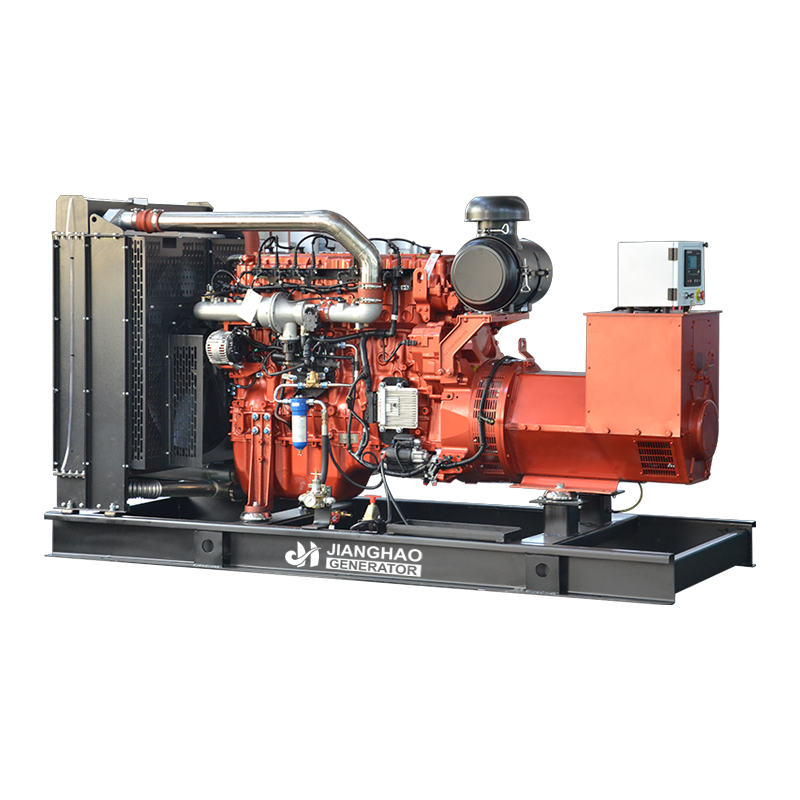 Natural Gas Generator Sets from Jianghao for Cleaner PowerJianghao manufactures natural gas generator sets with a wide power range and engine options, offering a reliable alternative to diesel for continuous baseload and emergency backup applications.View Product →
Total Cost: Capital, Fuel, and Operating Expenses
Cost is often the first question a plant manager asks. The honest answer is that a simple "diesel is cheap" or "gas is cheap" statement is not useful. You need to compare the total cost of ownership over the expected project horizon. That includes the initial generator set, the fuel infrastructure, the auxiliary systems, the installation labor, the annual maintenance, and the fuel consumed under real load patterns.
Diesel generator sets generally have a lower purchase price than natural gas units of the same power rating. A diesel engine is built around a more standard combustion cycle and a mature supply chain. The gas engine, especially an industrial lean-burn engine, has more components such as gas carburetion, catalytic converters, ignition systems, and more developed control logic. That is why natural gas sets often carry a premium on the initial equipment quote.
Fuel price is where natural gas can win. Natural gas is often cheaper per MMBtu than diesel, but the consumer price depends on local tariffs, peak demand charges, and the energy content of the supplied gas. If a factory already purchases gas under an industrial contract, the incremental cost for the generator may be lower than purchasing diesel fuel at a retail pump price. However, gas is not always cheap; in winter or during demand spikes, industrial gas prices can rise significantly.
Fuel efficiency is where diesel can win. A diesel engine generates a kilowatt-hour with a lower input of thermal energy in most cases. The approximate heat rates for large industrial diesel generator sets are often 8,500 to 9,500 Btu per kWh. Lean-burn natural gas generator sets can be in the 10,000 to 12,000 Btu per kWh range. This means a natural gas unit needs more fuel energy to produce the same electrical output. When you multiply a higher heat rate by a potentially lower fuel price, the result is site-specific and sometimes not as one-sided as expected.
To compare the fuel costs, you should use your own local prices and not a national average. A simpler method is to ask each generator supplier for an estimated fuel consumption in the operating hours you plan to run. Then multiply by your actual delivered fuel cost. For a factory that runs a standby generator for 100 hours per year, the fuel cost difference is usually minor. For a plant that runs a gas generator for 6,000 hours per year, even a small cost difference per kWh can create a serious financial impact.
| Parameter | Diesel Generator | Natural Gas Generator |
| Initial equipment cost | Lower for the same power rating and enclosure | Higher due to gas carburetion, ignition, and control complexity |
| Fuel cost per energy unit | Higher per MMBtu under most regional conditions | Lower per MMBtu when industrial gas tariffs are available |
| Fuel efficiency | Lower Btu per kWh over a broad operating range | Higher Btu per kWh, especially at partial load |
| On-site fuel storage | Bunded tank, fuel polish, water and bacteria monitoring | No storage required if connected to utility gas line |
| Load step acceptance | 80 to 100 percent block load in many industrial sets | 60 to 80 percent for many lean-burn gas engine packages |
| Maintenance intervals | Longer intervals for oil, filters, and injector service | Shorter intervals for spark plugs, ignition, and valve service |
| Air emissions | NOx, particulate matter, aftertreatment may be required | NOx and methane slip, little particulate matter from combustion |
| Typical long-term reliability | Proven under extreme block loads and variable duty | Good for steady baseload, less proven for aggressive starts |
Fuel Storage and Site Constraints: The Hidden Cost
Many procurement decisions fail because site constraints are ignored. A generator may meet the kw rating, but the site cannot support the fuel system or the enclosure. This is especially true in older manufacturing plants where the utility tie-in is at the back of the property, and the local fire code requires distance between the fuel tank and the building.
For diesel, you need a storage tank, a containment area, a fill point, a level monitoring system, and possibly a fuel polishing loop. The tank should be sized for the expected autonomy time. If a plant has a critical process load of 1,000 kW and wants 24 hours of backup, the fuel consumption at full load could be thousands of liters. Storing that much diesel requires space, permits, and a spill prevention plan. Fuel management is also a maintenance task: diesel can degrade, absorb water, and support microbial growth if it sits unused for long periods. A regular fuel maintenance program is not optional for critical facilities.
For natural gas, the main site constraint is the gas supply pipe. The generator needs a specified gas flow and pressure at the distribution rail. If the pipe is undersized, the generator may derate or fault when the load increases. In a manufacturing plant, the process equipment may already be consuming gas, so the generator must be connected to a separate gas line or a dedicated branch with proper pressure regulation. This is an engineering task that should be defined during the design phase, not after the generator arrives.
If no utility gas line exists, natural gas can be supplied as compressed natural gas or liquefied natural gas. CNG requires a high-pressure storage system and a vaporizer, and LNG requires cryogenic storage. These options add significant capital cost and require operator training. For most factories, CNG or LNG is only competitive when the annual operating hours are very high and the environmental performance or fuel price savings justify the complexity.
Diesel also has advantages in extreme settings. A factory in a remote location may not have access to a gas pipeline, but it can arrange diesel deliveries from a reliable supplier. If the plant is in an area with severe cold weather, diesel fuel can be treated for low-temperature operation. Natural gas, on the other hand, may have issues with gas pressure, condensate, and regulator icing in cold conditions unless the system is designed for it.
Efficiency Under Real Manufacturing Loads
Manufacturing loads often run far below the generator's rated capacity. A 1,000 kW generator may be sized to cover peak load, but the average factory load might be only 500 to 700 kW. The generator will spend many hours in partial load. Understanding efficiency at partial load is more important than full-load efficiency in many applications.
Diesel engines generally have a flatter fuel consumption curve. At 50 percent load, a diesel generator may consume about 60 to 70 percent of the fuel it would consume at 100 percent load. This means the specific fuel consumption per delivered kilowatt-hour, while somewhat higher than at full load, does not increase dramatically. Diesel generators are therefore practical for variable loads and for applications where the generator sometimes runs at light load.
Natural gas engines, especially some lean-burn designs, are less efficient at partial load. When the load drops, the air-fuel ratio needs to be adjusted, and the control system may burn more fuel per kWh to maintain stable combustion. For a plant that runs a gas generator at partial load for long periods, the operating cost may be higher than a simple full-load calculation would suggest.
This is why load profile studies are valuable. A good study will record the actual kW, kVA, power factor, and motor-starting events over a representative week. It will show not just the peak load but also how often the generator sits at 30 percent, 60 percent, or 90 percent load. That data helps determine whether the generator should be a diesel set, a gas set, or a pair of smaller paralleled units.
If the plant has a highly variable load, a common strategy is to size two or more generator sets and run them in parallel. At low load, only one set runs; at high load, both sets run. This improves the efficiency at part load because each generator is closer to its rated output. This approach is especially useful for natural gas generators where partial load efficiency is a concern. A paralleling system is a worthwhile investment when the generator will serve a fluctuating production load.
Emissions, Permitting, and Environmental Risk
Environmental regulations are becoming a bigger part of generator selection in manufacturing. A generator that fails to meet air permit requirements can delay commissioning, trigger fines, or force a redesign after purchase. The emissions profile depends on the engine type, the load profile, and the exhaust aftertreatment options.
Diesel generators have a well-known set of emissions characteristics. They produce nitrogen oxides and particulate matter. In many regions, emergency standby diesel generators are exempt from some permitting requirements if they are only used for rare outages. But they are still subject to reasonable operating limits, and some facilities must apply for a permit if the generator is used for non-emergency operations. If you plan to use the generator for peak shaving or demand response, you may need to install aftertreatment or choose an engine with lower emissions.
Natural gas engines produce significantly less particulate matter. The combustion process is cleaner, and there is no visible smoke. However, natural gas engines still produce NOx, and they can emit unburned methane. Methane is a potent greenhouse gas, and some environmental authorities are beginning to account for methane slip. In a site that is tracking Scope 1 or Scope 2 emissions, methane slip could be a hidden liability.
For manufacturing sites in nonattainment areas, natural gas can be a useful choice because it avoids the need for diesel particulate filters or selective catalytic reduction. However, low-NOx gas engines may have different maintenance needs and may be more sensitive to fuel quality. This is a tradeoff that should be discussed with the manufacturer and with a local air-quality consultant before the generator is purchased.
Another point to consider is the noise permit. A diesel open-frame set can produce 95 to 105 dB(A) close to the exhaust, while a high-quality silencer and enclosure can reduce that to 65 to 75 dB(A) at a distance. Natural gas sets are often perceived as quieter, but the enclosure design is usually the dominant factor. If the factory is near a residential boundary, the noise specification in the purchase order, not the fuel type, will determine whether you receive a compliant installation.
Maintenance, Lifespan, and Downtime Risk
Maintenance is where a generator decision can become expensive. The cost of a single unplanned shutdown after a generator failure often exceeds the annual fuel savings of a cheaper fuel option. So maintenance should be treated as a risk factor, not just an operating expense.
Diesel generator maintenance is familiar to most industrial facilities. The tasks include fuel filter changes, oil changes, coolant checks, battery maintenance, injector inspection, and regular load testing. A well-maintained diesel generator can be very reliable. In standby applications, diesel sets are typically load-tested under load once per month to confirm that the engine is ready for an emergency. This is a standard practice for mission-critical facilities.
The lifespan of a diesel generator set is often measured in operating hours. A heavy-duty industrial diesel engine can typically run 20,000 to 30,000 hours before a major overhaul, depending on load, speed, and maintenance quality. Some engines have been known to exceed 40,000 hours in carefully managed applications. For a factory that runs its generator only a few hundred hours per year, a diesel set can last for decades.
Natural gas generator maintenance is different. A lean-burn gas engine uses spark plugs, ignition coils, and a gas carburetor or injection system. These components require regular inspection and replacement. Spark plugs may need to be changed every 1,000 to 2,000 hours, depending on the engine. Valve lash and exhaust valve condition are also critical in gas engines. Oil change intervals for a gas engine can be shorter than for a diesel engine due to the combustion characteristics and the potential for oil contamination.
For continuous baseload applications, the maintenance schedule for a natural gas generator is manageable if the plant has a skilled maintenance team or a service contract. But for a plant that only has a diesel-trained technician, switching to gas can create a maintenance gap. A manufacturer's service network should be evaluated before purchase. If the manufacturer can support the site with spare parts, remote diagnostics, and field service, the risk is significantly lower.
The downtime risk is also linked to fuel availability. A diesel generator can run for hours after a grid outage, but if the fuel tank is empty, the unit stops. A natural gas generator has an unlimited supply from the pipeline, but if the gas utility experiences its own outage, the generator is useless. Some plants use a dual-fuel generator that can switch to diesel if gas pressure drops. Dual-fuel systems add to the initial cost, but they can be valuable for facilities that cannot accept interruption of their process load.
Voltage Dip, Transient Response, and Generator Sizing
Industrial motors, presses, welders, and compressors create transient loads. When a large motor starts, the generator experiences a short-term voltage dip and a frequency deviation. If the generator cannot recover quickly, the production line may trip, PLCs may reset, and motors may lose synchronization. The generator must therefore be sized to handle the worst starting load, not just the steady-state load.
A diesel generator set has a reputation for providing stronger transient response. The engine can rapidly increase fuel delivery and boost pressure to match the load demand. This gives the voltage regulator more time to maintain output. For example, a diesel generator set may hold voltage within 10 percent during a 100 percent block load application. Natural gas gas engines may have a larger initial voltage drop and need more time to recover when the load is applied abruptly.
This is not a universal rule, but it is a common pattern. The manufacturer's data sheet should include ISO 8528 transient performance data. If your plant has a motor-starting sequence, request a motor-starting study from the supplier. The study will identify whether a natural gas generator needs to be oversized to handle the inrush current. Over-sizing a gas generator can eliminate the operating cost advantage by increasing both the capital investment and the lower load efficiency losses.
In manufacturing, voltage quality is also a concern for CNC machines and other sensitive electronic equipment. A generator that produces a deeper voltage dip may cause nuisance trips. Some plants solve this by using a UPS system for critical controls. Others use a generator set with an oversized alternator to reduce the voltage dip. Both options should be considered in the overall system design.
Customized Configurations for Manufacturing Plants
Manufacturing facilities are rarely simple. A factory may need a generator that can be paralleled with the utility, a high-voltage output, a mobile package for an auxiliary site, or a compact sound-attenuated enclosure. These requirements are not always available in standard catalog products.
If your plant has a complex power distribution system, you may benefit from working with a manufacturer that can provide a custom generator set design. A custom design can define the electrical characteristics, the control system, the alarm points, and the physical arrangement before the unit is built. This helps reduce installation surprises and ensures the generator can be integrated with existing switchgear. The manufacturer can also advise on whether the generator should be a single large unit or a paralleled group of smaller units.
For plants that need to connect to a medium-voltage distribution network, a high voltage generator set package is often required. A high-voltage package includes a step-up transformer, a high-voltage breaker, protection relays, and controls that allow the generator to operate in parallel with the utility or to island the plant. This is a specialized area where the manufacturer's engineering capabilities matter more than the fuel type.
Another common requirement in manufacturing is the ability to operate multiple generator sets in parallel. Paralleling allows the plant to match generation to load, increase redundancy, and reduce the wake of a single large unit. If a plant has a continuous process that cannot tolerate a full shutdown, a paralleled system can be arranged so that maintenance on one set happens while the other set continues to feed the critical load. For both diesel and natural gas, a paralleling system adds complexity but also adds flexibility.
Mobile and self-lifting packages are useful when the generator must be moved between production halls or deployed to a temporary site. In some factories, a trailer-mounted generator is used as a backup while a permanent unit is under repair. The manufacturer can provide a mobile package with a self-lifting design so the plant can place the unit without a crane. This is not a core comparison topic between diesel and gas, but it affects the final selection because not every fuel type is available in every configuration.
A Practical Buying Checklist for Your Plant
Before you issue a purchase order, use the following checklist to avoid the most common mistakes. The list is intentionally practical and can be used as a review document during the procurement process.
- Define the operating mode. Is the generator for emergency standby, prime power, continuous baseload, peak shaving, or grid parallel operation? A generator that is used for emergency backup may have different emissions requirements and maintenance protocols than one used for daily production.
- Calculate the expected annual running hours. The annual fuel cost is only meaningful when you multiply the fuel consumption rate by the actual hours the generator runs. A 200-hour standby application will have a different fuel cost sensitivity than a 5,000-hour continuous application.
- Request a load profile. Measure or estimate the average load, peak load, power factor, and the starting kVA of the largest motor. Also consider whether a production line can be re-sequenced to reduce the starting load.
- Confirm fuel availability. Ask the gas utility whether the existing pipe pressure and flow can support the generator. If the gas line is too small, the natural gas option may require a dedicated line and a pressure booster. For diesel, confirm the tank size and the annual fuel delivery contract.
- Check local permits. Identify whether the generator can be used for limited non-emergency events, whether aftertreatment is required, and what noise limit applies at the property line. Include these requirements in the specification before requesting a quote.
- Evaluate maintenance access. Confirm that the facility has technicians trained to service the selected engine platform. If not, ask the supplier about the availability of a local service contract and the lead time for replacement parts.
- Compare total cost of ownership. Ask each supplier for a lifecycle cost estimate that includes the generator, fuel system, installation, controls, maintenance, fuel consumption, and a projected residual value. A slight difference in quoted power rating can change the cost calculation substantially.
- Review the manufacturer's product portfolio. A supplier that can provide multiple fuel types, power ranges, and enclosure options gives you more flexibility if the project changes. A supplier with a narrower product range may force you into a suboptimal configuration.
This checklist should be filled out by the plant engineer, the operations manager, and the procurement lead. The decision is not only technical; it also affects annual budgets, staffing, and compliance. Bringing the right people into the conversation early reduces the chance of a late change order.
Final Recommendation: Which Should Your Manufacturing Plant Choose?
If your plant is looking for a classic backup generator that may sit idle for most of the year and must reliably start after a sudden grid outage, choose diesel. Diesel offers a lower initial cost, a familiar service routine, strong load step acceptance, and the ability to store fuel on site. It is the safer choice for manufacturing facilities that are not already connected to an industrial gas line.
If your plant has a stable natural gas supply and the generator will be used for hundreds of hours each day as a primary or peaking unit, natural gas is worth serious evaluation. A natural gas generator can reduce particulate emissions, simplify fuel storage, and produce lower fuel costs per kWh when gas tariffs are competitive. The key is to verify the gas pressure, include a motor-starting study, and budget for the shorter maintenance intervals of a gas engine.
For many manufacturing facilities, the decision is not one or the other. A common arrangement is a diesel generator for emergency standby and a gas generator for grid peak shaving or continuous baseload. This gives the plant the reliability of diesel for short outages and the operating economics of natural gas for long-running applications. The two systems can share the same control philosophy and be integrated into the same switchgear.
A few final practical warnings: never select a generator based on a brochure rating alone. Always ask for the actual site performance data under your altitude, temperature, and load conditions. Never ignore the fuel storage or gas supply system, because that is where most project cost overruns happen. And never let a supplier change the fuel type of a quote without asking them to re-submit the transient performance data, the noise data, and the emissions data.
The generator is not the last thing you buy; it is the starting point for a power system that protects your production and your margin. When you choose with a clear eye on your actual manufacturing load profile and your site's fuel reality, you avoid the expensive mistake of picking the wrong fuel on paper and finding out in commissioning.