 English
 русский
 Español
 عربى
عربىWhat Can Cause a Diesel Generator Not to Start? 12 Common Faults and Fixes
Imagine a data center loses utility power, and the standby diesel generator cranks slowly, then stops. The controller shows “failure to start.” For a maintenance manager, this is the start of a long night. In our years of building and servicing diesel generator sets, we have found that this scenario almost never comes from a single complex failure. It comes from a small set of recurring faults that are easy to overlook.
Here is the bottom line: a diesel generator fails to start because one of the three starting conditions is missing. The engine must crank at sufficient speed, the cylinders must develop compression, and fuel must be injected at the right time. In addition, the safety circuit must allow the start sequence to run. This article walks through the common causes behind each condition and gives you a practical troubleshooting order.
What a Diesel Engine Needs to Start
A diesel engine is different from a gasoline engine. There are no spark plugs. Instead, it relies on heat generated by compression. When the starter motor turns the crankshaft at a high enough speed, typically 150 to 300 rpm for most industrial engines, the air inside the cylinder is compressed hard enough to raise its temperature above the auto-ignition point of diesel fuel. Then fuel is sprayed into the cylinder and ignites.
That process requires three separate systems to work at the same time:
- A battery and starter circuit that can rotate the engine fast enough.
- A mechanical condition inside the engine that produces compression.
- A fuel delivery system that supplies clean, pressurized diesel at the correct moment.
The control panel and safety relays are also part of the chain. If any one of these systems is blocked, the controller may crank the engine but never send the start command, or it may refuse to crank at all. For most medium-power industrial sites, a 100-300 kVA diesel generator set uses a 24 V starting system, and the same fault logic applies to larger and smaller units.
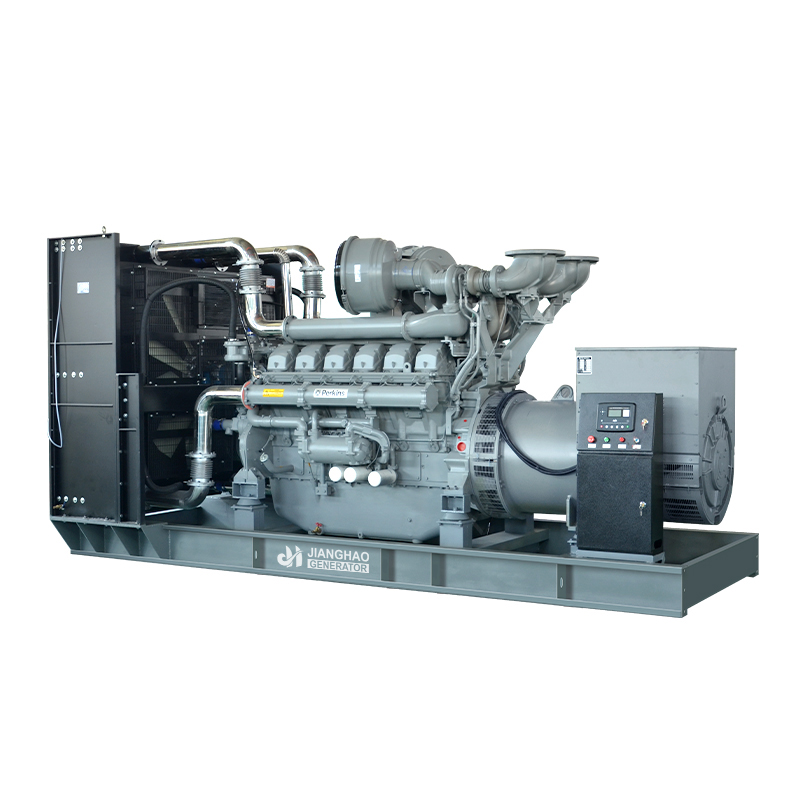
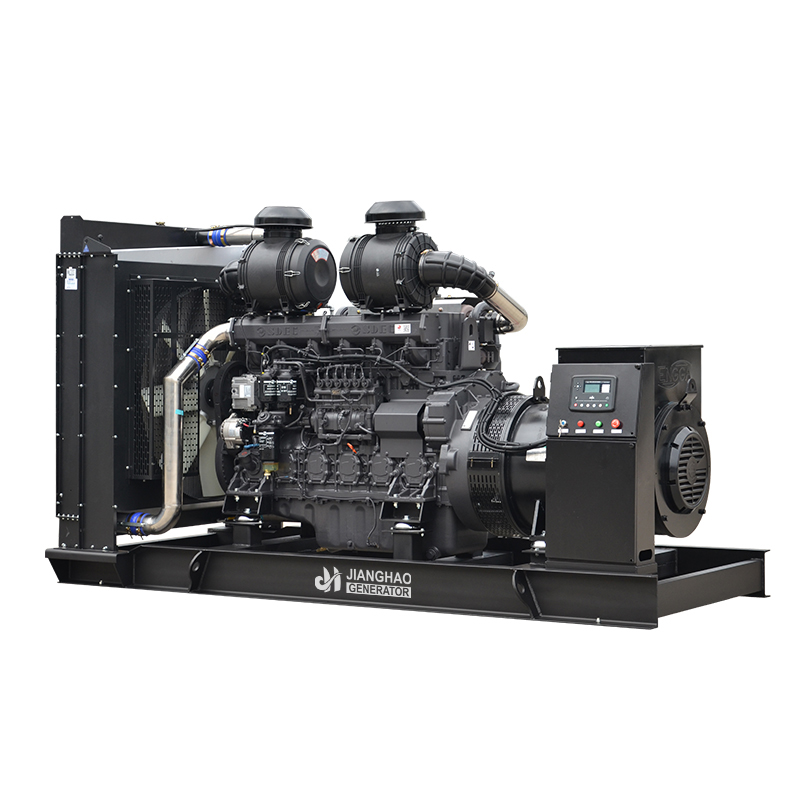
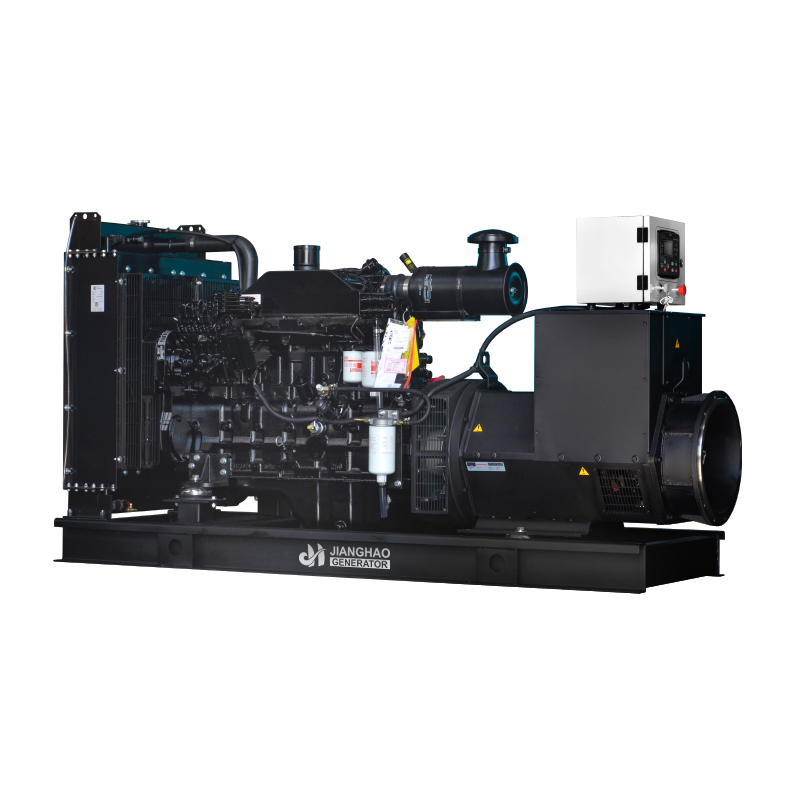 Custom 100-300kVA Diesel Generator Sets Suppliers, Manufacturers - Jiangsu JiangJiangsu Jianghao Generator Set Co., Ltd is China custom 100-300kVA Diesel Generator Sets suppliers and manufacturers, Optional brand:Cumm...View Product →
Battery and Cranking Circuit Faults
Battery problems are the most common cause of a diesel generator not starting. When the engine does not crank or cranks too slowly, start by checking the battery and the cables. A healthy 12 V battery should show a resting voltage of at least 12.6 V. On a 24 V system, that reading is 25.2 V. During cranking, the voltage should not drop below 9.5 V on a 12 V system, or 19 V on a 24 V system. If it drops lower, the battery is weak, the terminals are corroded, or the connections are loose.
Other elements in the starting circuit also cause failure. A defective start relay, a worn solenoid, a faulty battery disconnect switch, or a failing starter motor can all prevent the engine from reaching cranking speed. In some cases, a bad earth cable will allow the panel lights to come on but produce only a click from the starter. The starter motor on a medium industrial engine can draw 200 to 400 amperes while rotating the flywheel, so a high-resistance connection that looks clean at rest can still limit current.
| Symptom | Likely cause | Check |
|---|---|---|
| No crank, no click | Dead battery, open battery switch | Measure battery voltage, test switch continuity |
| Slow crank | Weak battery, corroded terminals | Measure cranking voltage drop, clean cables |
| Click but no crank | Starter solenoid or motor fault | Check solenoid power, inspect starter brushes |
If the engine cranks normally but still refuses to start, the problem is not in the battery circuit. Move to the fuel system.
Fuel Supply and Fuel Quality Problems
Even with a strong battery, a diesel generator that “cranks but will not fire” usually has a fuel delivery problem. The first things to check are the simplest: Is the day tank full? Is the manual fuel valve open? Does the electric fuel lift pump receive power? In many installations, a closed fuel valve or an empty tank is the entire story.
Next, look for contamination. Diesel fuel supports microbial growth when water is present. Bacteria form sludge that blocks filters and fuel lines. A blocked fuel filter starves the injection pump of fuel. Air in the fuel system has the same result. If you see bubbles in a clear primer bulb or fuel line, you need to bleed the system. Stored diesel also degrades over time; beyond about six to twelve months, oxidation can leave sticky varnish inside injection pumps and injectors.
Cold weather adds another failure mode. Diesel fuel contains paraffin wax that separates at low temperatures and clogs filters. If the generator is installed in a cold climate and the fuel used is not winter grade, starting can be impossible. For a generator that must start at minus 10 degrees Celsius or lower, we recommend a cold-flow-improved fuel and a block heater.
Finally, the high-pressure components matter. A worn injection pump, a stuck injector, or a leaking fuel return line can lower fuel pressure enough to prevent combustion. On modern common-rail engines, a fuel pressure sensor fault will also shut the engine down.
Safety Shutdowns and Protection Relays
Diesel generator sets are designed to protect themselves. If a safety switch detects low oil pressure, high coolant temperature, overspeed, or a failed charging alternator, the controller will not allow the unit to start until the fault is cleared. A common and easily missed cause is an emergency stop button left in the pressed position. Another is a low coolant level switch that is corroded or simply tripped because the expansion tank was topped off incorrectly.
Most controllers display an alarm code or a specific message. For example, “low oil pressure shutdown” or “fail to start” usually means the engine cranked for a set time but never fired. The controller has a start attempt limit, often three attempts, and then locks out the start sequence. You must manually reset the lockout after fixing the underlying issue.
One point that surprises many technicians: some oil pressure and coolant level switches are normally closed contacts. When the engine is not running, a normally closed low oil pressure switch is closed, which is exactly what the controller expects. If that switch has a bad wire or a broken internal contact, the controller sees an open circuit and believes the engine has low oil pressure before the cranking test even begins.
Sensors, Wiring, and Control Panel Logic
Modern diesel generators rely on electronic controllers and engine control modules. These systems monitor crankshaft speed, camshaft position, oil pressure, coolant temperature, and battery voltage. If the controller does not receive a speed signal from the crankshaft sensor, it assumes the engine is not spinning and will not continue the start sequence, even if the starter is turning the flywheel.
This situation often feels confusing. The starter cranks powerfully, there is no alarm, but the controller resets itself after a few seconds. The cause is usually a failed magnetic pickup or crankshaft sensor, a loose harness connector, or corrosion in the sensor plug. A technician with a multimeter can check the sensor resistance and AC output while cranking. In many cases, a magnetic pickup produces only one to five volts AC during cranking, and a small change in gap or a worn cable can make that signal undetectable.
Wiring from the automatic transfer switch is another weak point. If the generator is set to “automatic” mode, it needs a clean remote start signal from the transfer switch. A loose neutral wire, a partially disconnected terminal, or a blown fuse in the control panel can prevent that signal from reaching the generator controller.
Cold Weather and Air Intake Restrictions
Cold starts are a whole category of their own. When the ambient temperature drops, engine oil becomes thicker, making the starter work harder. The battery also loses capacity in cold weather, so the two problems combine to reduce cranking speed below the minimum needed for ignition. If the engine has air intake heaters or glow plugs, a failed heater preventing combustion can cause white smoke and no start.
Air filtration is easy to overlook, because the engine will crank. A severely clogged air filter creates strong intake vacuum, which can distort the airflow measurement and prevent the engine management system from delivering the correct fuel quantity. Check the air filter restriction indicator if one is fitted. In dusty environments, this check should be part of every scheduled maintenance interval.
A Field-Tested Troubleshooting Sequence
When you are standing next to a generator that will not start, follow this order. It moves from the most likely and cheapest to fix, to the most involved.
- Read the controller display. Always start with the alarm history. It will often tell you exactly which safety circuit tripped.
- Check the emergency stop button and the mode switch. Make sure the stop button is released and the selector is in manual or automatic as required.
- Measure battery voltage at the battery and at the starter. This tells you whether you have a cable or connection problem.
- Confirm fuel level and open all manual fuel valves. Then listen for the fuel lift pump priming when the controller is powered.
- Prime and bleed the fuel system. If the unit has been serviced recently, air is a likely culprit.
- Inspect fuel filters and the water separator. A blocked filter stops fuel delivery regardless of pump pressure.
- Try to start with the load disconnected. A generator that fails under load but starts no-load often has a voltage or frequency issue on the ATS side.
- Retrieve engine diagnostic codes. For electronic engines, connect the diagnostic tool and look for crankshaft sensor, fuel pressure, or injection circuit faults.
If you have followed these steps and the generator still will not start, the next step is a mechanical test of the engine, including compression and valve lash, and a bench check of the high-pressure fuel pump and injectors. If your installation has unusual starting requirements, such as low-temperature enclosures or high-altitude derating, work with an engineer who can provide a custom generator set design that accounts for the specific ambient conditions.
How Preventive Maintenance Reduces Start Failures
Most start failures are preventable. A good maintenance plan does not need to be elaborate. Check the battery voltage and specific gravity weekly. Run the generator under load for at least 15 minutes once a month to burn off stale fuel and keep the alternator dry. Test the fuel for water and microbial contamination quarterly. Replace fuel filters and air filters on the schedule recommended by the engine manufacturer, and clean battery terminals and torque them to specification twice a year.
Also review the protection settings with a qualified technician. In our experience, several “no-start” calls come from an incorrectly set controller parameter or a float switch that was bypassed during a previous repair. If you are evaluating a new unit, a robust product design with well-documented maintenance points makes a real difference. For that reason, we build our diesel generator sets with accessible filters, labeled wiring, and standard industrial controllers, so your maintenance team can identify problems quickly rather than guess.
 OEM/ODM Diesel Gensets Manufacturers, FactoryAs China Diesel Gensets manufacturers and Diesel Gensets OEM/ODM factory, Jiangsu Jianghao Generator Set Co., Ltd. produce Diesel Genset...View Product →