 English
 русский
 Español
 عربى
عربىCan I Use Red Diesel in a Generator? Rules, Risks, and Better Options Explained
Short answer first: red diesel can go into a generator in some markets and not in others, and the deciding factor is almost never the generator itself. It is the site, what the set is backing up, and the jurisdiction the fuel is delivered in. A mine or a farm in the United States can legally run a standby set on dyed diesel. The same fuel in a UK data centre's standby generator has been an unauthorised use since 1 April 2022, and the penalty is calculated on fuel duty rather than on a small environmental fine.
Three questions settle the matter before a tanker is ordered: where the generator sits, what it protects, and who is buying the fuel. Get those wrong and you can be fined, lose the fuel, and in some cases lose the equipment it was standing in.
What Red Diesel Is, and What the Dye Actually Changes
Red diesel is gas oil with two additions: a red dye, most often Solvent Red 24, and in the UK and EU a chemical marker. The marker matters more than the colour. It is detectable at a few parts per million, so topping up a tank of dyed fuel with clear diesel does not make that tank legal. Enforcement laboratories can still identify it after dilution, and the dye stains filters and fuel lines long after the last delivery.
Chemically, the base fuel is usually close to road diesel. Cetane, energy content and lubricity are broadly comparable, and a generator does not run differently simply because the fuel is red. The differences that matter are the duty rate and the permitted use. Rebated fuel carries a lower duty than white diesel, and the rules exist to protect that gap.
One technical exception is worth checking before anything else. In parts of Africa, Asia and the Middle East, rebated gas oil is still sold at higher sulphur levels than road diesel. A modern engine with selective catalytic reduction and a diesel particulate filter can be damaged by high-sulphur fuel, and the repair will not be covered by warranty. Ask for the sulphur content in ppm rather than for "diesel".
Where Red Diesel Is Still Legal in a Generator
The rules are set nationally, not by engine type, and they normally follow the activity rather than the equipment. In the United States, dyed diesel is the everyday fuel for off-road equipment, and a standby generator on a construction site, farm or mine is off-road equipment. It becomes a problem only when that fuel reaches a vehicle running on public highways. In the European Union, marked gas oil rules differ by member state, and several restrict it to agriculture and forestry. In the UK, the rebated fuel concession for most off-road machinery and commercial power generation ended on 1 April 2022, with a limited transition window for fuel already sitting in storage tanks that has since closed.
| Market | Dyed diesel in a standby generator | Main condition | Typical consequence of misuse |
|---|---|---|---|
| United Kingdom | Not permitted for most commercial power generation since 1 April 2022 | Limited exemptions such as agriculture, rail and non-commercial power | Unpaid duty assessment, penalty, seizure of fuel and equipment |
| United States | Permitted on off-road plant, including standby generators | Never on public highways; keep delivery records | Per-gallon IRS penalty plus back tax |
| European Union | Varies by member state | Often restricted to agriculture, forestry and rail | National duty penalties and fuel seizure |
| Many other markets | Commonly permitted off-road | Local marking, permit and reporting rules | Varies widely, from warning to prosecution |
The Penalties, and Why Duty Evasion Is the Real Risk
Using rebated fuel where it is not allowed is treated as fuel duty evasion, not as a minor technical breach. In the UK, the tax authority can assess the unpaid duty, add a penalty, and seize both the fuel and the equipment it was used in. A generator running on the wrong fuel is, in practical terms, evidence with a serial number.
The knock-on effects are frequently more expensive than the fine itself. Insurance cover can be refused if the fuel was not compliant with the law or with the engine manufacturer's specification. Engine warranty terms typically require fuel meeting EN 590 or ASTM D975, with defined sulphur and water limits, and an off-specification sample drawn from the tank is enough to close a warranty claim. For data centres, telecom sites and other clients under service-level agreements, a fuel compliance finding can also surface in audits and contract renewals, because the standby plant forms part of the client's own resilience evidence.
Leftover Stocks, Mixing and Tank Cleaning
If you were holding red diesel when the rules changed, the question becomes what to do with it. Suppliers at the time advised that existing stocks could be used until they ran out; the formal UK easement for fuel already in storage tanks ran only to 31 March 2023 and has closed. Unless a specific exemption applies to your site, treat any remaining dyed fuel as illegal for generator use.
Mixing is not a way out. Adding clear diesel to a red tank does not remove the marker, and it does not change the duty status of the volume already in the tank. The practical route is to have the tank drained, the sludge removed and the interior cleaned, then keep the disposal paperwork with the fuel records. A 2,000-litre bunded tank is not a small asset, and a contaminated one will keep causing filter problems long after the legal issue is settled.
Fuel Quality: What Actually Fails on a Standby Set
Standby generators are the hardest duty cycle for stored fuel. A data centre set may run 50 to 200 hours a year, which means the fuel sits for months between tests. EN 590 diesel has a practical storage life of roughly 6 to 12 months, and up to 24 months with a stabiliser and disciplined housekeeping. Beyond that, oxidation, water ingress and microbial growth take over.
Biodiesel content is the main culprit. Most European and UK clear diesel contains up to 7 percent FAME, which is hygroscopic and provides a food source for bacteria and fungi. The result is dark sludge, blocked filters, corroded injectors and a set that fails on the one day it is needed. Water is the second factor: condensation in a part-full tank collects at the bottom, and a fuel and water separator only removes what reaches it.
For any critical standby installation, test the fuel annually for water, sediment, microbial contamination, cetane and sulphur, polish the fuel periodically, and clean the tank every three to five years. On high-sulphur dyed fuel, add the exhaust aftertreatment catalyst to the list of components at risk.
Alternatives: Clear Diesel, HVO and Natural Gas
If red diesel is unavailable or simply not permitted, the alternatives are narrower than they first appear. Clear diesel, also called white diesel or DERV, is the default choice. It is fully legal, it matches the engine specification, and it is the only fuel most manufacturers warrant without extra paperwork. It costs more per litre because duty is paid.
HVO, hydrotreated vegetable oil, is a drop-in replacement meeting EN 15940. It stores longer, performs better in cold weather and carries a much lower carbon footprint. Check the engine manufacturer's approval letter first, and check local supply, because availability rather than chemistry is usually the limiting factor.
Natural gas is the structural alternative. Where a site has a gas supply, a gas generator set removes the duty question entirely, and the fuel does not degrade in a tank. Jianghao builds Cummins, Weichai and Yuchai gas sets alongside its diesel range, which means the fuel decision can be made before the engine platform is fixed.
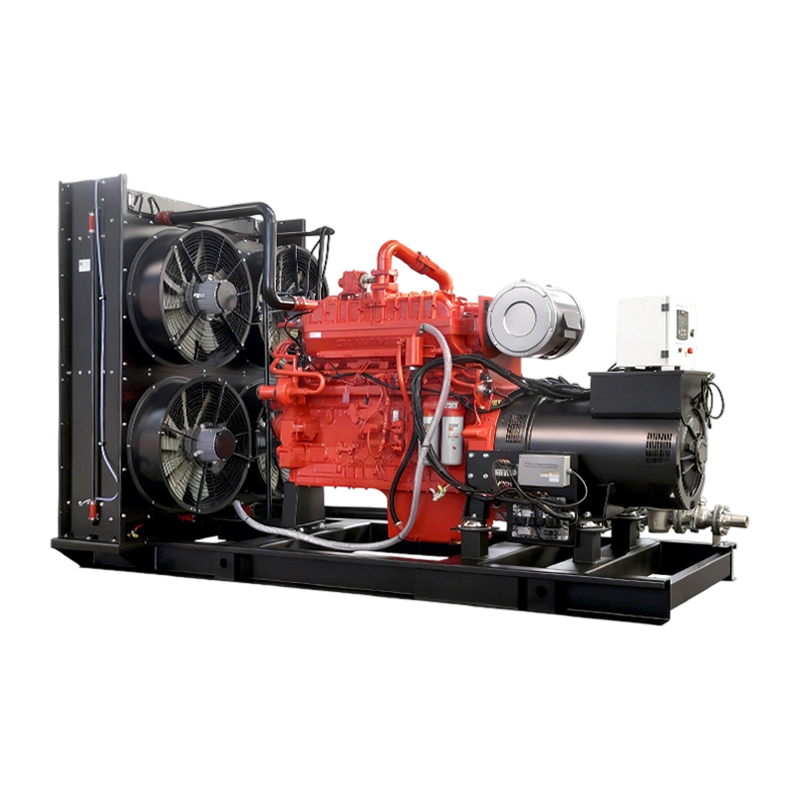 Cummins Natural Gas Generator Sets for Continuous or Backup PowerNatural gas generator sets powered by Cummins engines, with 300–1200 kW continuous output and multi-fuel options for industrial, commercial, and remote applications.View Product →
Sizing and Specifying Around the Fuel You Can Legally Burn
Fuel rules should be settled before the set is sized, because they change the specification. If a site may only burn clear diesel, budget for a compliant storage and delivery arrangement: a bunded tank with leak detection, a day tank close to the engine, and a fuel polishing loop. If dyed fuel is permitted, as on many farms and mine sites, the tank arrangement can be simpler, but the record keeping has to be better, because the burden of proof sits with the operator.
Power range follows load, not fuel. A small pumping station or telecom cabinet might sit in the 8 to 100 kVA band, a factory or regional hub in 100 to 300 kVA, a mine or hospital in 300 to 1000 kVA, and a data centre hall or heavy industrial plant above that. Sizing to the largest expected step load, and keeping continuous load below roughly 80 percent of rating, is what keeps a set dependable across a fifteen-year life. For plants where one machine is not enough, multi-unit parallel systems let two or three smaller sets share the load and provide redundancy without a second full-capacity unit on standby.
Enclosures, Tanks and Site Layout
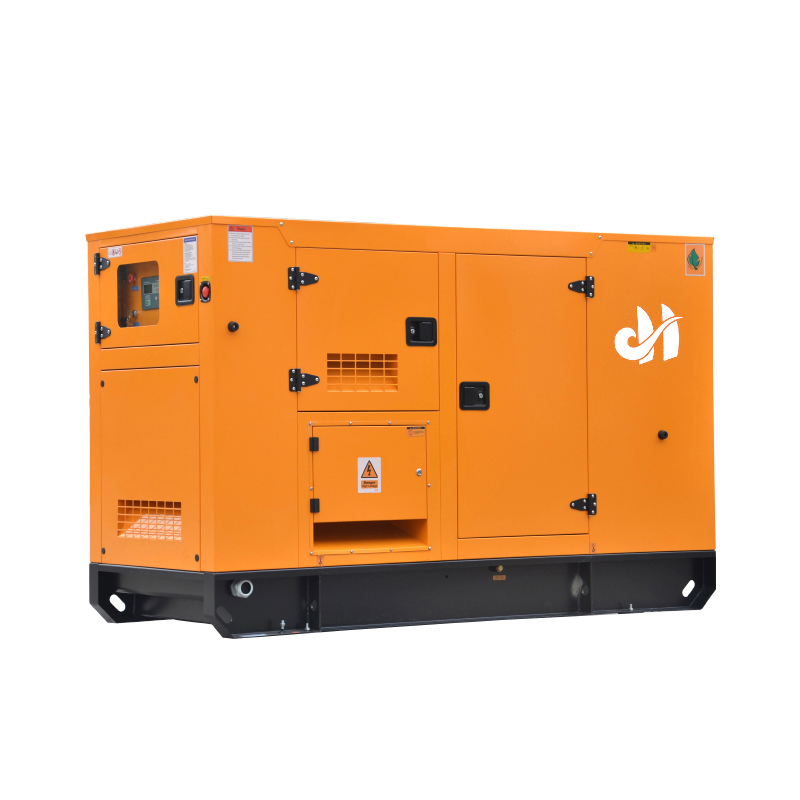
Where the generator sits decides the enclosure and the fuel installation. Open-frame sets are the cheapest to buy and the easiest to service, but they need a weatherproof plant room and they are loud. Silent canopies bring noise down to levels acceptable beside hospitals and housing. Containerised sets combine the enclosure and the transport frame, which suits sites where the plant room is a container and where the set may need to move later; a site guide to silent, open-frame and containerized diesel generator sets sets out the trade-offs in more detail.
Fuel storage follows the same logic. A containerised set with an integrated tank is convenient but limited in autonomy; a separate bulk tank gives days of runtime but needs bunding, vents, fire separation and tanker access. Whichever route you take, the tank has to be compatible with the fuel you are legally allowed to burn, because the storage is the part of the installation that inspectors look at first.
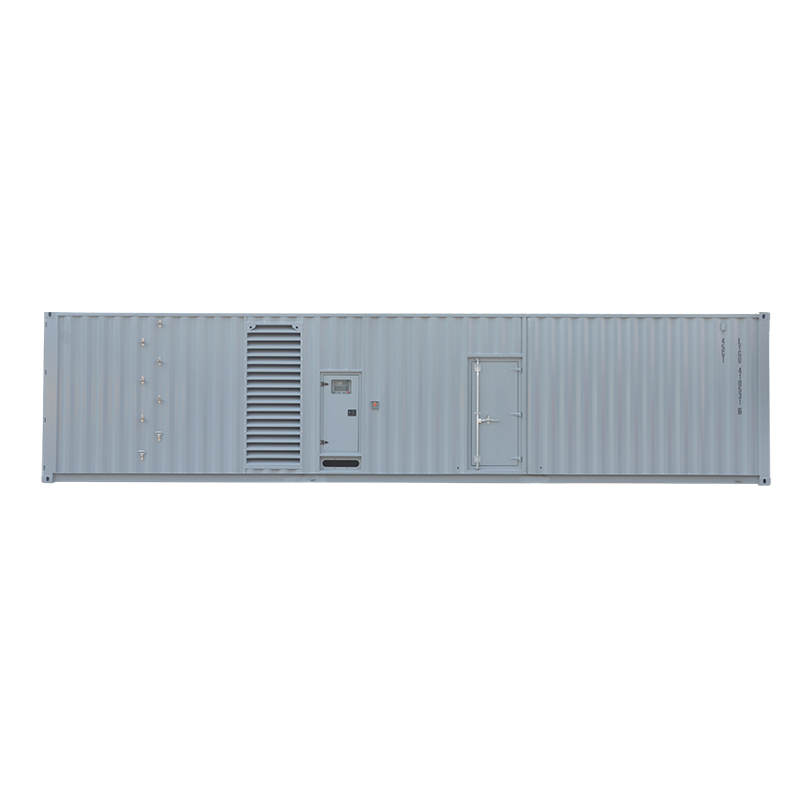 Containerized Diesel Generator Sets for Mobile and Remote PowerFor mobile or off-grid duty, these integrated 1000–4000 kVA sets offer weather protection, noise control, and standard-container transport.View Product →
A Practical Checklist Before You Fill the Tank
- Identify the jurisdiction that applies to the site, not the country where the generator was purchased.
- Confirm the activity: agriculture, rail, non-commercial power and similar uses are often exempt, while commercial standby generation usually is not.
- Read the engine manual for the required fuel standard, sulphur limit and maximum biodiesel content.
- Keep delivery notes and invoices together with the maintenance log; they are the first thing an inspector asks for.
- Test stored fuel annually and polish it if the set runs fewer than 200 hours a year.
- Never mix dyed and clear fuel in an attempt to use up a tank, because the marker survives dilution.
- Clean and document the tank after any change in fuel type, and keep the disposal records.
The honest answer to whether red diesel can go into a generator is: not by default, and never on the assumption that it must be fine because the engine starts and runs. The dye is a tax marker, not a technical grade, and legality depends on the site, the activity and the market. Settle that question first, then size, enclose and store the set around the fuel you are actually allowed to burn.