 English
 русский
 Español
 عربى
عربىWhy Choose Open Frame Diesel Generator Sets for Your Industrial Power Needs?
What Are Open Frame Diesel Generator Sets and How Do They Work?
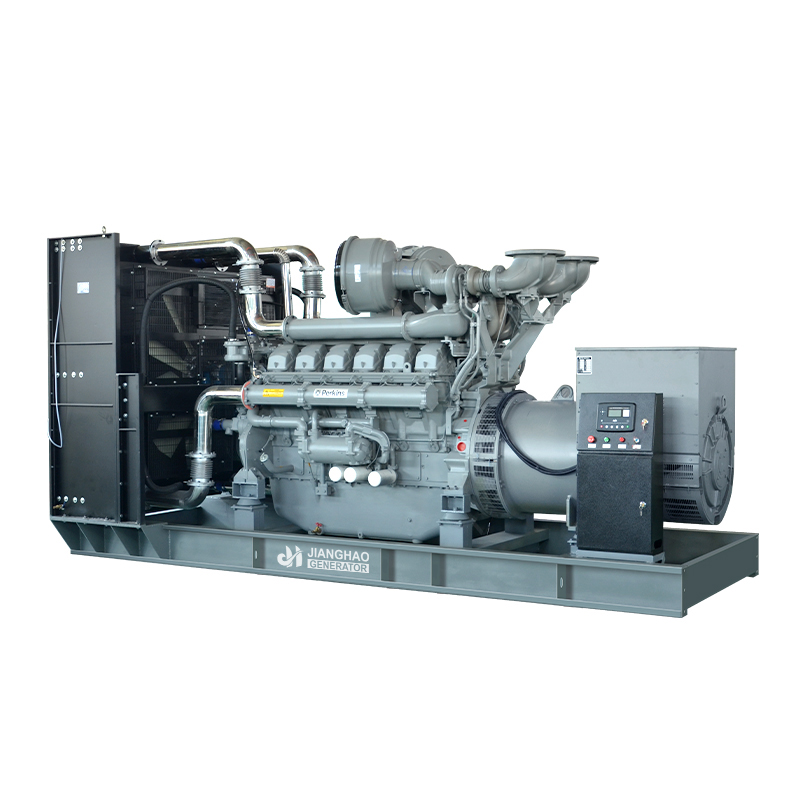
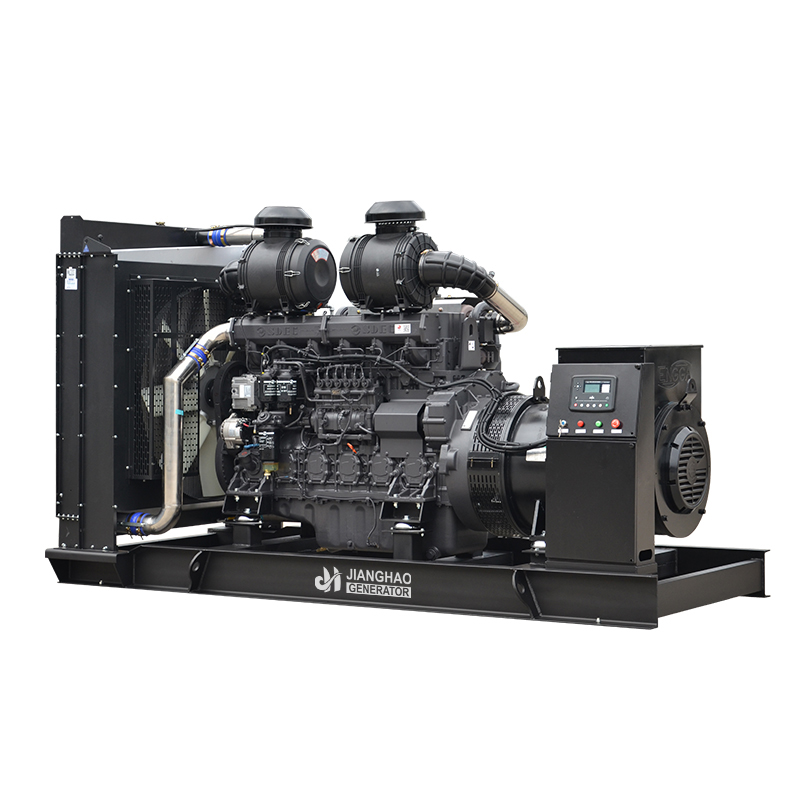
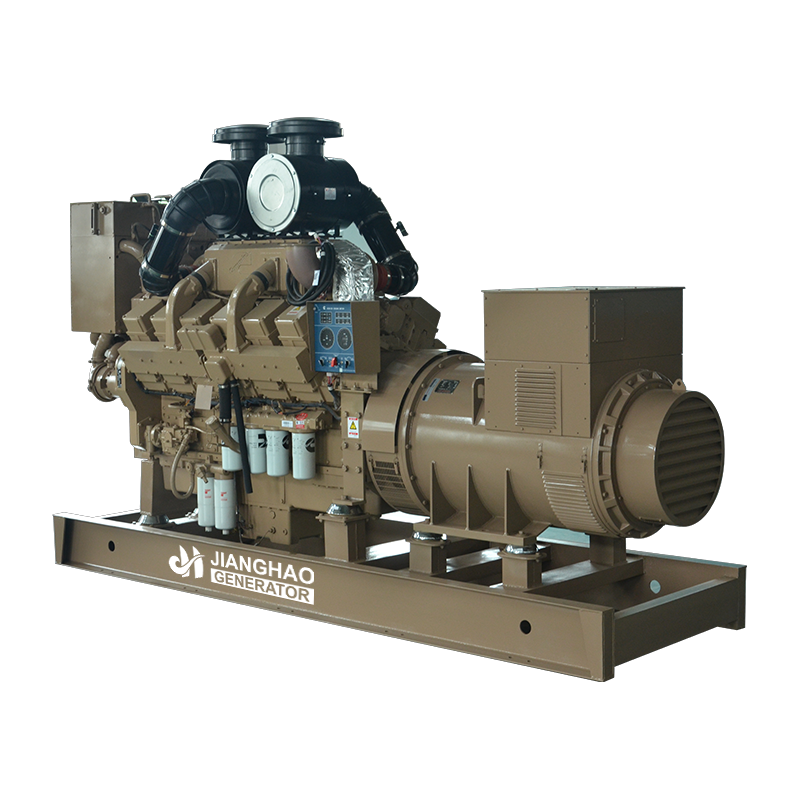
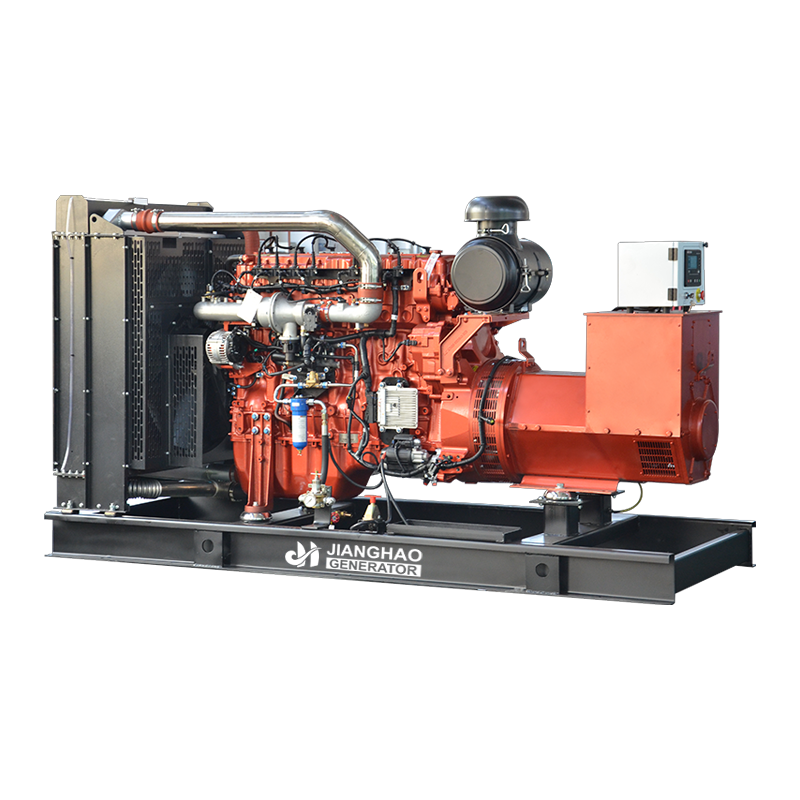
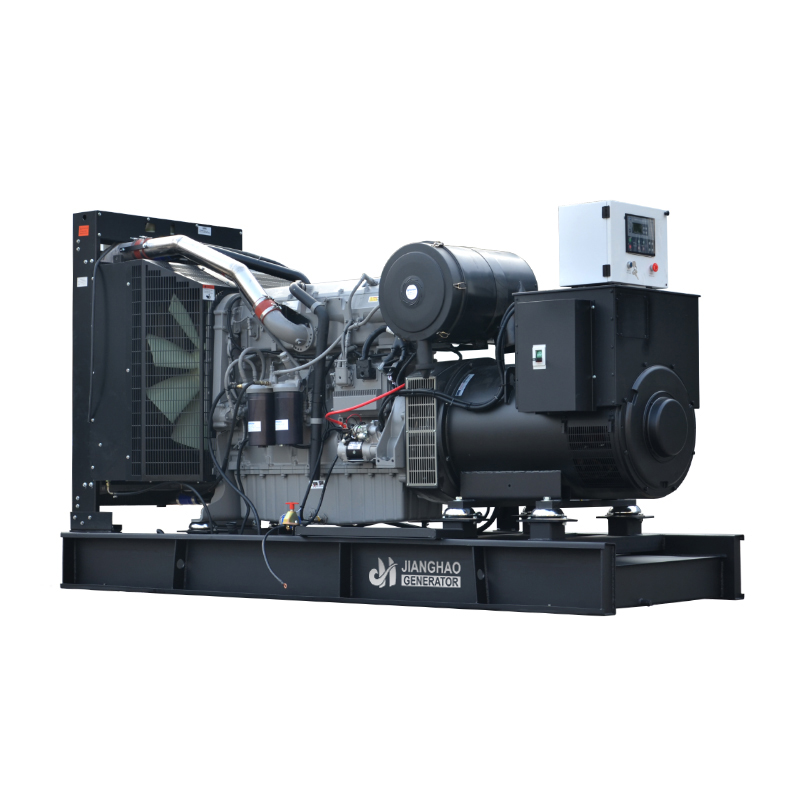
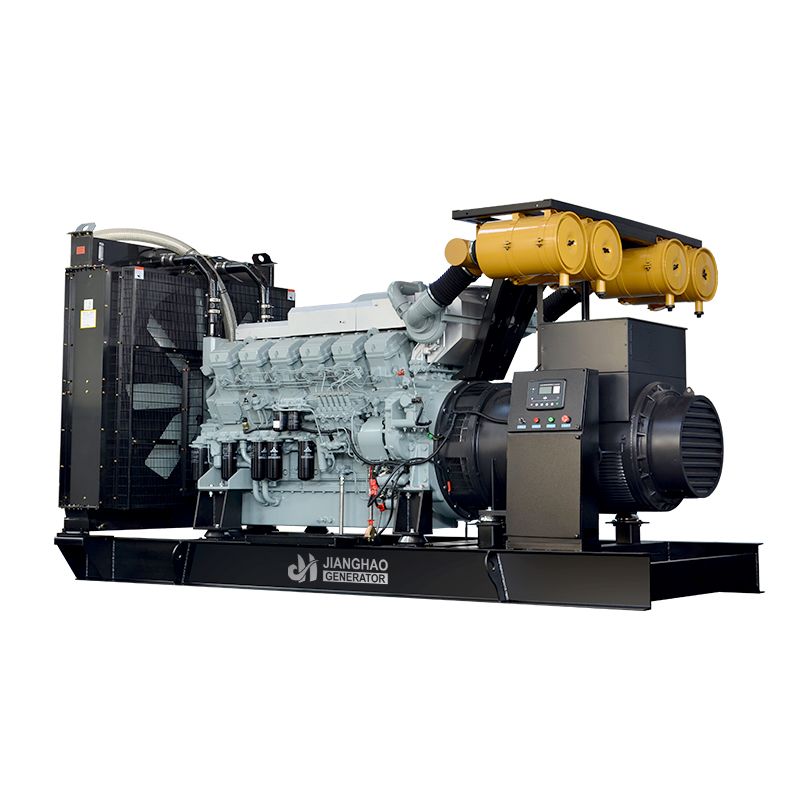
An open frame diesel generator set is a complete power generation system built on a rigid steel base. The key components are openly accessible, which simplifies installation, repairs, and routine checks. The diesel engine burns diesel fuel to produce mechanical energy, which is transferred via a flexible coupling or direct drive to the alternator (generator head). The alternator converts this mechanical energy into electrical energy, producing AC power at standard voltages (e.g., 120/240V single-phase or 277/480V three-phase).
The engine is equipped with a radiator and cooling fan to dissipate heat, a fuel system (fuel tank, filters, injection pump, injectors), a lubrication system, an air intake system, and an exhaust system (often with a simple muffler). The control panel includes gauges for oil pressure, coolant temperature, battery voltage, frequency (Hz), and voltage, as well as start/stop controls and circuit breakers. More advanced panels include digital controllers with automatic start/stop, remote monitoring, and protective relays.
The open frame design means that all these components are exposed to the ambient environment. This has several implications: the generator runs cooler because air circulates freely around the engine and alternator; maintenance is easier because technicians can access every part without removing panels; but the generator is also louder and vulnerable to weather, dust, and debris unless placed in a protected location or a separate housing.
Key Advantages of Open Frame Diesel Generator Sets
Why do industries continue to rely on open frame diesel generator sets despite the availability of enclosed and soundproof models? The advantages are compelling.
Superior Cooling and Heat Dissipation
Diesel engines generate intense heat during operation. Enclosed generators often require additional fans and larger radiators to manage heat buildup inside the enclosure. Open frame units benefit from natural airflow, reducing the risk of overheating, especially in hot climates or during extended run times. The engine and alternator run cooler, which extends component life and improves overall reliability.
Easier Maintenance and Serviceability
When a generator fails, downtime is expensive. Open frame designs allow mechanics to quickly reach the engine, alternator, belts, hoses, filters, and electrical connections without dismantling enclosures. Oil changes, filter replacements, belt adjustments, and alternator checks can be performed in minutes. This accessibility reduces labor costs and gets the generator back online faster.
Lower Initial Cost
Because open frame generators lack soundproof enclosures, base fuel tanks (though often included), and complex ventilation systems, they are significantly less expensive than equivalent enclosed or silenced models. For a given power rating (e.g., 100 kVA), an open frame unit can cost 20–40% less. This makes them attractive for budget-conscious projects or for applications where noise is not a concern.
Open frame diesel generator sets also have simpler construction, which leads to fewer components that can fail. The absence of a soundproof housing means no doors, latches, gaskets, or sound-absorbing foam to degrade over time.
Lighter Weight and Compact Footprint
Without a heavy steel or aluminum enclosure, open frame generators are lighter and take up less floor space. This is crucial for mobile applications – mounting the generator on a trailer, a truck bed, or a flatbed. For stationary installations in machine rooms or outdoor enclosures, the compact size allows more flexible placement.
High Power Density for Industrial Use
Open frame diesel generator sets are available in a wide power range, from small 10 kVA units for farm shops to massive 3000 kVA units for mining operations and data centers. For high-power applications, open frame is often the only practical option because enclosures for very large generators become prohibitively expensive and heavy.
These advantages make open frame units the default choice for prime power in remote areas, continuous industrial operation, and standby applications where noise regulations are lenient.
Ideal Applications for Open Frame Diesel Generator Sets
The versatility of open frame diesel generator sets means they are found in a diverse range of industries. Below are the most common applications.
Construction and Earthmoving: On construction sites, power is needed for tools, lighting, pumps, and temporary offices. Open frame generators provide rugged, portable power that can withstand dust, vibration, and rough handling. They are often trailer-mounted and moved between locations.
Agriculture and Farming: Farms use open frame generators to power irrigation pumps, grain dryers, ventilation fans, milking equipment, and workshop tools. Diesel is readily available, and the open design resists dust and chaff.
Manufacturing and Industrial Plants: Factories use large open frame sets as standby or prime power. They are installed in dedicated generator rooms or outdoor fenced areas. The open design allows easy integration with plant cooling systems.
Mining and Quarrying: Mines operate in remote locations with poor grid access. Open frame diesel generator sets provide primary power for drills, conveyors, crushers, and camp facilities. Their ruggedness is essential in dusty, harsh environments.
Oil and Gas: Drilling rigs, pumping stations, and refineries use open frame generators for backup and remote power. Explosion-proof versions are available for hazardous areas.
Telecommunications and Data Centers: Although many data centers use soundproofed generators, some install open frame units in separate enclosures or basements where noise is not an issue. The focus is on reliability and serviceability.
Emergency Backup for Commercial Buildings: While many commercial buildings prefer silenced generators, open frame units are still used in areas without noise restrictions, such as industrial parks or rooftop installations.
In summary, if your application demands low cost, easy maintenance, high reliability, and you can tolerate the noise or place the generator away from sensitive ears, open frame diesel generator sets are an excellent choice.
How to Select the Right Open Frame Diesel Generator Set
Choosing the correct generator requires careful analysis of your power needs, operating environment, and budget. Follow this step-by-step approach.
Determine the power requirement (kVA or kW): List all equipment that will run simultaneously. Add the starting (inrush) currents for motors – they can be 3-6 times the running current. Use a power calculation sheet or consult an electrician. It is wise to add a 20-25% margin for future expansion. For example, if your total running load is 80 kW, select a generator rated at 100-120 kW (125-150 kVA).
Choose between single-phase and three-phase: Single-phase is typical for residential and small commercial loads (up to about 20 kVA). Three-phase is required for most industrial equipment, large motors, and HVAC systems. Most open frame diesel generator sets above 15 kVA are three-phase, but many offer single-phase or switchable options.
Consider the duty cycle: Prime power (continuous, high load factor) requires a generator rated for continuous operation with a 10% overload capability for short periods (e.g., 1 hour in 12). Standby power (occasional use, low load factor) allows a smaller engine because it will rarely run at full load. Most open frame sets are rated according to ISO 8528 standards: prime, standby, or continuous. Be sure to match the rating to your application.
Select the engine and alternator brands: Reputable engine manufacturers include Cummins, Perkins, Deutz, John Deere, CAT, Yanmar, and Kubota. Alternator brands: Stamford, Leroy-Somer, Mecc Alte, Marathon. While Chinese engines (e.g., Weichai, Yuchai) are cheaper, their parts availability and longevity may be lower. For critical applications, invest in established brands.
Fuel tank capacity: Open frame sets often come with a base-mounted fuel tank ranging from 8 to 24 hours run time at full load. For prime power, consider a larger external day tank or bulk storage.
Control panel features: Basic panels have analog gauges and manual start. Advanced digital controllers (Deep Sea, ComAp) offer automatic start on utility failure, remote monitoring (via GSM or Ethernet), data logging, and protective functions (low oil pressure, high coolant temperature, overspeed). For unattended or critical applications, invest in a digital controller.
Environmental and noise considerations: Open frame generators are loud – typically 90-105 dB(A) at 7 meters. If noise is a concern, you may need a soundproof enclosure or locate the generator far from occupied areas. Check local noise ordinances. For dust or rain, consider a simple shelter (roof and side screens) that still allows airflow.
Finally, always request a technical datasheet and compare specifications like fuel consumption (L/hr at 50%, 75%, 100% load), alternator efficiency, and warranty terms.
Fuel Efficiency and Operating Costs
One of the primary reasons industries choose diesel over gasoline or natural gas is fuel efficiency. Diesel engines convert a higher percentage of fuel energy into mechanical work. A modern open frame diesel generator set consumes approximately 0.3 to 0.4 liters of diesel per kWh produced (at full load). For example, a 100 kW generator running at 75% load (75 kW) would burn about 75 * 0.35 = 26 liters per hour. At a diesel price of $1.00 per liter, the hourly fuel cost is $26. By comparison, a natural gas generator may use 0.4-0.5 cubic meters per kWh, often cheaper but less efficient and requires gas supply.
Fuel consumption is not linear; generators are most efficient at 70-85% load. Running a large generator at very low loads (under 30%) causes "wet stacking" – unburned fuel accumulates in the exhaust, leading to carbon deposits and reduced engine life. Therefore, size the generator appropriately to avoid chronic underloading.
To estimate your annual fuel cost, multiply the average load in kW by hours of operation per year, then by the specific fuel consumption (e.g., 0.35 L/kWh), and then by fuel price. For prime power applications, fuel is the largest operating cost – sometimes exceeding the purchase price within a few years. Investing in a more efficient engine pays off quickly.
Installation and Site Requirements for Open Frame Generators
Proper installation ensures safety, performance, and longevity. Here are the critical requirements.
Foundation: The generator set must be placed on a level, non-combustible concrete pad or steel base. The pad should extend beyond the generator footprint to allow access. For outdoor installations, ensure the pad is above grade to prevent water pooling. Use vibration isolators (rubber pads or spring mounts) between the generator and foundation to reduce vibration transmission.
Clearance for airflow: The engine radiator requires adequate airflow for cooling. Leave at least 1 meter (3 feet) clearance on the sides for air intake and 1.5-2 meters (5-6 feet) on the radiator discharge side. Do not point the hot air discharge towards another generator or towards combustible materials.
Exhaust system: The exhaust must be routed safely away from windows, doors, and air intakes. Use insulated flexible sections to connect the engine manifold to the rigid exhaust pipe. The pipe should be supported independently of the engine. Install a rain cap or gooseneck to prevent water entry. For indoor installations, the exhaust must vent to the outside with proper backpressure calculations.
Fuel supply: If using an external fuel tank, ensure it is placed at the same level or below the engine injection pump (gravity feed is not recommended for diesel). Use approved fuel lines, filters, and a fuel transfer pump if needed. Install a fuel shutoff valve for safety.
Electrical connections: Connect the generator to the building electrical system via a transfer switch (for standby) or to a load panel (for prime). Use properly sized cables and conduit. The neutral must be bonded to ground only at the generator or only at the service entrance – never both. Consult local electrical codes (NEC, IEC).
Lightning and surge protection: Install surge arrestors on the generator output and ensure the frame is properly grounded to an earth rod.
For mobile (trailer-mounted) open frame diesel generator sets, ensure the trailer has stabilizers, proper towing lights, and brakes if required.
Maintenance Best Practices for Long Life
Open frame diesel generator sets are designed for easy maintenance, but neglect is the leading cause of failure. Follow this schedule to maximize reliability.
Daily (before each start): Check the engine oil level, coolant level, and fuel level. Inspect for leaks (oil, fuel, coolant). Check the air filter restriction indicator. Listen for unusual noises. Record running hours and load.
Every 100-250 hours (or weekly): Change engine oil and filter. Diesel engines typically require oil changes at 250 hours or 6 months, whichever comes first. Use the oil grade recommended by the engine manufacturer (e.g., 15W-40).
Every 500 hours: Replace the fuel filters and water separator element. Check the alternator belt tension and condition. Clean or replace the air filter element (more often in dusty environments). Inspect the radiator fins and clean with compressed air.
Every 1000 hours or annually: Perform a valve clearance check and adjustment. Replace the coolant and flush the system. Inspect the engine mounts, exhaust system, and electrical connections. Test the battery and clean terminals. Exercise the generator under load for at least 30 minutes to burn off carbon deposits.
Every 2000-3000 hours: Inspect and adjust injectors. Replace the water pump belts (if separate). Check the alternator bearings. Perform a load bank test to verify output and clean the alternator windings.
Always keep a logbook of maintenance activities and any repairs. For critical applications, consider a service contract with a local dealer.
One advantage of open frame designs is that you can easily see the engine condition – leaks, rust, belt wear – and address problems early.
Open Frame vs. Enclosed (Silenced) Diesel Generator Sets
When is an open frame generator preferable to an enclosed (sound-attenuated) unit? The decision involves trade-offs in noise, cost, size, and maintenance.
Noise level: Open frame units typically produce 90-105 dB(A) at 7 meters. Enclosed units with soundproofing can reduce noise by 15-25 dB, making them suitable for residential areas, hospitals, and offices. If you operate in an industrial zone with no noise limits, open frame saves money.
Cost: For the same engine and alternator, an enclosed generator costs 30-50% more due to the steel enclosure, acoustic foam, larger radiator (to compensate for restricted airflow), and additional fans. Open frame is more economical.
Footprint and weight: Enclosures add significant bulk and weight. For mobile or space-constrained installations, open frame is lighter and smaller.
Maintenance access: Enclosed generators require opening doors or removing panels; often the side opposite the control panel is difficult to reach. Open frame provides 360-degree access.
Weather protection: An open frame generator is not protected from rain, snow, or dust. It must be installed in a building, under a shelter, or in a dry climate. Enclosed units are rated for outdoor use (typically NEMA 3R or IP23).
Safety: Enclosures protect against accidental contact with hot surfaces, moving parts, and high-voltage terminals. Open frame units require guarding (fences, barriers) to prevent unauthorized access or injury.
In summary, choose open frame if noise is not a concern, you have a protected location, you want lower cost and easier maintenance. Choose enclosed if you need outdoor operation, low noise, or enhanced safety.
Common Troubleshooting for Open Frame Diesel Generators
Even reliable generators can experience issues. Here are typical problems and solutions.
Problem: The generator fails to start. Check the battery voltage and connections. Ensure there is fuel and the fuel shutoff valve is open. Verify that the emergency stop button is not pressed. Inspect the starter motor and solenoid. If the engine cranks but does not fire, check the fuel filters, fuel pump, and glow plugs (if equipped).
Problem: The generator starts but produces no voltage. This could be due to loss of residual magnetism in the alternator. Try flashing the field – briefly apply 12V DC from a battery to the exciter field leads. Also check the automatic voltage regulator (AVR) for damage, the brushes (if applicable), and the circuit breaker position.
Problem: Low voltage or unstable frequency (Hz). Engine speed (RPM) directly determines frequency. A 4-pole alternator requires 1500 RPM for 50 Hz or 1800 RPM for 60 Hz. Low fuel supply, clogged air filter, or faulty governor can cause speed droop. Check the throttle linkage and governor settings. Also verify the AVR is set correctly.
Problem: Engine overheats. Check the coolant level, radiator cap, and fan belt. Clean debris from radiator fins. Ensure the cooling air intake is not obstructed. For prolonged overload, reduce the load.
Problem: Excessive smoke from exhaust. Black smoke indicates incomplete combustion – likely an overloaded generator or dirty air filter. Blue smoke is burning oil – worn piston rings or valve seals. White smoke on cold start is normal for diesels; if persistent, it may be coolant in the cylinders (blown head gasket).
Always consult the engine and alternator manuals for specific diagnostic procedures. For serious internal engine faults, contact a qualified diesel mechanic.
Environmental and Safety Considerations
Using open frame diesel generator sets responsibly involves attention to emissions, fuel storage, and fire safety.
Emissions: Diesel engines produce nitrogen oxides (NOx), particulate matter (PM), carbon monoxide (CO), and hydrocarbons. For indoor or high-occupancy areas, ensure adequate ventilation or install exhaust aftertreatment (DPF, SCR). Many regions have emission standards (Tier 4, Stage V) for new engines. Be aware of local regulations.
Fuel storage: Diesel is less flammable than gasoline but still a fire hazard. Store fuel in approved containers away from ignition sources. Secondary containment (drip trays) is required for large tanks. Ground all fuel transfer equipment to prevent static sparks.
Fire suppression: Consider installing a fire extinguisher (Class B and C) near the generator. For larger units in critical facilities, a fixed CO2 or foam suppression system may be required.
Carbon monoxide (CO) hazard: Never run an open frame generator indoors or in a partially enclosed space without exhaust extraction. CO is odorless and deadly. Even outdoor placement should ensure exhaust does not enter buildings through windows or doors.
Electrical safety: The generator output can cause electrocution. Always turn off the generator before working on electrical connections. Use lockout/tagout procedures. Ensure the generator is properly grounded.
By following safety guidelines and local codes, you can operate open frame diesel generator sets with minimal risk.
Future Trends in Open Frame Diesel Generator Technology
Despite the push for renewable energy, diesel generators remain essential for backup and remote power. Modern open frame units are incorporating several innovations:
Hybrid systems: Combining diesel generators with battery storage and solar allows the engine to run at optimal load while batteries handle peaks and low loads. This reduces fuel consumption and emissions.
Electronic engine controls: Common rail fuel injection and electronic governing improve fuel efficiency and reduce emissions even in open frame designs.
Remote monitoring and IoT: Low-cost cellular and satellite modules allow operators to monitor fuel level, load, temperature, and fault codes from anywhere. This reduces maintenance costs and prevents unexpected outages.
Stage V / Tier 4 final compliance: New diesel generators use DOC, DPF, and SCR aftertreatment. Open frame units now incorporate these systems while maintaining accessibility.
For industries that depend on reliable power, the open frame diesel generator set will continue to evolve, but its fundamental advantages – simplicity, maintainability, and low cost – ensure its enduring popularity.
Frequently Asked Questions (FAQ)
What is the difference between an open frame and a canopy diesel generator set? An open frame generator has no enclosing housing, making all components accessible. A canopy generator (sound-attenuated) is enclosed in a weatherproof, noise-reducing shell. Open frame is cheaper, easier to maintain, but louder and less weather-resistant.
Can I use an open frame diesel generator set outdoors in the rain? Not directly. Rain can damage the alternator, control panel, and cause rust. You must either place the generator under a weatherproof shelter or install a custom cover (with ventilation). For continuous outdoor use, an enclosed generator is recommended.
How loud is an open frame diesel generator? Typical noise levels range from 90 to 105 dB(A) at a distance of 7 meters (23 feet). This is comparable to a jackhammer or a motorcycle. Prolonged exposure without hearing protection is dangerous. Always operate at a safe distance or with ear protection.
What is the typical lifespan of an open frame diesel generator set? With proper maintenance, a quality diesel engine can last 20,000 to 30,000 hours of prime power operation or 40+ years of standby use. The alternator may need bearing replacement or rewinding after 10-15 years. Regular service is key.
Are open frame diesel generators allowed in residential areas? Generally no, due to noise and emissions. Most local ordinances limit generator noise to 60-70 dB(A) at property lines, which open frame units exceed. They are intended for industrial, construction, and agricultural zones.
What size of open frame generator do I need for a 100 amp service? 100 amps at 240V single-phase equals 24 kVA (24 kW at unity power factor). But you must consider starting currents of motors. A 30-40 kVA generator would be a safer choice. For three-phase, 100A per phase at 208V is about 36 kVA. Consult an electrician.
Can an open frame generator be converted to run on natural gas or propane? Some diesel engines can be converted to dual-fuel (diesel + gas), but it requires significant modifications and reduces reliability. It is usually not cost-effective. If you need gas fuel, buy a dedicated gas generator.
Do open frame diesel generator sets come with a warranty? Yes, reputable manufacturers offer warranties ranging from 1 to 5 years on the engine and alternator. However, wear items like filters, belts, and batteries are typically excluded. Read the warranty terms carefully.
How do I calculate fuel consumption for an open frame diesel generator? A rough estimate: multiply the load in kW by 0.35 to get liters per hour at full load. For partial loads, use the specific fuel consumption curve from the manufacturer. Example: 50 kW load × 0.35 = 17.5 L/h.
What is the typical voltage regulation of open frame alternators? Standard brushless alternators provide ±1-2% voltage regulation. With an automatic voltage regulator (AVR), you can achieve ±0.5% for sensitive electronics. Permanent magnet generators (PMG) offer better short-circuit capability.
Can I parallel two open frame diesel generators for more power? Yes, if both generators are equipped with synchronizing controllers (digital paralleling modules). Paralleling allows redundant power, load sharing, and maintenance without shutdown. However, it adds complexity and cost. For most users, a single larger generator is simpler.
What is the difference between prime and standby rating? Prime rating: continuous operation with variable load, average load not exceeding 70% of prime rating, with 10% overload capability for 1 hour in 12. Standby rating: operation only during utility failure, average load not exceeding 80% of standby rating, no overload capability. Using a standby-rated generator for prime power will shorten its life.
How often should I exercise an open frame diesel generator? Ideally once a week for 30 minutes under at least 50% load. This burns off moisture, lubricates engine parts, and prevents wet stacking. If weekly is not possible, at least once a month.
What safety equipment is required for an open frame generator installation? Typical requirements: a fire extinguisher, spill containment for fuel, proper grounding, exhaust extension away from occupied areas, warning signs, and a lockable disconnect switch. Check local electrical and fire codes.
Are open frame diesel generator sets suitable for cold climates? Yes, but you may need additional cold-weather aids: engine coolant heaters (block heaters), battery warmers, fuel tank heaters, and low-viscosity oil. Most generators can operate down to -20°C with these modifications.
What is the typical delivery time for a custom open frame generator? Standard stocked models can ship in 1-2 weeks. Custom units (special voltages, alternators, enclosures, etc.) may take 6-12 weeks. Always ask the supplier about lead times.
How do I dispose of used oil and filters from a diesel generator? Used oil should be collected in approved containers and recycled at an auto parts store or hazardous waste facility. Oil filters should be drained and recycled as scrap metal where accepted. Never dump oil or filters into the trash or drains.
Can an open frame generator be remotely started and monitored? Yes, if equipped with a digital controller that supports remote start contacts and communication modules (GSM, Ethernet). Many aftermarket systems are also available. This is common for unmanned sites.
What is the difference between a 1500 RPM and 1800 RPM diesel generator? 1500 RPM is for 50 Hz systems (most of the world except North America). 1800 RPM is for 60 Hz systems (North America, parts of South America, Japan). Slower RPM generally means longer engine life and lower noise but requires a larger alternator for the same power.
Final recommendation: For industrial users who need reliable, cost-effective power and can provide a suitable operating environment, open frame diesel generator sets are an excellent investment. Focus on choosing the correct size, trusted engine and alternator brands, and committing to a rigorous maintenance schedule. With proper care, your open frame generator will provide decades of trouble-free service, keeping your operations running when the grid fails.