 English
 русский
 Español
 عربى
عربىHow to Stop a Runaway Diesel Generator: Causes, Immediate Actions & Prevention
It starts like a normal automatic start. The utility dips, the automatic transfer switch sends a start command, and a standby diesel generator set cranks, fires, and settles toward its governed speed. Then, instead of holding steady at 1,500 rpm for a 50 Hz set or 1,800 rpm for a 60 Hz set, the engine keeps climbing. The overspeed alarm appears on the control panel. An operator presses the emergency stop. The speed keeps rising. A low rumble becomes a harsh mechanical scream, blue-grey smoke pours from the exhaust, and the genset shakes hard against its isolation mounts. If you work with industrial diesel generators, you know this as a runaway diesel engine. If you have never seen one, the most important fact to record is this: pressing the emergency stop button will not stop a runaway diesel generator, and neither will opening the main breaker. The only dependable way to stop a true engine runaway is to remove its combustion air supply, and the only dependable way to keep it from happening is a combination of disciplined maintenance and an engineered air intake shutdown system. This guide covers the causes, the immediate steps to take in the seconds that matter, and the maintenance and equipment choices that prevent the failure altogether.
What Is a Diesel Generator Runaway and Why Fuel Cutoff Fails
A diesel generator produces electricity by coupling a diesel engine to an alternator. Unlike a gasoline engine, the diesel has no throttle plate that limits airflow. The intake is always wide open, and engine speed is controlled by the governor, which adjusts the amount of fuel that the injection pump or common-rail system delivers to the cylinders. On a generator set, the governor holds engine speed at a fixed value so that the alternator produces a constant frequency: 1,500 rpm for 50 Hz or 1,800 rpm for 60 Hz on a conventional four-pole machine.
A runaway happens when the engine begins to burn a fuel that the governor cannot meter. The most common source is engine oil: oil that leaks past a turbocharger oil seal, oil mist carried out of the crankcase by blow-by gases, or even oil fumes from an overfilled oil pan. The oil enters the intake manifold, mixes with the intake air, and ignites in the cylinders like diesel fuel itself. Because a higher engine speed draws in more air, and more air draws in more oil vapor, the process becomes a positive feedback loop. The governor reduces the injected fuel to zero, but the engine does not need it anymore. It is running on vaporized oil that it is pulling through the air inlet with its own suction.
This is why the normal shutdown devices do not work. An emergency stop button on a generator set is wired to a fuel solenoid, a stop solenoid, or the run circuit of the electronic control unit. All of those act on the injection system. When a secondary fuel is already present in the intake, cutting off the injection system removes only part of the fuel. The engine continues to burn the oil mist and keeps accelerating. Disconnecting the generator from the load has a similar limitation: it protects the connected equipment from over-frequency and over-voltage, but the engine still has more mechanical energy than it needs, so it accelerates even faster without a load.
The speed increase is not gradual in a way that gives you a comfortable window. A severe oil leak can push a 1,500 rpm engine past 2,000 rpm in a few seconds, and without intervention it will run until a valve floats, a connecting rod bends, a piston seizes, or the flywheel housing splits. Parts failure at that speed can send fragments through the enclosure. This is one of the few failures where hesitation or reliance on a normal emergency stop can turn a recoverable event into a complete engine replacement.
Early Warning Signs: The Seconds Matter
In a modern generator set, the first sign is usually an overspeed alarm on the genset controller. Most manufacturers program the overspeed alarm at about 110 percent of rated speed and a trip at 115 to 120 percent. When the engine is running on oil mist, the controller will command the actuator to minimum fuel, yet the rpm and frequency will continue to climb past 52 Hz or even 55 Hz on a 50 Hz system. That combination, a fuel command at minimum and a speed that keeps rising, is the signature of a true runaway.
Other warning signs that a generator is running away include:
- A continuous climb in engine rpm or output frequency after the overspeed alarm has activated, rather than a brief overshoot that settles back.
- A change in exhaust sound from a steady diesel thrum to a rising howl or hard mechanical rattle.
- Blue-grey smoke from the exhaust, which indicates oil being burned, sometimes mixed with black smoke if the injection system is still adding fuel.
- A strong smell of hot oil near the air filter or inside a containerized enclosure.
- Unusual vibration at the generator skid, alternator end, or enclosure panels as the rotating assembly approaches stresses it was not designed for.
The challenge is that you rarely have time to confirm the cause. A governor or actuator failure can also produce an overspeed, but in that case cutting the fuel will stop the engine. A true runaway will not respond to fuel cutoff. Since the two conditions look identical in the first few seconds, the correct operating rule is to assume a runaway and take the air shutdown actions described in the next section without waiting for confirmation.
How to Stop a Runaway Diesel Generator: Immediate Actions
A stationary generator set does not have the option that a truck or tractor has of shifting to a high gear and stalling the engine against the brakes. The engine has no practical mechanical brake strong enough to overcome an overspeed. The only reliable method is to starve the engine of air. If you are on site when the speed starts to climb, take these steps in order.
- Press the emergency stop button. It takes one second, it removes the injected fuel, and if the cause is a governor or actuator fault the engine will shut down normally. If the cause is oil entering the intake, the emergency stop will not change the speed, but it prepares the rest of the system and removes one variable.
- Disconnect the generator from the load. Trip the generator breaker or return the automatic transfer switch to the utility position. This protects data centers, machinery, and other connected equipment from a rising frequency and voltage. It will not stop the engine.
- Activate the automatic air intake shutoff valve if the set is fitted with one. These valves close a butterfly or flap inside the intake duct with a spring, a compressed-air pilot, or a solenoid. If the control panel has a remote release, use it. The engine will stall within seconds as it consumes the last air in the intake manifold.
- If there is no automatic valve, block the intake opening manually. Use a solid, rigid cover that is already stored near the genset for this exact purpose, such as a steel plate, a thick plywood sheet, or a heavy rubber mat. Press the cover firmly over the air filter inlet or the end of the intake duct and hold it in place. The engine will draw a strong vacuum and stop in a few revolutions.
- If the intake is deep inside an enclosure and you cannot reach it quickly, discharge a large CO2 extinguisher into the air inlet louver or filter housing. Carbon dioxide displaces the oxygen that the combustion needs, and the engine will smother. Keep the extinguisher nozzle right at the inlet so the CO2 is pulled in rather than diluted outside.
- On smaller industrial engines that have a mechanical decompression lever, using the lever opens the cylinder exhaust valves and removes compression, which stops combustion. Most modern generator packages, especially above 100 kW, do not have a decompressor, so this applies mainly to older or smaller units.
What you should not do is almost as important as what you should do:
- Do not open the intake to look inside or to help it breathe. Every opening admits more air and accelerates the runaway.
- Do not pour water into the intake. Water can stop combustion, but it also causes hydro-lock, which bends connecting rods and can crack the cylinder head or block.
- Do not rely on disconnecting the batteries. Mechanical-injection diesel engines will keep running with no battery at all. Disconnecting a battery from a running common-rail engine can also create a voltage spike that damages the engine control unit.
- Do not try to close the exhaust. Attempts to block the exhaust create backpressure that strains the turbocharger and valves, and the damper is rarely strong enough to seal before the engine tears itself apart.
- Do not stand in front of the flywheel end or directly over the engine while it is overspeeding. A broken connecting rod or flywheel fragment can punch through the bell housing and the enclosure.
- Do not attempt to restart the engine after it stalls. A runaway that has been stopped is not safe to run again until the oil source has been found and repaired.
| Action | What it does | Stops a true runaway? | Practical notes |
|---|---|---|---|
| Emergency stop button | Cuts fuel solenoid or controller run circuit | No, if the fuel is oil mist in the intake | Do it first anyway; it handles governor and actuator overspeed faults |
| Open main breaker or ATS | Removes the electrical load from the alternator | No | Protects facility equipment; engine accelerates even faster without load |
| Automatic air intake shutoff valve | Closes a flap in the intake duct | Yes | Fastest and safest; install between air filter and turbocharger inlet |
| Manual intake blocking | Seals the air filter or intake duct with a rigid cover | Yes, if fully sealed | Use a steel plate or thick plywood; never a hand or glove |
| CO2 extinguisher into the intake | Displaces oxygen in the intake air | Yes, if discharged fully into the inlet | Use a large extinguisher; do not use dry chemical if you want to reuse the engine |
| Decompression lever | Opens cylinder exhaust valves to remove compression | Sometimes | Only on older or small engines that have a decompressor |
| Battery disconnect only | Removes DC power from controls | No | Mechanical engines keep running; common-rail engines can suffer ECU voltage spikes |
An automatic shutdown that trips the air intake valve is the preferred outcome, because it acts in less than a second and keeps people away from a machine that may be shedding parts. On an unmanned site, the overspeed relay output should be wired to both the fuel-off command and the air shutoff valve release, and the alarm should be sent to the monitoring center. If the set has no air shutoff valve, the remote operator should not try to stop the engine by cycling the controller or closing and opening the breaker. Those actions do not remove the oil mist from the intake path; only on-site intake blockage or a CO2 discharge will stop the engine.
Root Causes: Why a Generator Runs Away
Every runaway is caused by an unintended source of fuel reaching the cylinders. In a generator set, the most common sources are the engine oil system, the crankcase ventilation system, and the surrounding air. Understanding the causes makes the inspection plan clearer and reduces the chance that a repaired engine will run away a second time.
Turbocharger Oil Seal Leakage
The turbocharger is the most common source of oil in a runaway generator. Oil under pressure is fed to the turbo center housing to lubricate the shaft. On the compressor side, a seal keeps that oil out of the compressed air path. When the seal ring wears, the shaft bearing begins to wear, or the oil drain line becomes restricted with coked oil, oil can be pushed past the seal into the compressor and then downstream toward the engine. In a genset that runs many hours under light load or idles during tests, oil can gather in the intake pipe or intercooler and be drawn in as a slug. Regular checks for an oily film inside the intake hose are one of the simplest diagnostics.
Worn Rings, Valve Guides, and Crankcase Blow-By
As piston rings and cylinder liners wear, combustion pressure pushes blow-by gases into the crankcase. Valve guides can also allow oil to travel down the valve stem into the intake port. In modern emissions-controlled diesel engines, the crankcase breather is often routed through a closed crankcase ventilation separator and back into the intake system. When the separator is clogged with sludge, the oil mist that it should be catching flows directly into the turbocharger inlet and the cylinders. This is a particular risk on gensets that have passed their first long service interval without a separator service.
Overfilled Crankcase or Fuel Dilution
An overfilled engine oil pan is a frequent and preventable cause. The rotating crankshaft whips the oil into a fine aerosol at higher crankcase pressure, and the breather picks it up and delivers it to the intake. Fuel dilution of the engine oil has the same effect. A leaking injector or a unit that is run heavily overloaded for long periods can allow diesel to wash down the cylinder walls and into the pan. The fuel reduces the oil viscosity, raises its vapor output, and makes the oil mist entering the intake far more flammable. An oil analysis that shows fuel dilution above a couple of percentage points should be treated as a serious maintenance finding.
External Hydrocarbon Vapor and Fuels in the Air
Generator sets installed in industrial buildings sometimes ingest vapors that have nothing to do with the engine itself. A diesel fuel spill left open near the air intake, solvent mist from a cleaning operation, a leaking propane or natural gas line in a combined facility, or even paint fumes in an enclosed generator room can be pulled into the intake and burn as fuel. Enclosed generator rooms and containerized packages need to be kept clean and ventilated, and any potential vapor source in the same room should be eliminated.
Governor and Actuator Faults
Not every overspeed is a true runaway. A seized actuator linkage, a failed electronic governor, or an injection pump that feeds at maximum rack can push an engine above rated speed while the injection system is still the only fuel source. The outward signs are similar, but the difference matters because the emergency stop button will stop this type of overspeed. However, operators cannot waste time trying to tell the difference during an event. The procedure is the same: cut the air, cut the fuel, disconnect the load, and inspect afterwards.
The inspection sequence matters when a maintenance engineer arrives at a generator that has a history of oil consumption. Start at the air cleaner and work toward the intake manifold: the air filter element, the rubber hose from the filter to the turbo, the compressor outlet pipe, the intercooler if fitted, and the intake manifold flange. An oily residue at any joint indicates the path the oil takes, and cleaning the entire path is necessary to avoid a repeat event on the first start after repair.
Prevention: Maintenance That Stops Runaway Before It Starts
A runaway diesel generator is rarely a random failure. It is almost always the end result of a maintenance item that was deferred or a fuel source that was overlooked. Because most standby generator sets run only a few hundred hours per year, the conventional maintenance schedule is often measured in calendar months as much as in running hours. Following the engine manufacturer's published service program is the first line of defense, and the following points deserve special attention on every set.
Oil System Discipline
- Check the oil level frequently and never fill above the upper mark on the dipstick. An oil pan that is even slightly overfilled produces more oil mist under load.
- Change the oil and filter at the interval set by the engine builder for generator duty, usually 250 to 500 operating hours, and never exceed the calendar limit even if the genset has barely run.
- Use the oil viscosity and API or ACEA specification required for the engine. For most modern four-stroke diesel genset engines, a 15W-40 heavy-duty oil is typical, but some newer common-rail engines require a 10W-30 or 5W-30 grade.
- Send an oil sample to a commercial laboratory annually or at every few oil changes. Review the report for fuel dilution, soot, viscosity loss, and elevated wear metals in the iron, aluminum, and chromium ranges.
- Record engine oil consumption during each service interval. An engine that begins using noticeably more oil between oil changes is sending an early signal that the turbocharger seal or piston ring package is degrading.
Air Intake and Turbocharger Checks
- Inspect the intake piping between the air filter and the turbocharger for an oil film, wet spots, or a liquid puddle. Any oil in this pipe is a warning that the turbo seal or crankcase ventilation is starting to fail.
- Check the turbocharger according to the engine manual: remove the intake hose and feel the compressor shaft for radial play and end play; inspect compressor and turbine wheels for contact marks; look for oil leaks at the center housing and drain line.
- Replace the closed crankcase ventilation filter or service the oil separator at the OEM-specified interval. A blocked separator is one of the most common overlooked causes of oil mist entering a running engine.
- Inspect the air cleaner housing for bypass gaps, and verify that the sealing surface between the filter housing and the intake duct is airtight.
Operating Practices
- Exercise the generator under electrical load at least once a month for 30 to 60 minutes at 30 to 50 percent of rating. A genset that spends its life at idle or no load can develop cylinder glazing and fuel dilution, which make the oil system more volatile.
- When a load test is not possible at the site, use a portable load bank so that the engine and turbocharger reach normal operating temperature and the oil in the turbo center housing can be thoroughly drained after a hot shutdown.
- Keep the generator room, container floor, and the intake area free of fuel, solvent, and hydraulic oil. Do not store open drums or rags soaked with fuel near the air inlet.
- Install a simple intake cover or a lockable bag over the air filter inlet when the genset is under long-term maintenance and will not be started. The cover must be removed before the unit is restored to automatic standby, and a written check-off prevents that mistake.
Maintenance prevents most causes, but no maintenance program is perfect. The final layer of defense is an engineered air shutdown system, which is the subject of the next section.
Specifying and Retrofitting Runaway Protection
The best emergency response is the one that acts without waiting for a human to react. For a diesel generator, that engineered response is an automatic air intake shutoff valve, often called an emergency shutdown valve or air stop valve.
Automatic Air Intake Shutoff Valves
An air intake shutoff valve is installed in the intake duct between the air cleaner and the turbocharger inlet. It is held open by a latch, a solenoid, or a pneumatic pilot. When the overspeed relay detects a selected set point, usually 110 to 115 percent of rated speed, it releases the latch and a spring slams the butterfly or flap closed. The engine then draws a strong vacuum in the duct, burns the remaining oxygen in the intake manifold, and stops within several revolutions. A manual cable release is an important backup, because the valve must be operable even when the control panel has lost power.
The manual release cable is a detail that is easy to get wrong. Route the cable to a point outside the container door or at the side of a soundproof enclosure, so a technician can pull it without opening the enclosure and releasing a burst of air towards the intake. Respect the valve manufacturer's marked flow direction during installation; a valve fitted backwards can fail to close under the reverse vacuum that a genset experiences during a runaway.
When selecting a valve, choose a fail-closed design, meaning that any loss of air pressure, electrical power, or control signal causes the valve to close. Inspect and test the valve on a routine interval, because a valve that has never moved can seize in the open position. The same valve should be included in the monthly no-load test: trip the overspeed relay in a controlled manner and confirm that the engine shuts down and the valve closes completely.
What to Specify in a New Generator Package
For a new installation, runaway protection should be specified in the procurement document, not added later as a retrofit. The specification should include an independent overspeed relay, an automatic air intake shutoff valve with a manual release, and a load-breaker interlock that opens the generator output when an overspeed condition is detected. A facility that buys an enclosed package can ask the manufacturer to fit the valve, connect its trip signal to the controller, and road-test the full shutdown sequence before delivery. Container-type generator sets, for example, can be supplied with the air shutoff valve, remote trip, and monitoring connections integrated into the container design, which is valuable for remote sites where technicians cannot reach the intake quickly.
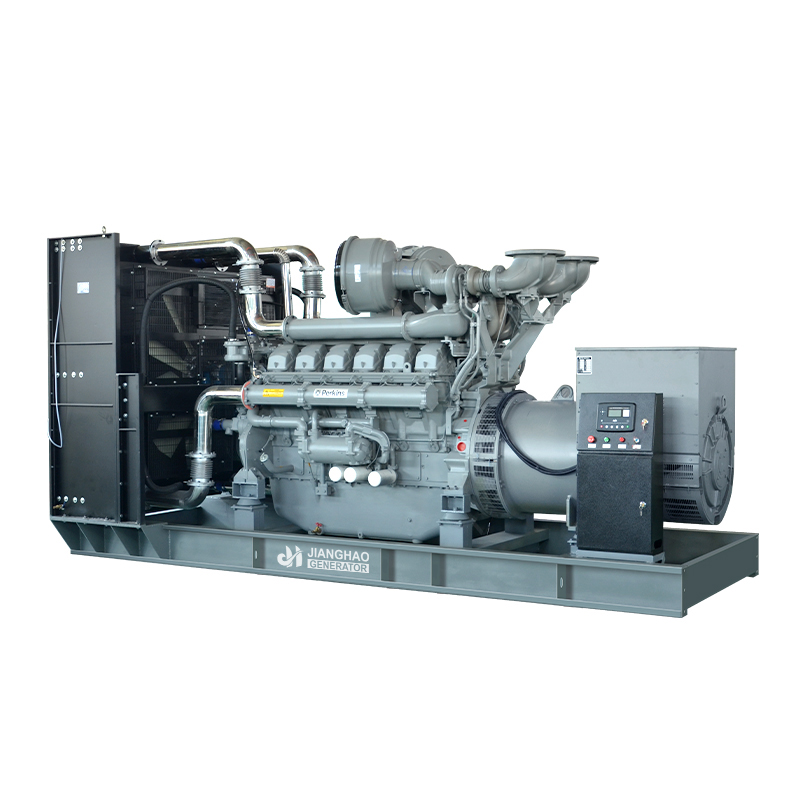
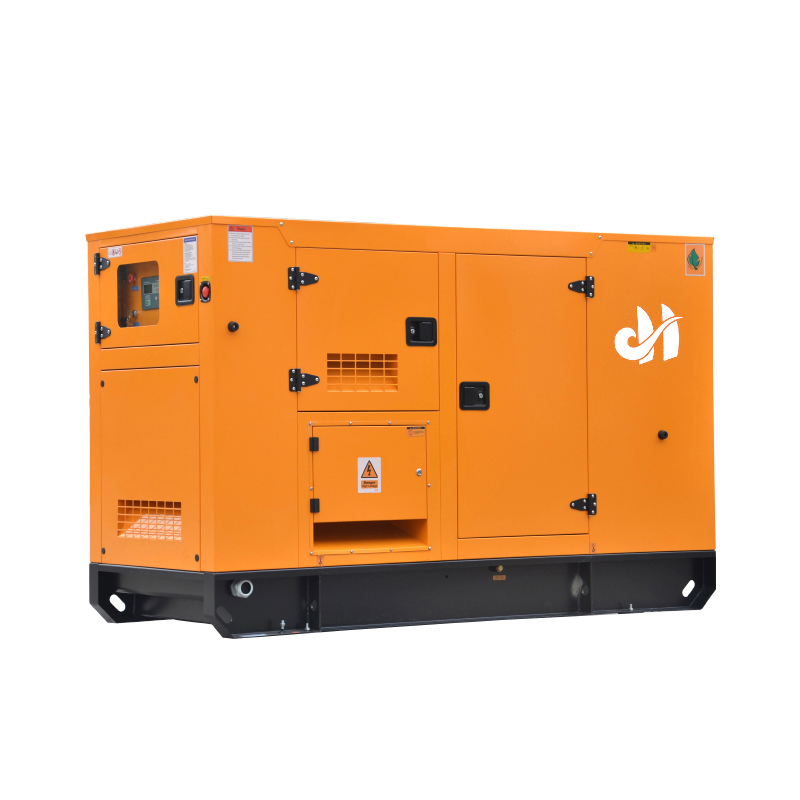
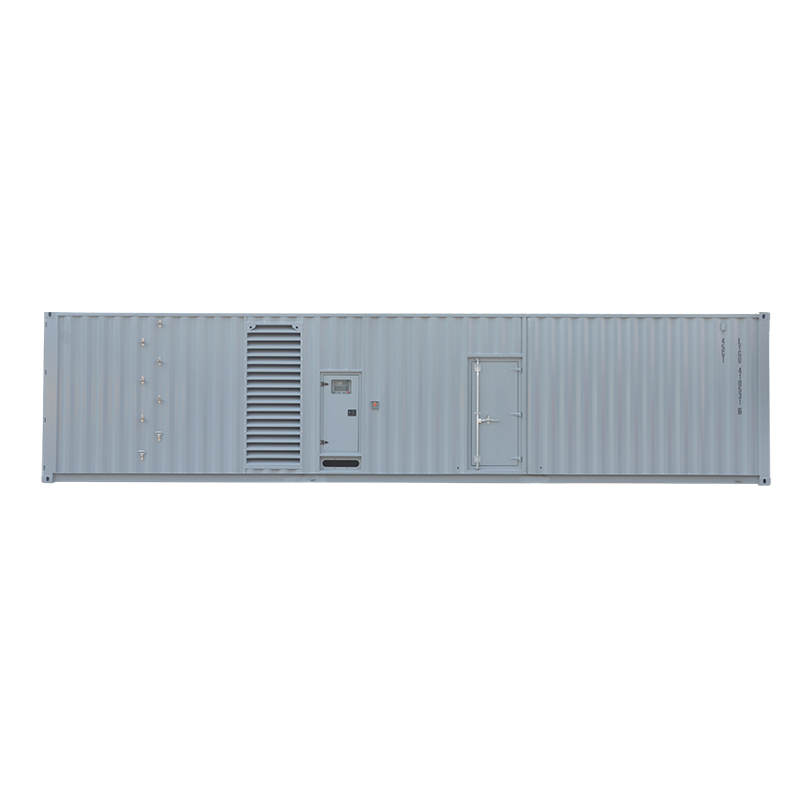 Container Type Diesel Generator Sets Manufacturers, SuppliersJiangsu Jianghao Generator Set Co., Ltd. is China container type diesel generator sets manufacturers and suppliers, we offer custom 1000-...View Product →
If the set is an open-type unit, maintenance access is simpler, which is an advantage because the turbocharger, crankcase vent, and intake piping can be inspected without removing enclosure panels. The disadvantage is that the open air inlet is exposed to dust, weather, and nearby vapor sources, so the maintenance schedule must include the intake checks listed earlier. For critical facilities with the highest consequence of failure, such as data centers, hospitals, and industrial processes, 1000-4000 kVA generator sets should be treated as non-negotiable candidates for an automatic air shutdown, because the cost of an engine replacement and facility downtime is many times higher than the cost of the valve.
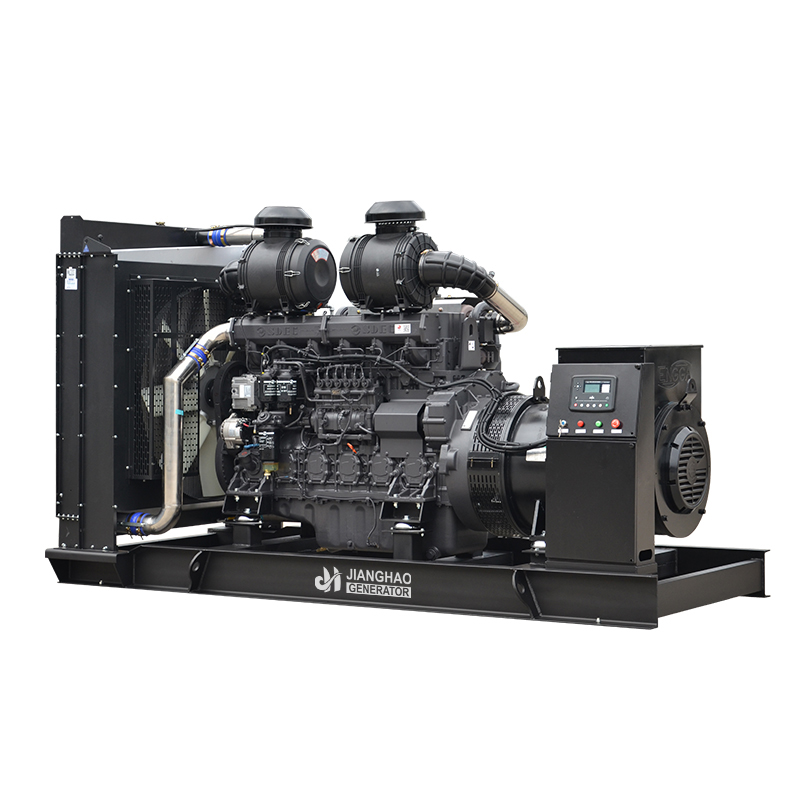
 Custom 1000-4000kVA Diesel Generator Sets Manufacturers, SuppliersAs China 1000-4000kVA diesel generator sets manufacturers and suppliers, Jiangsu Jianghao Generator Set Co., Ltd. custom 1MVA 2MVA 4MVA b...View Product →
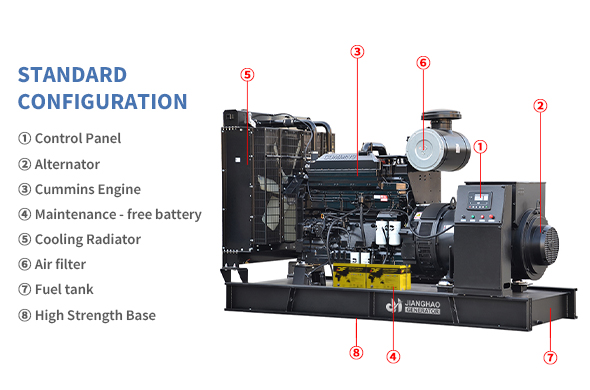 Open Frame Diesel Generator Sets Manufacturers, SuppliersJiangsu Jianghao Generator Set Co., Ltd. is China open frame diesel generator sets manufacturers and suppliers, we offer custom 8-4000kVA...View Product →
A genset builder with an integrated engineering and service team, such as Jianghao Generator Set Co., Ltd., can incorporate the air shutoff valve, the overspeed relay, and the required wiring into a single custom design package. When you contact the manufacturer, ask for a written shutdown sequence that covers the normal emergency stop, the overspeed trip, the air shutoff valve, and the breaker interlock, and request the same protection if the set is configured with trailer, soundproof, or container options.
Paralleling and the Runaway Risk
In a multi-genset site where several sets are synchronized on a common bus, a single runaway unit is more dangerous than in a single-set installation. The synchronous alternators on the bus are electrically coupled, so a runaway set can drive the entire bus frequency upward. The healthy engines will receive a lower fuel demand from their governors, but the electrical frequency continues to rise until a protection relay acts. The result can be an over-frequency trip, a cascade of generator breakers opening, and mechanical stress on the alternators of the healthy sets, which are forced to motor. For this reason, parallel generator set systems require an over-frequency and overspeed protection scheme that trips the offending generator breaker and triggers the air shutoff valve on the failed engine at the same time.
Post-Incident Inspection and Repair
After a runaway has been stopped, the engine is not ready to return to standby service. The uncontrolled speed and the high vacuum created by an air shutdown can cause damage even if the engine appeared to stop quickly. A disciplined inspection procedure is the only correct route back to service.
- Lock out and tag out the generator, and confirm that the emergency stop is still engaged and the air intake shutoff valve is still in the closed position. Check the room for fuel or oil leaks before entering.
- Identify the fuel source. Look for oil in the intake piping, a leaking turbocharger seal, a soaked crankcase ventilation separator, an overfilled oil pan, or an external vapor source near the air inlet. Do not order parts until this is confirmed.
- Bar the engine over by hand or by using the flywheel turning tool before any restart. If the engine cannot be turned, damage is severe and a full engine inspection is needed.
- Remove the air filter and check whether it is oil-soaked. Clean the intake pipe, intercooler, and any oil traps. Replace the air filter and the oil and oil filter if there is any possibility that the oil was contaminated.
- Run a compression or leak-down test on all cylinders. Look at the borescope images of the cylinder walls, pistons, and valve crowns. If the engine overspeed was brief and stopped by the air shutoff, the top end may be reusable, but valves or rocker arms can be damaged if the engine over-revved until valve float occurred.
- Inspect the turbocharger for seal and bearing damage, and inspect the crankcase ventilation system for blockage. The turbocharger should be rebuilt or replaced if oil consumption is confirmed.
- Inspect the alternator. Overspeed stresses the rotor, exciter, and rotating diodes, and the over-voltage can damage the automatic voltage regulator and insulation. Perform an insulation resistance test and check for abnormal vibration during the first test run.
- After repairs, run the engine unloaded with the air shutoff valve armed and a technician standing at the manual release. Confirm that the controller reads normal frequency and voltage before a step-load test is performed.
If the runaway was caught very early at a modest overspeed, the repair may be limited to a turbo seal, a crankcase ventilation service, new oil and filters, and an intake cleaning. If the engine ran at severe overspeed for more than a few seconds, expect bent valves, damaged pistons, a stretched or broken connecting rod, and a cracked exhaust manifold. In many catastrophic cases, replacing the complete generator set is more economical and safer than rebuilding a block that has already seen overspeed.
Facility Preparedness and Operator Training
A written emergency procedure turns a panic situation into a sequence of actions. Every site that operates a diesel generator set should have a one-page runaway response procedure posted at the genset controller and in the control room. The procedure should list the same steps described above: press the emergency stop, disconnect the load, activate the air intake shutoff, and block the intake if no valve exists.
Each genset room should also have a runaway response kit. The kit should contain a rigid cover sized to the air filter opening or intake duct, a large CO2 extinguisher, a flashlight, and a replacement pull-cable or spare release latch for the air shutoff valve. Storing the cover next to the genset eliminates the need to search for something to block the intake in the middle of an emergency.
Operator training should cover the fundamental difference between stopping an engine by cutting off fuel and stopping it by cutting off air. Many experienced operators are surprised to learn that the emergency stop button is not sufficient for a true runaway. Reinforce this message with a supervised drill: during a planned maintenance window, trip the air shutoff valve at rated speed and confirm that the set stops within the time stated in the engine manual. Test the overspeed relay and the valve together so that the maintenance team sees the automatic response working, not just the manual release.
The Bottom Line on Runaway Diesel Generators
A runaway diesel generator is one of the most dangerous failures that can occur in a standby power plant. It is also one of the most preventable and most manageable, if the correct principle is respected: fuel control will not stop an engine that is burning oil or vapor from the intake, but air control will. The action plan is the same for any source of secondary fuel: stop the injected fuel, disconnect the load, and close or cover the intake completely. The prevention plan is equally clear: maintain the oil system, the turbocharger, and the crankcase ventilation; use the generator under real load regularly; keep flammable vapor sources away from the air inlet; and specify an automatic air intake shutoff valve on both new and retrofitted sets. For an operator who understands what causes a diesel engine to run away and how to stop it, the event loses most of its mystery. With the right procedures and equipment, a runaway generator becomes an interruption that the site is equipped to handle, not a disaster waiting for a spare moment.