 English
 русский
 Español
 عربى
عربىHow to Choose Between Mitsubishi, Yuchai, and Natural Gas Generators?
Which Generator Type Is Right for Your Application
The correct generator choice depends on four factors: the installation environment, noise tolerance, fuel availability, and whether the unit requires portability or weatherproof deployment. Choose an open type diesel generator for indoor machine rooms, workshops, or temporary construction sites where cost is the primary concern and ambient noise is already high. Choose a Silent type Generator Set for hospitals, hotels, data centers, office buildings, and any location where noise regulations apply or occupant comfort matters. Choose Mitsubishi Diesel Generator Sets when long-term reliability, low total cost of ownership, and proven performance in demanding industrial and standby power applications are the priority. Choose Yuchai Diesel Generator Sets when excellent value, strong Asia-Pacific and African market support, and mid-range to high-end performance at competitive pricing are required. Choose Natural Gas Generator Sets when continuous baseload power generation is planned and a reliable piped gas supply is available, as natural gas significantly reduces fuel storage logistics and per-kilowatt-hour fuel cost compared to diesel. Choose a diesel generator container when the generator must be deployed outdoors, relocated between sites, or installed in extreme climates without a purpose-built machine room.
This guide covers each product category in detail with specific performance data, application matching, and practical selection criteria to support informed procurement decisions across all six generator categories.
Open Type Diesel Generator: Construction, Advantages, and Best Applications
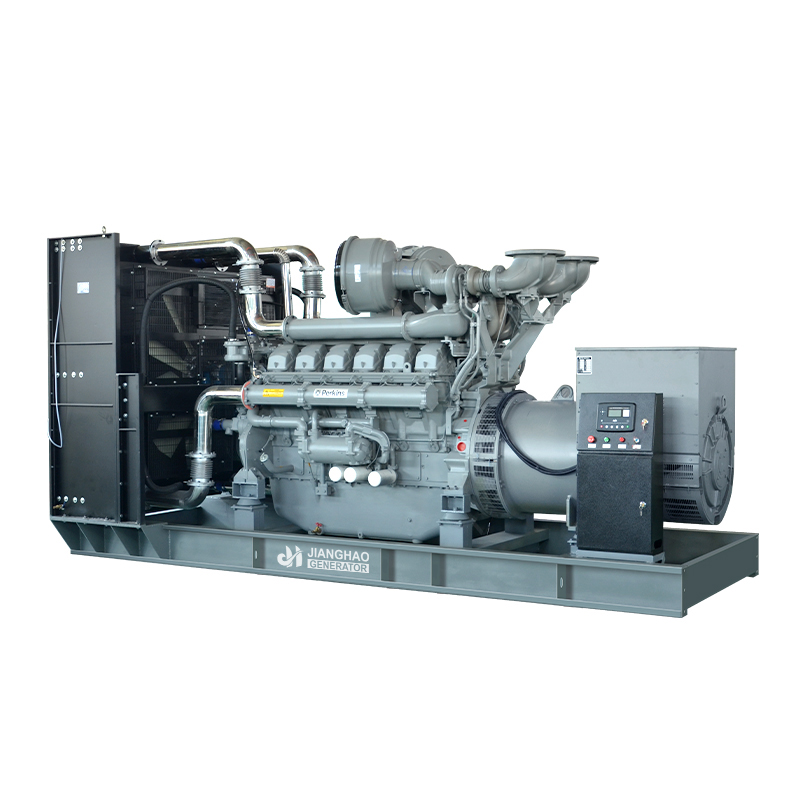
An open type diesel generator is a generating set where the diesel engine and alternator assembly are mounted on a common base frame without any acoustic enclosure, weather canopy, or sound attenuating housing. The generating set is exposed to the surrounding environment, which makes it the simplest, lightest, and lowest-cost configuration per kilowatt of installed capacity. Open type configurations are available from the smallest portable units at 5 kVA through industrial generator sets exceeding 3,000 kVA.
Construction of an Open Type Diesel Generator
The core components of an open type diesel generator are:
- Diesel engine: The prime mover that converts chemical energy in diesel fuel to rotational mechanical energy. Engine speed is typically 1,500 rpm for 50 Hz markets (Europe, Asia, Africa, Middle East) or 1,800 rpm for 60 Hz markets (Americas, parts of Asia). Turbocharged and intercooled engines provide higher power density and better fuel efficiency than naturally aspirated engines at equivalent displacement.
- Synchronous alternator: Converts rotational energy from the engine shaft to alternating current electricity. Brushless self-exciting alternators are standard in commercial generator sets for their maintenance advantages over brush-type designs. The alternator's power factor rating (typically 0.8 lagging) determines the kW output relative to the kVA rating.
- Common baseframe: A welded steel skid that provides structural alignment between engine and alternator and serves as the mounting surface for ancillary components including the control panel, fuel tank (if base-mounted), battery, and circuit breaker.
- Control panel and automatic transfer switch (ATS) interface: Manages engine start, stop, and speed governing, and interfaces with the site ATS for automatic transition to generator power on mains failure. Modern digital control panels including Deepsea DSE series, ComAp InteliLite, and Woodward controllers provide remote monitoring, load management, and parallel operation capability.
Noise Output and Operating Environment Requirements
An open type diesel generator produces noise levels of 95 to 115 dB(A) at 1 meter from the unit, depending on engine size and speed. This level is comparable to a jackhammer at close range and requires hearing protection for anyone working near the running generator. For this reason, open type diesel generators must be installed in a dedicated enclosed machine room with appropriate acoustic treatment, ventilation for combustion air and cooling, and exhaust routing to the exterior of the building. An open type diesel generator installed in a properly designed machine room can achieve exterior noise levels of 55 to 65 dB(A) at the building perimeter, which is generally acceptable in industrial zones but may still exceed planning requirements in residential or commercial areas.
Cost Advantage of Open Type Configuration
The principal commercial advantage of the open type diesel generator over Silent type Generator Set and containerized alternatives is its lower purchase cost for equivalent power output. An open type diesel generator typically costs 25% to 40% less than an equivalent-rated Silent type Generator Set because the acoustic enclosure, ventilation system, and weather protection hardware of a silent set add significant manufacturing cost without increasing the power output. For large installations above 500 kVA where the machine room is part of the building design and provides all necessary protection and noise control, the open type configuration is almost always the more economical choice when total installed cost including civils is evaluated.
Silent Type Generator Set: Acoustic Design, Performance, and Applications
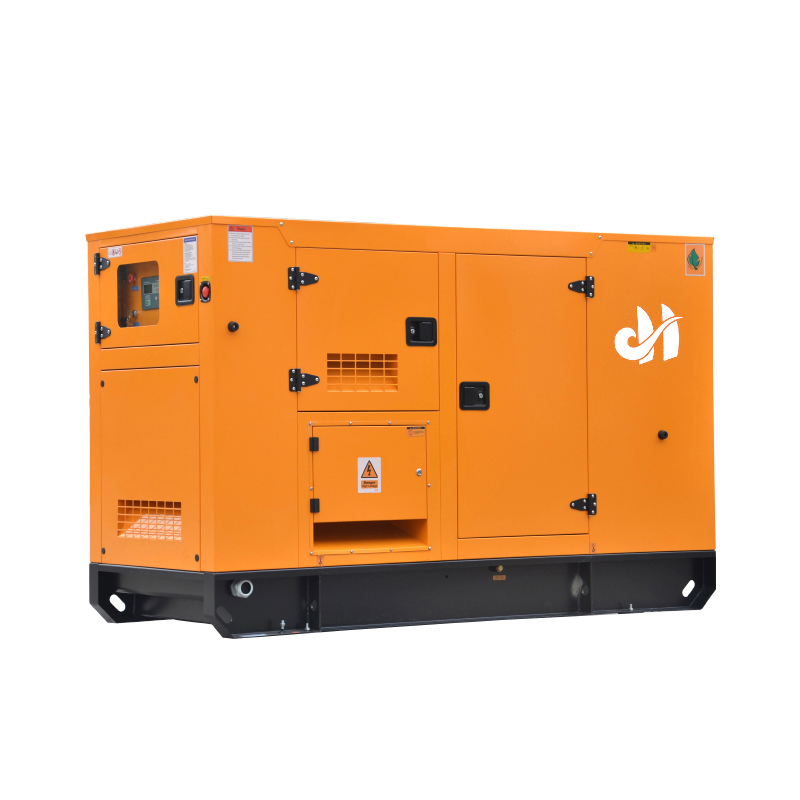
A Silent type Generator Set places the open type generating set inside a sound-attenuating acoustic enclosure that reduces radiated noise to levels acceptable in noise-sensitive environments without requiring a separate machine room. The enclosure integrates ventilation baffles, acoustic lining, anti-vibration mounts, and weatherproofing into a single factory-assembled package that can be installed outdoors on a simple concrete pad or indoors in a standard equipment room.
How Acoustic Enclosures Reduce Noise in Silent Type Generator Sets
The acoustic enclosure of a Silent type Generator Set reduces noise through three mechanisms working in combination:
- Sound absorption lining: Mineral wool or polyurethane foam panels bonded to the interior surfaces of the enclosure panels absorb sound energy that would otherwise reflect within the enclosure and radiate through the panels to the exterior. A well-specified absorption lining achieves 5 to 10 dB of noise reduction across the frequency range of engine and alternator noise.
- Ventilation acoustic baffles: Air must enter and exit the enclosure for engine combustion and cooling, and these air paths are the primary flanking routes for noise to escape the enclosure. Acoustic baffles in the ventilation inlet and outlet openings are designed as labyrinthine paths that allow air flow while reflecting sound back into the absorption lining, typically achieving 10 to 20 dB attenuation in the ventilation paths.
- Structural isolation: Anti-vibration mounts between the generating set base frame and the enclosure floor panel prevent structure-borne vibration from the engine and alternator from exciting the enclosure panels and radiating noise to the exterior independently of the airborne noise path.
The combined effect of these three mechanisms typically achieves a noise reduction of 20 to 35 dB(A) compared to the equivalent open type diesel generator, resulting in radiated noise levels from a standard Silent type Generator Set of 65 to 75 dB(A) at 1 meter and 45 to 55 dB(A) at 7 meters from the unit. Super-silent enclosures with enhanced acoustic treatment achieve 60 to 65 dB(A) at 1 meter, suitable for urban commercial and residential adjacent installations.
Applications Where Silent Type Generator Set Is the Required Specification
- Hospitals and healthcare facilities: Patient recovery and intensive care environments have strict noise limits. The Silent type Generator Set enables emergency standby power without creating noise disturbance during the critical moments of mains failure when clinical staff are most active.
- Data centers and server rooms: Continuous operation cooling systems and precision electronics in data centers are sensitive to vibration as well as noise. Silent type Generator Sets with both acoustic enclosures and anti-vibration base mounts are standard specification for data center backup power worldwide.
- Hotels, resorts, and commercial properties: Guest comfort and brand reputation require that emergency or primary power generation is invisible and inaudible to guests. Silent type Generator Sets installed at or near the property perimeter meet this requirement without the civil cost of a deeply buried or remotely located machine room.
- Outdoor events and film production: Mobile Silent type Generator Sets on trailers are the standard power source for outdoor concerts, sporting events, and film location shoots where the generator must operate near performers, audiences, and production recording equipment.
Mitsubishi Diesel Generator Sets: Engineering Heritage and Performance Standards
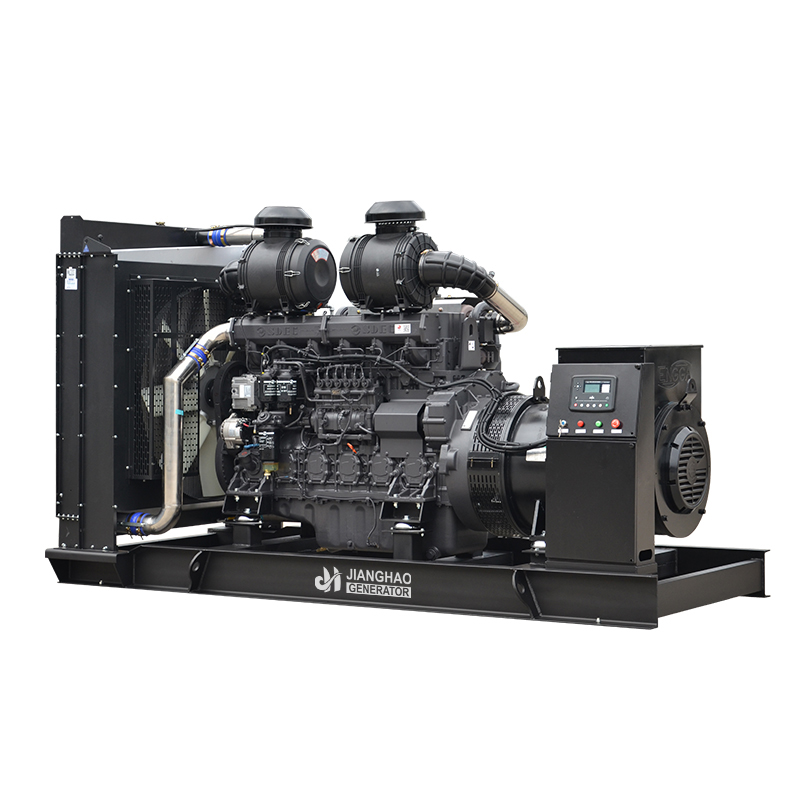
Mitsubishi Diesel Generator Sets occupy the premium end of the industrial generator market, backed by Mitsubishi Heavy Industries' engineering heritage in heavy machinery, marine propulsion, and power generation dating to the late nineteenth century. The Mitsubishi S-series and S-HDT series diesel engines used in Mitsubishi Diesel Generator Sets are specifically engineered for power generation duty, with design features that prioritize long service intervals, low fuel consumption, and reliable performance under the continuous and standby duty cycles of critical facilities.
Key Technical Advantages of Mitsubishi Diesel Generator Sets
- Engine efficiency and fuel consumption: Mitsubishi turbocharged and aftercooled engines achieve specific fuel consumption (SFC) ratings of 195 to 210 g/kWh at rated load, which represents best-in-class efficiency for diesel generator engines in the 200 to 2,000 kVA range. Over a 10-year standby power lifecycle with typical annual running hours of 200 to 500 hours per year, this efficiency advantage translates to measurable fuel cost savings compared to generators with SFC ratings of 215 to 230 g/kWh.
- Service interval advantage: Mitsubishi Diesel Generator Sets are designed for engine oil change intervals of 500 hours or 12 months (whichever comes first) for standard standby duty, compared to 250 to 350 hour intervals common on less sophisticated engines. For a standby generator running 300 hours per year, this doubles the oil change interval from annual to biennial, reducing maintenance cost and service interruption frequency.
- Wet sleeve cylinder liner design: Mitsubishi S-series engines use wet sleeve cylinder liners that are individually replaceable, enabling major engine overhaul without complete engine replacement. This design feature extends the practical service life of the engine to 50,000 to 80,000 operating hours with appropriate maintenance, compared to the 20,000 to 30,000 hours typical of engines without this feature in continuous power applications.
- Emissions compliance: Current Mitsubishi Diesel Generator Sets for global markets meet EPA Tier 4 Final (United States), EU Stage V (European Union), and equivalent emissions standards for NOx, PM, HC, and CO without requiring selective catalytic reduction (SCR) aftertreatment in most power categories, simplifying installation and ongoing maintenance.
Mitsubishi Diesel Generator Sets Product Range and Power Categories
| Power Category | Standby Rating (kVA) | Engine Series | Fuel Consumption at 75% Load (L/hr) | Primary Applications |
|---|---|---|---|---|
| Small commercial | 100 to 250 | S4Q2, S4S | 15 to 45 | Offices, small commercial buildings |
| Mid commercial | 300 to 750 | S6R, S6R2 | 50 to 130 | Hotels, hospitals, data centers |
| Large industrial | 800 to 2,000 | S12H, S16R | 140 to 380 | Industrial plants, large data centers |
| Power station grade | 2,000 to 3,500 | S16R2, S16RPTA | 380 to 700 | Power generation, mining, remote communities |
Yuchai Diesel Generator Sets: Value, Reliability, and Global Market Presence
Yuchai Diesel Generator Sets are powered by engines from Guangxi Yuchai Machinery Co., Ltd., one of China's largest and most established diesel engine manufacturers with annual production exceeding 500,000 engines across its automotive, industrial, and power generation product lines. Yuchai engines used in generator set applications include the YC6 series (6-cylinder in-line), YC6M series (turbocharged), and YCK series (V-configuration for higher power outputs), covering the range from 20 kVA to 2,000 kVA in generator set configuration.
Why Yuchai Diesel Generator Sets Compete Successfully in Global Markets
Yuchai Diesel Generator Sets have achieved significant commercial success in Southeast Asia, Africa, the Middle East, and South America for reasons that reflect both the inherent quality of the Yuchai engine product and the commercial strategy of Yuchai's generator set manufacturing and distribution partners:
- Cost competitiveness: Yuchai Diesel Generator Sets are priced approximately 20% to 40% below equivalent-rated sets using European or Japanese engines (Perkins, Cummins, Mitsubishi, Volvo) for the same power output, making them the preferred choice for price-sensitive markets and large-volume infrastructure projects where unit economics are the primary selection criterion.
- Parts availability in developing markets: Yuchai has established an extensive spare parts network across its primary export markets in Africa and Southeast Asia, where parts availability rather than engine brand preference often determines which generator brand dominates the installed base. A generator set that can be maintained with locally available parts at local workshop prices delivers lower total cost of ownership than a premium-brand set requiring international parts sourcing at premium prices.
- Emissions certification: Current Yuchai engines for generator set applications are certified to China Stage III and EU Stage IIIA emissions standards as standard, with Stage V and Tier 4 Final compliant variants available for markets with more stringent requirements. This broad certification range makes Yuchai Diesel Generator Sets commercially viable across both developing markets with less stringent emissions requirements and mature markets with full emissions compliance requirements.
- Power density and reliability: Yuchai's turbocharged YC6M series engines achieve power-to-weight ratios comparable to mid-tier European engines of the same displacement, and field reliability data from large-scale deployments in telecom tower backup power applications (where tens of thousands of Yuchai-powered sets are operating across Africa and Asia) demonstrates mean time between failures (MTBF) exceeding 2,000 hours under continuous duty conditions.
Selecting Yuchai Diesel Generator Sets for Specific Applications
Yuchai Diesel Generator Sets are particularly well-matched to the following application profiles:
- Telecom tower backup power: The YC6M series in 50 to 100 kVA configurations is widely specified for telecom base station backup generators, where the requirement is reliable automatic starting on mains failure with low maintenance frequency and competitive total cost of ownership over a 10 to 15 year site life.
- Agricultural and rural electrification: In regions where grid electricity is unavailable or unreliable, Yuchai Diesel Generator Sets in 100 to 500 kVA configurations serve as primary power sources for agricultural processing facilities, water pumping stations, and rural community centers where budget constraints make premium-brand generators economically inaccessible.
- Construction site power: Temporary construction power requirements demand generators that can tolerate variable loads, dusty environments, and intermittent maintenance, while remaining economical enough to be treated as consumable assets over a project lifecycle. Yuchai Diesel Generator Sets in open type configuration meet all these requirements at acceptable capital cost.
Natural Gas Generator Sets: When Gas Power Is the Better Choice
Natural Gas Generator Sets use an internal combustion engine modified for combustion of natural gas (methane, CNG, or LNG) rather than liquid diesel fuel, paired with a synchronous alternator to produce electricity. The fundamental thermodynamic principles are identical to diesel generation, but the differences in fuel properties, combustion characteristics, and fuel supply logistics create a distinctly different operational and economic profile that makes Natural Gas Generator Sets the preferred choice in a defined set of applications.
How Natural Gas Generator Sets Differ from Diesel Generators
The key technical differences between Natural Gas Generator Sets and diesel generators that drive application suitability are:
- Fuel delivery system: Natural Gas Generator Sets connect to a piped gas supply at the point of installation, eliminating the need for onsite fuel storage tanks, fuel delivery scheduling, and the fuel theft risk that affects diesel generators in remote or insecure locations. A piped gas supply provides effectively unlimited fuel availability as long as the supply network remains pressurized, which makes Natural Gas Generator Sets suitable for continuous baseload power generation at locations connected to the gas distribution grid.
- Emissions profile: Natural gas combustion produces significantly lower particulate matter (PM), sulfur dioxide (SO2), and nitrogen oxide (NOx) emissions than diesel combustion at equivalent power output. NOx emissions from natural gas engines are typically 50% to 70% lower than from diesel engines of equivalent power, and PM emissions from natural gas are essentially zero, making Natural Gas Generator Sets the preferred specification for urban areas, indoor installations, and markets with strict air quality regulations where diesel exhaust would be unacceptable.
- Fuel cost advantage for continuous duty: In markets where grid natural gas pricing is below the energy-equivalent cost of diesel, Natural Gas Generator Sets operating in continuous or prime power duty achieve lower fuel cost per kilowatt-hour than diesel generators. In many Asian and European markets, the fuel cost advantage of natural gas over diesel for continuous power generation ranges from 20% to 50% per kWh of electricity produced, which represents a significant operational cost saving over the lifetime of a baseload power plant.
- Slower transient response: Natural gas engines have slightly slower transient load acceptance capability than diesel engines of equivalent power due to the lower energy density of the gaseous fuel mixture in the cylinder at the moment of ignition. This can affect voltage and frequency stability in the first seconds following a sudden large load application, which makes Natural Gas Generator Sets slightly less suitable than diesel for standby applications where sudden full-load connection from a cold start is the primary operational scenario.
Applications Where Natural Gas Generator Sets Are the Preferred Choice
| Application | Why Natural Gas Generator Sets Excel | Typical Power Range |
|---|---|---|
| Combined heat and power (CHP) | Continuous operation, exhaust heat recovery for building heating and cooling | 100 to 3,000 kW |
| Industrial continuous power | Low emissions, lower fuel cost vs diesel at high annual hours | 500 to 5,000 kW |
| Gas field and pipeline power | Uses wellhead gas or pipeline gas as free or very low-cost fuel | 200 to 10,000 kW |
| Landfill gas and biogas power | Converts waste gas to electricity with low or negative fuel cost | 100 to 2,000 kW |
| Urban commercial building primary power | Low emissions acceptable in urban air quality zones, piped gas supply | 200 to 2,000 kW |
Diesel Generator Container: The Mobile and Weatherproof Power Solution
A diesel generator container is a generating set installed inside a purpose-designed container structure that provides weather protection, acoustic attenuation, forced ventilation, fuel storage, and all necessary electrical connections in a single transportable package. The container is typically based on standard ISO 20-foot or 40-foot shipping container dimensions, enabling transport by standard flatbed truck, shipping vessel, or rail without special permits or lifting equipment beyond what is routinely available at ports and logistics facilities worldwide.
Components and Design Features of a Diesel Generator Container
A properly designed diesel generator container integrates the following features in a single factory-assembled unit:
- Generator set: An open type diesel generator of appropriate power rating mounted on anti-vibration mounts bolted to the container floor structure. Container-housed generators are typically available from 100 kVA to 3,000 kVA in single-unit configurations, with parallel operation capability for larger power requirements.
- Acoustic enclosure within the container: The container structure itself provides a first level of noise attenuation. Additional internal acoustic treatment including absorptive lining panels and ventilation baffles reduces the radiated noise of a diesel generator container to 65 to 75 dB(A) at 1 meter, equivalent to a standard Silent type Generator Set, without requiring any additional on-site acoustic treatment or machine room construction.
- Integrated fuel tank: Base-mounted or belly-mounted fuel tanks with capacities of 500 to 5,000 liters provide 24 to 72 hours of autonomy at rated load, depending on generator size and tank specification. The integrated fuel tank eliminates the need for external bulk fuel storage connections in temporary or emergency deployment scenarios.
- Forced ventilation system: Motorized ventilation fans draw cooling air through the container via acoustic baffle-equipped inlet and outlet openings, maintaining the engine, alternator, and electrical equipment within safe operating temperature limits. The ventilation system is designed for continuous operation in ambient temperatures from minus 20 degrees Celsius to plus 50 degrees Celsius depending on the specification.
- Cable connection ports: Standardized cable entry glands and output busbars on the exterior of the container provide power connection points that allow quick connection to site distribution without entering the container, improving safety and operational efficiency during deployment and reconnection.
- Weather and security protection: The steel container structure provides protection against rain, wind, sand, and physical intrusion. Lockable access doors prevent unauthorized entry and protect the generating set from tampering or theft in unmanned or remote locations.
Specific Applications Where Diesel Generator Container Is the Optimal Choice
- Remote mining and resource extraction sites: Mining operations in desert, arctic, or jungle environments require robust, self-contained power solutions that can be delivered by standard logistics, installed without civil construction, and relocated when the mine moves or expands. A diesel generator container with integrated fuel storage meets all these requirements in a single deliverable asset.
- Disaster recovery and emergency power deployment: Disaster response organizations and military engineering units maintain fleets of containerized generators that can be deployed globally within 24 to 72 hours of a decision to deploy, using standard shipping and air freight logistics. The standardized container format allows pre-stacking in warehouses and rapid loading onto ships or aircraft.
- Construction sites without permanent buildings: Major civil infrastructure projects (dam construction, highway building, port development) require substantial temporary power for construction equipment, site offices, and worker accommodation. A diesel generator container delivers this power without requiring a permanent machine room building, which would represent a significant additional civil cost on a temporary project site.
- Telecom and data infrastructure in harsh climates: Mobile base stations and edge data centers in extreme climate locations including Arctic research stations, desert oilfields, and tropical island sites use diesel generator containers as their primary or backup power source because the container structure provides adequate climate control and protection without permanent infrastructure investment at sites with uncertain long-term operational life.
- Rental fleet and temporary event power: Power rental companies standardize their fleet on containerized generator sets to simplify logistics, enable rapid deployment and retrieval, and protect high-value assets from weather damage during outdoor deployments at construction sites, outdoor events, and peak-demand facility support applications.
Generator Type Comparison: Selecting the Right Configuration
| Generator Type | Noise Level at 1m | Installation Requirement | Relative Cost | Best Use Case |
|---|---|---|---|---|
| Open type diesel generator | 95 to 115 dB(A) | Enclosed machine room required | Lowest | Purpose-built plant rooms, large buildings |
| Silent type Generator Set | 65 to 75 dB(A) | Concrete pad, outdoor or indoor | Medium (25% to 40% above open type) | Hospitals, hotels, offices, data centers |
| Diesel generator container | 65 to 75 dB(A) | Level pad, minimal civil works | Medium-high (with fuel tank and ventilation) | Remote sites, construction, emergency power |
| Natural Gas Generator Sets | Varies by enclosure | Gas supply connection required | Higher capital, lower operating cost | CHP, industrial continuous duty, gas fields |
Practical Selection Criteria: Matching Generator to Application
Selecting the correct generator configuration for a specific application requires evaluating six practical criteria in sequence, beginning with the most constraining factors and working down to those with more flexibility in the selection process.
Step by Step Generator Selection Process
- Determine the required power output in kVA. Calculate the connected load in kW, accounting for the power factor of the load (most commercial and industrial loads have power factors of 0.7 to 0.9 lagging). Add a minimum 20% safety margin above the calculated maximum continuous load demand. Select a generator rated at this figure or above in standby duty rating.
- Identify the duty cycle. Standby duty (emergency backup for mains failure, typically below 200 hours per year) allows a higher rated output than prime duty (continuous primary power, operating above 500 hours per year). The same generator set will have different standby and prime power ratings, with prime ratings typically 10% to 15% below standby ratings.
- Assess the noise constraint. Identify the applicable noise limit at the site boundary or at the nearest sensitive receptor. If the limit is below 65 dB(A), a standard Silent type Generator Set is required. If below 60 dB(A), a super-silent enclosure or machine room with acoustic treatment is necessary. If noise is unconstrained (remote industrial site, dedicated plant room), an open type diesel generator is acceptable.
- Evaluate fuel availability. If a reliable piped gas supply is available and the duty cycle involves above 2,000 hours per year of operation, Natural Gas Generator Sets should be evaluated against diesel on a total cost of ownership basis. For standby applications with fewer than 500 annual running hours, diesel is almost always more economical and operationally simpler than gas.
- Assess site logistics and portability requirements. If the generator must be relocated between sites, deployed to a remote location without permanent buildings, or shipped internationally as a self-contained asset, a diesel generator container is the correct specification. If the generator will be permanently installed in a building or with civil infrastructure, an open type or Silent type configuration is more economical.
- Select the engine brand based on total cost of ownership priority. If maximum reliability, longest service intervals, and lowest lifecycle maintenance cost are the priority and budget allows premium pricing, Mitsubishi Diesel Generator Sets represent the best value over a 15 to 20 year asset life. If competitive initial pricing with adequate reliability and good regional parts and service support are the priority, Yuchai Diesel Generator Sets provide an excellent balance of value and performance.
Frequently Asked Questions
1. What is the main difference between an open type diesel generator and a Silent type Generator Set?
The main difference is the presence or absence of a sound-attenuating acoustic enclosure. An open type diesel generator has no enclosure and produces noise of 95 to 115 dB(A) at 1 meter, requiring installation in an enclosed machine room. A Silent type Generator Set places the generating set inside an acoustic enclosure that reduces noise to 65 to 75 dB(A) at 1 meter, allowing outdoor installation on a simple concrete pad without any additional acoustic treatment. The Silent type Generator Set costs 25% to 40% more than an equivalent open type unit but eliminates the need for a purpose-built machine room, which often costs more than the enclosure premium when civil construction costs are included in the total project budget.
2. How do Mitsubishi Diesel Generator Sets compare to Yuchai Diesel Generator Sets in total cost of ownership?
Mitsubishi Diesel Generator Sets typically have a higher purchase price (20% to 40% above equivalent-rated Yuchai units) but deliver lower fuel consumption (195 to 210 g/kWh versus 210 to 230 g/kWh for Yuchai), longer service intervals, and longer engine overhaul life (50,000 to 80,000 hours versus 20,000 to 35,000 hours), resulting in lower total cost of ownership over a 15 to 20 year asset life in high-utilization applications. For low-utilization standby power (below 300 hours per year) where fuel consumption and service intervals matter less, Yuchai Diesel Generator Sets deliver competitive performance at lower total capital outlay, making them more economical over the life of the asset in this specific duty profile.
3. When should I choose Natural Gas Generator Sets instead of diesel?
Choose Natural Gas Generator Sets when: a reliable piped gas supply is available at the installation site, the generator will operate more than 2,000 hours per year making fuel cost savings significant, local air quality regulations restrict diesel emissions in the installation zone, or the application involves combined heat and power (CHP) where exhaust heat recovery from gas engines significantly improves overall system efficiency. Do not choose Natural Gas Generator Sets for remote locations without gas supply, pure standby applications with very low annual running hours, or applications where rapid full-load acceptance from cold start is critical.
4. What size diesel generator container do I need for a 500 kVA generator set?
A 500 kVA generator set typically fits within a 20-foot ISO container with adequate space for the generating set, internal maintenance access, control panel, ventilation baffle systems, and a base-mounted fuel tank of 1,000 to 2,000 liters capacity. For generator sets above 750 kVA, a 40-foot container is typically required to accommodate the larger engine and alternator dimensions and provide adequate maintenance access clearance around the equipment. Always verify the external dimensions and weight of the proposed generating set against the container's internal clearances and floor load capacity before finalizing the container specification for a given generator rating.
5. Can Yuchai Diesel Generator Sets meet European or North American emissions standards?
Yes. Yuchai offers engines certified to EU Stage V and EPA Tier 4 Final emissions standards in specific engine families and power categories, in addition to their standard China Stage III certified models. For projects requiring EU or US emissions compliance, buyers should specify the Stage V or Tier 4 Final certified engine variant explicitly in the purchase specification and request the original engine emissions certification documentation from Yuchai or the generator set assembler before accepting delivery.
6. What is the typical fuel consumption of a 500 kVA Mitsubishi Diesel Generator Set?
A 500 kVA Mitsubishi Diesel Generator Set operating at 75% load (375 kW output) typically consumes approximately 80 to 95 liters of diesel per hour, corresponding to a specific fuel consumption of approximately 195 to 210 g/kWh. At full rated standby load of 500 kVA (400 kW at 0.8 power factor), fuel consumption rises to approximately 105 to 125 liters per hour. These figures represent the consumption of the generator only; any parasitic loads from the acoustic enclosure ventilation fans, automatic transfer switch heating, or battery charger are additional to this figure and should be included in fuel autonomy calculations when sizing base-mounted fuel tanks.
7. Can I parallel multiple diesel generator containers together to increase total power capacity?
Yes, multiple diesel generator containers can be operated in parallel to achieve total power output beyond the capacity of any single unit, provided each container's generator set is equipped with a synchronizing controller capable of automatic load sharing. Modern generator control systems including Deepsea DSE 8xxx series, ComAp InteliGen, and Woodward easYgen series support both first-unit-governs and master-slave parallel operation modes. Paralleling three 500 kVA containers produces a total standby capacity of 1,500 kVA with N+1 redundancy, meaning the system can lose any single generator and still supply the full 1,000 kVA operating load from the remaining two units.
8. What maintenance does a Silent type Generator Set require compared to an open type diesel generator?
The core diesel engine maintenance requirements (engine oil change, fuel filter, air filter, coolant, belts, injectors) are identical for both Silent type Generator Set and open type diesel generator configurations because they use the same engine and alternator assembly. The Silent type Generator Set requires additional maintenance items specific to the enclosure: periodic inspection and cleaning of the ventilation baffle acoustic lining (typically annually), lubrication of enclosure door hinges and locks, inspection of the enclosure panel seals for weather integrity, and cleaning of the ventilation fan blades and motor bearings. These additional items add approximately 1 to 2 hours of maintenance time per annual service visit, which is a minor increment above the base engine service labor requirement.
9. What are the advantages of choosing a diesel generator container over building a machine room?
A diesel generator container offers three primary advantages over a purpose-built machine room: lower total installed cost (eliminating building construction cost, which typically exceeds the container enclosure premium for any generator above 200 kVA), full relocatability (the container and all its contents can be moved to a new site without civil demolition or reconstruction costs), and faster deployment (a factory-assembled container arrives ready to connect, while a machine room requires design, permitting, construction, and fit-out before the generator can be installed). The primary disadvantage of the container format is its fixed dimensions, which may not optimally match the generator footprint for very large generators above 2,000 kVA where purpose-built machine rooms provide more flexibility in layout and maintenance access arrangement.
10. Is a Natural Gas Generator Set appropriate for a hospital standby power application?
Natural Gas Generator Sets can be appropriate for hospital standby power in specific configurations, but they are not the standard recommendation for several practical reasons. The primary concern is fuel supply reliability: a piped natural gas supply can be interrupted during a disaster event (the same event that causes the mains power failure the standby generator is intended to cover), leaving the hospital without either grid power or emergency generation. Additionally, natural gas engines have slightly slower load acceptance transient response than diesel, which can cause voltage and frequency instability during the critical first seconds after hospital load connection on generator power. The dominant standard for hospital standby power in most healthcare guidelines (including NFPA 99, HTM 06-01, and equivalent national health infrastructure standards) specifies diesel fuel as the standby generator fuel to ensure independence from utility gas supply infrastructure during disaster events.