 English
 русский
 Español
 عربى
How does a diesel generator start: Practical Applications, Selection, Performance
At 2:14 a.m., a 1,250 kVA standby diesel generator receives a start signal from the automatic transfer switch. The utility feeder has dropped below the pickup threshold. Within 12 seconds the engine is cranking. Within 25 seconds the alternator is producing 400 V at 50 Hz. The transfer switch checks voltage and frequency, waits for a stable window, and closes the load breaker. The facility never sees a blackout.
From the outside, that sequence looks like a button press. Inside, it is a chain of electrical, mechanical, and thermal events. The short answer is this: a diesel generator starts when a control system energizes a battery-powered starter motor, which cranks the engine to ignition speed; the fuel system injects diesel into compressed, heated air; combustion accelerates the engine to rated speed; the alternator excitation system builds voltage; and the transfer switch connects the load only after voltage and frequency are stable.
The rest of this guide explains each link in that chain, with the values, failure points, and site conditions that matter to engineers, facility managers, and buyers. The focus is practical: what happens, in what order, and why a generator that cranks but does not start is usually telling you something specific.
The Start Command: What Tells the Generator to Crank
An automatic transfer switch does not start the generator directly. It senses the utility supply, confirms a real outage rather than a short voltage dip, and then closes a dry contact or sends a network command to the generator controller. The controller runs a pre-start check: emergency stop circuit healthy, coolant level acceptable, oil pressure switch at rest, fuel supply available, and no active shutdown alarms. If the panel is in AUTO, the start delay timer begins. That delay is often 0 to 10 seconds; it prevents nuisance starts during utility recloser operations.
Manual start is different. The operator selects MANUAL, presses the start button or turns the key, and the controller energizes the starter solenoid. Remote start uses the same logic through a monitoring gateway, but the site may have a start-inhibit interlock for maintenance. In all three cases, the start command ends at the same place: the starter solenoid.
One practical point for buyers: the start signal is only as reliable as the control wiring. A loose terminal on the ATS contact, a corroded battery isolator, or a panel left in OFF will defeat a perfectly good engine. In commissioning, check the start command at the controller terminals, not only at the ATS display. A generator that fails to start on automatic transfer but starts fine from the local pushbutton usually has a command-circuit problem, not an engine problem.
The controller also decides whether the start is allowed. Low fuel level, high coolant temperature, low oil pressure, or an active emergency stop will block cranking. Some panels display “ready” even when a shutdown is latched; the operator must clear the alarm before the next attempt. That is why a start failure should be diagnosed from the alarm log first, not from the battery alone.
The Cranking Circuit: Battery, Solenoid, Starter, and Flywheel
The cranking circuit is a high-current DC system. A 24 V battery bank, usually two 12 V blocks in series, supplies the starter through cables sized for several hundred amps. The controller energizes the starter solenoid. The solenoid does two jobs: it pulls the pinion into mesh with the flywheel ring gear and closes the heavy contact that sends battery current to the starter motor. The motor turns the flywheel, the crankshaft, and the pistons.
Cold cranking amps matter more than reserve capacity for starting. A battery may show 12.7 V at rest and still fail under load. During cranking, the battery terminal voltage should stay above about 19 V on a 24 V system or 9.5 V on a 12 V system. A sharp drop to 15 V or lower on a 24 V system points to a weak battery, high-resistance cable, or a starter drawing excessive current.
Starter duty cycle is short: typically 10 to 15 seconds of crank, then 30 to 60 seconds of rest. The controller may allow three attempts before an overcrank lockout. That lockout is a protection, not a nuisance. Cranking a diesel engine without ignition washes oil from cylinder walls and overheats the starter.
The starter pinion must mesh cleanly. A misaligned starter, worn ring gear, or weak solenoid can produce a loud grind and a no-crank condition. On larger sets, the starter may be a 24 V unit with a separate magnetic switch. The battery charger should hold the bank at float voltage between starts; a generator that starts reliably after a manual boost but fails on automatic start usually has a charging or parasitic load problem.
| Parameter | Typical value | What it tells you |
|---|---|---|
| Battery rest voltage, per 12 V block | 12.6 to 12.8 V | Fully charged lead-acid; AGM may be slightly higher |
| Cranking voltage, 24 V system | 19 V or higher | Below this, check battery, cables, and starter |
| Cranking speed | 150 to 300 rpm | Enough to build compression heat |
| Starter current | 300 to 800 A | Large sets can exceed this |
| Crank attempt | 10 to 15 s | Follow with 30 to 60 s rest |
| Overcrank lockout | After 3 attempts | Reset only after finding the cause |
At Jiangsu Jianghao Generator Set Co., Ltd., we match battery capacity and charger size to the engine’s cranking demand, not to the generator’s kVA rating alone. A 1,000 kVA set with a high-displacement engine may need a different battery package than another 1,000 kVA set with a smaller, higher-speed engine. The start system is an engineered subset of the generator, not an accessory.
Compression Ignition: What Happens Inside the Cylinder
Once the engine turns, the diesel cycle takes over. The intake valve draws air into the cylinder. The piston compresses that air to roughly 30 to 50 bar, raising its temperature to about 500 to 700°C. Near top dead center, the injector sprays fuel into the hot air. The fuel atomizes, mixes, and autoignites. The expanding gas pushes the piston down. The exhaust valve releases the burned gas.
Starting is a matter of reaching ignition speed and compression temperature. If the engine cranks too slowly, compression leaks past rings and valves, and the air does not get hot enough. If the battery is weak, the starter may turn the engine at 80 rpm instead of 180 rpm; the engine may sound like it is trying but never catch.
Fuel delivery must be timed and metered. A mechanical injection pump uses a governor and rack; a common-rail system uses a high-pressure pump, rail, and electronically controlled injectors. In both cases, the fuel shutoff solenoid must be energized to allow fuel. A failed solenoid, a clogged filter, or air in the fuel line can produce a crank-no-start condition. After a fuel filter change, the system must be primed; a generator that starts and dies after a few seconds often has air in the fuel circuit.
Air intake restrictions matter too. A dirty air filter, a collapsed intake hose, or a closed intake shutter will prevent enough oxygen from entering the cylinder. Exhaust back pressure can also prevent clean starting. In enclosures, the combustion air path must be open and the exhaust outlet unobstructed.
Cold engines need help. Some indirect-injection engines use glow plugs to heat the combustion chamber. Larger direct-injection generator engines often use an intake air heater, a jacket water heater, or an oil pan heater. These devices reduce the cranking energy needed and shorten the time to stable combustion. They also explain why a cold-start package is not just a bigger battery.
Compression health is the long-term variable. Tight valve clearance, worn rings, or a scored cylinder can reduce compression enough to make cold starting difficult while the engine still runs acceptably at operating temperature. A compression test or cylinder leak-down test belongs in the diagnostic path for a generator that cranks at normal speed but fails to fire when cold.
Voltage Build-Up and Load Transfer
Once combustion is sustained, the engine accelerates to rated speed. The governor controls fuel to hold frequency: 50 Hz at 1,500 rpm for a four-pole generator, or 60 Hz at 1,800 rpm. The alternator rotor has residual magnetism, which produces a small voltage. The automatic voltage regulator increases excitation current, and the output voltage rises to the set point, typically 400/230 V or 480/277 V.
Voltage build-up is not instant. The AVR needs a few seconds to stabilize. The controller monitors oil pressure, coolant temperature, frequency, and voltage. It will not close the transfer switch until voltage and frequency are within window, often plus or minus 5% voltage and plus or minus 1% frequency, with a short stabilization delay.
The transfer switch then disconnects the utility and connects the load. For a single generator, this is a break-before-make transfer. For parallel systems, the controller must synchronize the generator to the bus before closing. That means matching voltage, frequency, phase angle, and phase sequence. A closed transition or soft-loading transfer can reduce transient dips, but it requires a more sophisticated control system.
After transfer, the generator should run at light load for a warm-up period, typically 3 to 5 minutes, before full load is applied. In cold weather, the warm-up may be longer. The load should be applied in steps if the site has large motors or UPS systems. A generator that starts and transfers but trips on overload may be sized correctly for steady load but undersized for starting kVA.
A generator that starts, runs, and produces no voltage usually has an excitation problem: a failed AVR, a broken sensing wire, or lost residual magnetism. Flashing the field according to the alternator manufacturer’s procedure can restore residual magnetism, but it does not fix the underlying cause. If the voltage collapses as soon as load is applied, the problem may be the AVR, the exciter, or a diode fault in the rotating rectifier.
Automatic, Manual, and Remote Starting Compared
Three start modes dominate: automatic, manual, and remote. Automatic is the default for standby power. The controller is in AUTO, the ATS owns the start command, and the generator starts without an operator. Manual mode is used for testing, maintenance, or local control. The operator presses start and watches the parameters. Remote start uses a monitoring platform or SCADA signal. It is common for telecom sites, pipelines, and data centers with remote operations.
Automatic start is not the same as unattended start. A generator can start automatically but still require an operator to reset a shutdown, check fuel, or acknowledge an alarm. Remote monitoring should report not only run status but also start failure, battery voltage, fuel level, coolant temperature, and alarm codes. A start signal without feedback is an open loop.
Manual start gives the operator a chance to hear the crank, watch oil pressure, and stop the engine if something sounds wrong. On new installations, manual start is used during commissioning before the ATS is enabled. Remote start is useful for exercising the generator under load, but it should be interlocked so that a maintenance lockout cannot be overridden from a remote screen.
| Mode | Trigger | Typical use | Watch-out |
|---|---|---|---|
| Automatic | ATS contact or controller logic | Standby power for data centers, hospitals, and factories | Requires healthy battery and panel in AUTO |
| Manual | Key or pushbutton | Commissioning, maintenance, and local tests | Operator must monitor gauges and alarms |
| Remote | SCADA, gateway, or network signal | Telecom, pipeline, and remote plant | Needs reliable communications and interlocks |
The mode also affects test procedures. An automatic transfer test should simulate a utility failure and record the time from signal to transfer. A manual test should record cranking voltage, time to oil pressure, and voltage build-up. The numbers from a manual test are often more useful than a simple pass/fail result, because they show the trend before a failure occurs.
Cold-Start Behavior and What Changes Below Zero
Cold start is where many start problems appear. At -20°C, a lead-acid battery may deliver only 50 to 60% of its rated cranking current. Engine oil thickens, increasing cranking torque. Diesel fuel can cloud and gel. The combined effect is slower cranking, lower compression temperature, and longer ignition delay.
Cold-start packages address each factor. A battery heater keeps the bank near a temperature where it can deliver current. A coolant heater or jacket water heater keeps the block warm. An oil pan heater reduces oil viscosity. An intake air heater warms the charge air. Winter-grade diesel with a lower cloud point and pour point prevents filter waxing. Some engines use glow plugs or a grid heater.
Starting fluid, usually ether, is sometimes used on older mechanical engines, but it must be applied according to the manufacturer’s instructions. Excessive ether can cause detonation, piston damage, or an intake explosion. On engines with an intake heater, ether should not be used unless the heater is disabled. Electronically controlled engines may have a cold-start strategy that advances injection timing and increases idle speed; the controller should be allowed to complete that strategy.
Published cold-start claims need to be read with the package. A generator rated for -40°C operation may require a specific battery, oil, coolant mixture, fuel grade, and heater package. Without those, the same generator may start at -15°C but fail at -30°C. For a data center in a cold climate, the start reliability test should be done at the lowest expected ambient temperature, not at room temperature.
Jiangsu Jianghao’s published specifications include cold-start provisions for ambient temperatures down to -40°C when the set is configured with the appropriate heater package and winter-grade fuel. The key word is configured. A standard set and a cold-climate set may look similar on the outside, but the battery charger, heater, oil, and fuel system are different. Buyers should ask for the cold-start bill of materials, not only the ambient rating.
Why Some Generators Fail to Start
Most start failures fall into a few categories: no crank, slow crank, crank no start, start then immediate shutdown, and start but no voltage. The first check should be the battery and the emergency stop circuit. The second should be fuel supply and air intake. The third should be the controller alarms.
| Symptom | Likely cause | First check |
|---|---|---|
| No crank, panel dead | Battery isolator open, battery flat, emergency stop pressed | Battery voltage, fuse, E-stop |
| Slow crank | Weak battery, high-resistance cable, starter drag | Cranking voltage, cable temperature |
| Crank no start | No fuel, air in fuel, shutoff solenoid closed, intake blocked | Fuel pressure, prime, intake path |
| Start then shutdown | Low oil pressure, high coolant temperature, overspeed, low fuel | Alarm code, gauge readings |
| Starts but no voltage | AVR, excitation, residual magnetism, broken sensing wire | AVR flash, wiring |
| Repeated overcrank | Fuel or compression problem | Stop cranking, find the cause |
An emergency stop button that is pressed will prevent cranking even if the panel shows AUTO. A low coolant level switch may trip after start, causing a shutdown that looks like a start failure. A fuel solenoid that receives power only in RUN, not in START, will allow cranking but no fuel. These are wiring and logic issues, not engine failures.
For a crank-no-start condition, check the fuel shutoff solenoid first. It should be energized in the START and RUN positions. Then check for air in the fuel line. A clear sight glass or a bleed screw at the filter head can show air bubbles. If the engine fires briefly and dies, fuel is reaching the cylinders but the supply is not continuous. That points to a lift pump, a clogged filter, or a blocked fuel line.
For a start-then-shutdown condition, read the alarm code before resetting. Low oil pressure is common in the first few seconds if the engine starts and the oil is cold. A faulty oil pressure sender can cause a false shutdown. High coolant temperature immediately after start usually means a coolant level problem or a blocked circulation path, not a real overheat.
The Start Sequence on a Timeline
Putting the sequence on a timeline helps commissioning and troubleshooting. The exact times vary, but the order is consistent.
- 0.0 s: Utility fails or a start command is given.
- 0.5 to 3 s: ATS or controller confirms the command and checks interlocks.
- 0 to 10 s: Start delay timer expires; pre-start checks complete.
- 1 to 2 s: Starter solenoid engages; pinion meshes with the flywheel.
- 5 to 15 s: Engine cranks; fuel is injected; combustion begins.
- 1 to 3 s: Engine accelerates to idle or rated speed.
- 3 to 10 s: Oil pressure rises; voltage and frequency stabilize.
- 5 to 30 s: ATS verifies voltage and frequency and transfers load.
- 3 to 5 min: Warm-up at light load before full load.
- Continuous: Controller monitors alarms and fuel level.
Fast is not always better. A generator that transfers load in 8 seconds may be running before oil pressure is fully stable. A generator that takes 45 seconds may be acceptable for a facility with UPS ride-through. The design should match the load’s ride-through capability, not a generic target.
For a data center, the UPS usually carries the load until the generator is stable. The start sequence should be coordinated with the UPS battery autonomy. If the generator takes 30 seconds and the UPS provides 10 minutes, there is margin. If the generator takes 30 seconds and the UPS provides 2 minutes, the site needs a faster start or a larger battery.
What Buyers Should Check in a Start System
When specifying a diesel generator, ask for the start package as a system. The engine rating is only one part of the specification. A generator that is correctly sized but poorly started will still fail the facility.
- Starting method: electric starter, air starter, or another approved method.
- Battery voltage, capacity, and charger type, including equalize mode.
- ATS type and start signal interface, including dry contact and network options.
- Controller modes and remote communication protocol.
- Cold-start package, including heaters, oil grade, coolant mixture, and fuel specification.
- Fuel priming and filtration, including water separation and filter access.
- Alarm and shutdown list, with first-out indication.
- Service access to battery, starter, filters, and control panel.
Air starting is used on some large industrial engines where battery banks would be impractical. It uses compressed air to turn the starter motor or drive the flywheel. The site needs an air compressor and receiver. For most 8 to 4,000 kVA generator sets, electric starting is standard.
Jiangsu Jianghao Generator Set Co., Ltd. builds diesel generator sets from 8 to 4,000 kVA in Taizhou, Jiangsu, near Shanghai port. Our sets are exported to more than 100 countries and are used in data centers, mines, factories, telecom sites, ports, and marine applications. For a start-system review, we look at the engine’s cranking demand, the site’s ambient temperature, the ATS sequence, and the maintenance access.
For projects that need a non-standard start sequence, such as a high-voltage set or a customized control interface, our engineering team can review the customized design requirements.
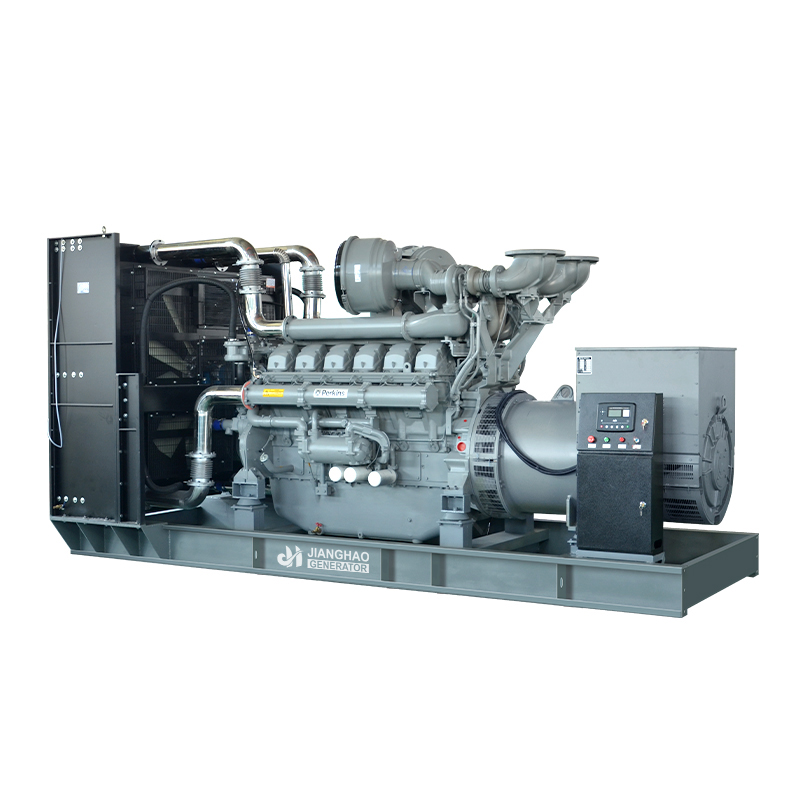
 Diesel Generator Sets by Engine Brand and Power RangeBrowse diesel gensets organized by engine brand, power range, and structure, with engineering review for customized control interfaces and non-standard start sequences.View Product →
Ask for the battery load test report, the charger settings, and the cold-start bill of materials. A start system that is documented is easier to maintain and easier to troubleshoot. A start system that is only described as “electric start” leaves too much to interpretation.
Parallel Starting and Synchronization
Parallel systems add a synchronization step. The generator must match the bus voltage, frequency, phase angle, and phase sequence before the breaker closes. A sync-check relay blocks closure if the angle is outside limits, typically 5 to 10 electrical degrees and a frequency slip of 0.1 to 0.3 Hz. The governor and AVR adjust speed and voltage to bring the machine into window.
Dead bus closing is different: if the bus is de-energized, the first generator can close without synchronizing and establish the bus. The next generator must synchronize. Load sharing uses governor control and voltage droop or isochronous control. A start failure in a parallel plant can be a synchronization failure, not a cranking failure.
Parallel starting also affects load transfer. If the plant has a large motor load, the first generator may need to be online before the motor starts. The sequence should be designed with the process, not only with the generator. A plant that starts all generators at once may have a fuel or battery problem that only appears during a black start.
For multi-set plants, our parallel generator configurations include synchronizing controls, load sharing, and black-start logic. The start sequence is tested as a system: first set, second set, load steps, and failure modes.
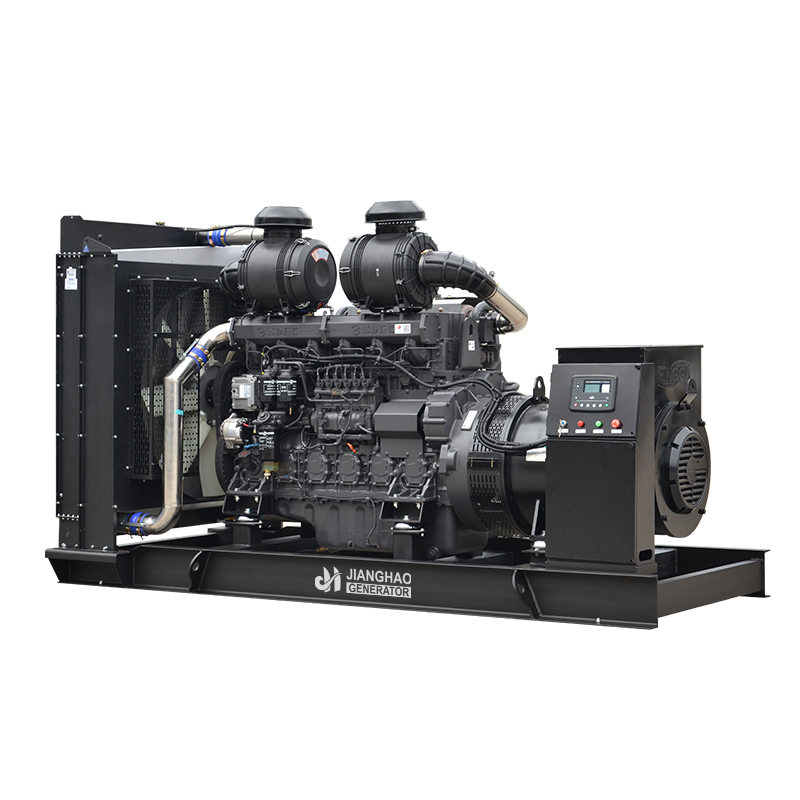
 1000-4000 kVA Diesel Generator Sets for Large-Scale Prime and Standby PowerReview 1000-4000 kVA diesel gensets with parallel distribution controls, automatic synchronization up to 32 units, and prime or standby power configurations.View Product →
Large plants should record the time from black start to full load. That number is more useful than the start time of a single generator, because it includes synchronization, load sharing, and operator response.
Site Integration: Fuel, Air, Exhaust, and Enclosure
The start system depends on the site. Fuel supply must be available at the engine’s lift pump. A day tank with a low-level alarm prevents a start with an empty tank. The fuel line should be sized for the engine’s consumption and primed after service. A shutoff valve should be accessible.
Combustion air and ventilation matter. An enclosure needs intake louvers sized for the engine’s air consumption and radiator airflow. A closed damper or blocked louver can cause a start and immediate shutdown. Exhaust back pressure must be within the engine manufacturer’s limit. A long exhaust run with a small diameter increases back pressure and can prevent starting.
Foundation and vibration also affect cranking. A generator on a weak foundation may crank slowly because the starter has to move the entire set. Flexible connectors and isolators reduce vibration, but they must not allow misalignment. Battery cables should be supported and protected from chafing. Terminal torque should be checked after the first 50 hours and at each service.
Enclosure design is a balance. A silent-type canopy reduces noise but can trap heat and battery gases. The battery compartment should be ventilated. The starter and battery should be accessible for service. A canopy with a poorly sealed exhaust outlet can recirculate exhaust and cause a shutdown.
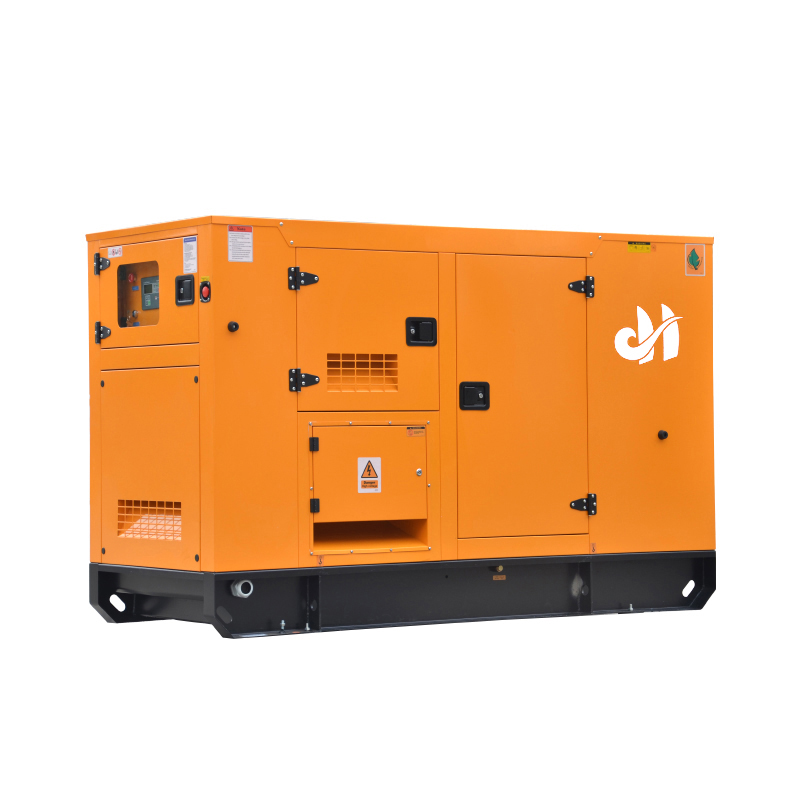
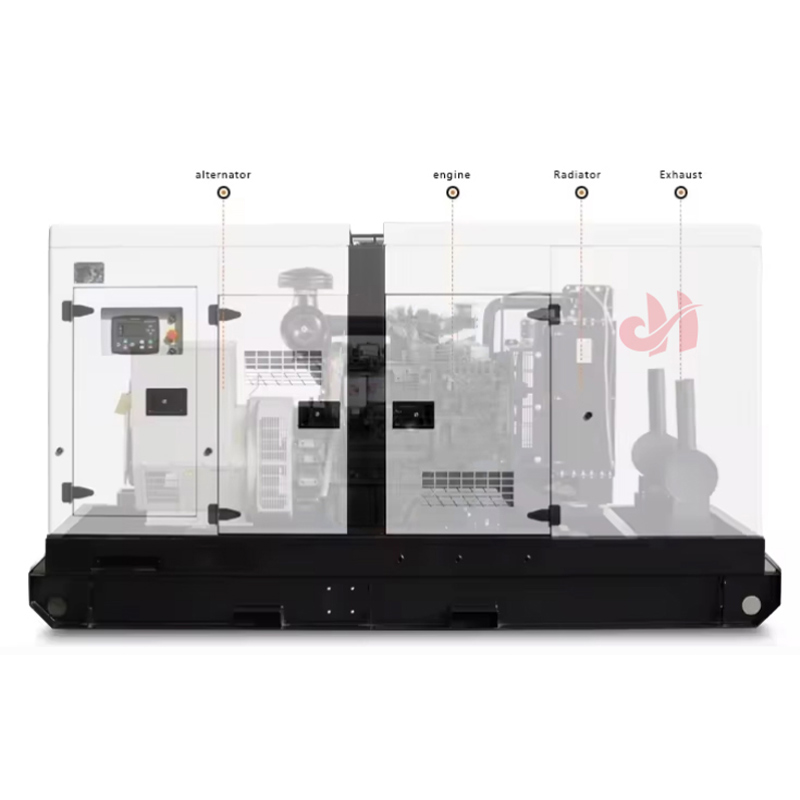 Silent Diesel Generator Sets for Noise-Sensitive LocationsReview 8-4000 kVA silent gensets with sealed, sound-absorbing enclosures and engine options, suited to noise-controlled residential, medical, or commercial sites.View Product →
For sites with limited space, a container-type or silent-type set may be the practical choice, but the start system still needs the same battery, charger, heater, and ventilation checks. The enclosure changes the environment around the start system; it does not replace it.
Maintenance Practices That Keep Starts Reliable
A start system is only reliable if it is tested. Exercise the generator under load monthly or according to the site’s maintenance plan. A no-load exercise warms the engine but does not prove the alternator can carry load. Use a load bank for a periodic full-load test.
Battery maintenance is the highest-value routine. Check electrolyte level on flooded batteries, clean terminals, and load test annually. A battery can pass a voltage check and fail a load test. Replace batteries as a set, not one block at a time. Check the charger’s float and equalize settings. A charger that is set for the wrong battery type can overcharge or undercharge the bank.
Fuel maintenance matters as much as battery maintenance. Test fuel for water and microbial growth. Replace filters on schedule. Keep the day tank clean. After a fuel delivery, allow sediment to settle and check the water separator. A generator that starts and dies after a fuel delivery may have water in the filter.
Starting system checks should include the starter pinion and ring gear, cable connections, emergency stop, and all shutdowns. Test the ATS in both directions. Simulate a utility failure and record the time to transfer. Keep a log of cranking voltage and start time; a trend is more useful than a single reading.
For cold-climate sites, test the heaters before winter. A battery heater that failed in summer will not announce itself until the first cold start. A coolant heater with a failed thermostat may keep the block warm but not warm enough. The maintenance checklist should include heater current, thermostat operation, and fuel cloud point.
The Start Is a System, Not a Button
The start of a diesel generator is a chain: command, battery, starter, compression, fuel, combustion, voltage, transfer. The weakest link determines the start time. A generator that cranks slowly but starts may be telling you the battery is aging. A generator that cranks normally but does not start may have a fuel or air problem. A generator that starts but does not transfer may have an AVR or ATS problem.
Buyers should specify the start system as part of the generator package, not as an afterthought. The right battery charger, heater package, ATS interface, and maintenance access are as important as the engine rating. A 2,000 kVA set with a poor battery bank will not start a data center; a 100 kVA set with a well-designed start system can carry a remote telecom site for years.
Jiangsu Jianghao builds and tests generator sets from 8 to 4,000 kVA for customers in more than 100 countries. If you are reviewing a start sequence, a cold-start package, or a parallel plant, start with the site conditions and the load’s ride-through requirement. The generator will follow the design.