 English
 русский
 Español
 عربى
20kW Diesel Generator Fuel Consumption: Liters per Hour by Load and Runtime
A 20 kW diesel generator usually burns about 5.0 to 6.0 liters per hour at 100% load. At 50% load, expect roughly 2.7 to 3.3 L/h; at 25%, about 1.7 to 2.2 L/h; at no load, 0.7 to 1.2 L/h. In gallons, full load is about 1.3 to 1.6 gal/h. Those figures are a working range, not a guarantee. Rating, engine efficiency, fuel temperature, altitude, maintenance, and the way the set is loaded all move the result. A unit sold as 25 kVA at 0.8 power factor will not behave like a true 20 kW prime-rated machine. The practical answer is therefore a range plus a method: estimate from load, verify with a fuel flow test, and size the tank and fuel system around the real duty cycle rather than a brochure headline.
This matters most when the generator is purchased for standby power, remote sites, rental fleets, or prime power where fuel deliveries are expensive. A 20 kW set is small enough to be treated casually, yet over 500 running hours the difference between 3.0 and 4.0 L/h is 500 liters of diesel. That is real money, real storage volume, and real logistics. The numbers below show where the fuel goes and how to keep the estimate close to site reality.
The quick answer: fuel burn by load
Diesel generator fuel consumption is driven mainly by electrical load, not by the nameplate alone. A 20 kW set running at 5 kW is not using one quarter of its full-load fuel, because the engine still has to overcome friction, drive the cooling fan, excite the alternator, and maintain speed. At low load the fuel curve is flatter than many buyers expect. At high load the curve becomes more linear and easier to predict.
The table below gives a practical planning range for a conventional 20 kW diesel generator with a mechanical or electronic fuel system. It assumes a 20 kW prime or continuous rating, reasonable maintenance, sea-level altitude, moderate ambient temperature, and diesel with normal energy content. A standby-rated set may allow a slightly higher short-term output, but its continuous fuel use at the same load will be close to these values.
| Load | Power output | Fuel use | Fuel use | Runtime on 50 L | Runtime on 100 L |
|---|---|---|---|---|---|
| No load | 0 kW | 0.7-1.2 L/h | 0.18-0.32 gal/h | 42-71 h | 83-143 h |
| 25% | 5 kW | 1.7-2.2 L/h | 0.45-0.58 gal/h | 23-29 h | 45-59 h |
| 50% | 10 kW | 2.7-3.3 L/h | 0.71-0.87 gal/h | 15-19 h | 30-37 h |
| 75% | 15 kW | 4.0-4.7 L/h | 1.06-1.24 gal/h | 11-13 h | 21-25 h |
| 100% | 20 kW | 5.0-6.0 L/h | 1.32-1.59 gal/h | 8-10 h | 17-20 h |
The runtime columns use nominal tank volume. In practice, only about 90% of a tank is usable without risking air ingestion or sediment pickup, so a 50 L tank should be treated as roughly 45 L of drawable fuel. That correction matters for remote sites and for any generator that must run unattended through a weekend or a storm.
Why 5 to 6 liters per hour is a sensible full-load estimate
Diesel fuel contains roughly 35.8 megajoules per liter, which is about 9.9 kWh of thermal energy per liter. A 20 kW generator producing 20 kWh of electrical energy per hour at 5.5 L/h is therefore converting about 54.5 kWh of fuel energy into 20 kWh of electricity. That gives an overall efficiency near 36.7%. At 5.0 L/h the efficiency is close to 40%; at 6.0 L/h it is around 33.5%. Those values are normal for small industrial diesel gensets. Large 1 MW machines can do better, but a 20 kW unit has relatively high friction and parasitic losses per kilowatt produced.
Another way to express the same idea is brake-specific fuel consumption, or BSFC. For small diesel generator engines, a realistic range is about 210 to 250 grams of diesel per kilowatt-hour at the shaft, with the generator end adding a small loss. Using 230 g/kWh and a fuel density of 840 g/L, a 20 kW load gives 20 × 230 = 4,600 g/h, or 4,600 ÷ 840 = 5.48 L/h. That sits neatly inside the 5.0 to 6.0 L/h band. If the engine is older, lightly loaded, or poorly maintained, the number moves toward the upper end. If it is a modern electronic unit running near its sweet spot, it can sit closer to the lower end.
The density of diesel is not fixed. A liter of diesel at 15°C may weigh about 835 to 850 grams; warmer fuel is slightly less dense per liter. That does not change the energy delivered per kilogram much, but it changes the liter-based number at the pump and in the tank. For most site estimates the effect is small, perhaps 1% to 2%. It becomes more visible when fuel is purchased by volume in hot climates or when a flow meter is calibrated in liters without temperature correction.
Load is the biggest variable, not generator size
A 20 kW generator does not automatically burn 5.5 L/h. It burns fuel in proportion to the load it carries, plus a no-load penalty. If the site runs a 20 kW set at 8 kW for most of the day, the fuel use will be closer to 2.3 to 2.8 L/h than to 5.5 L/h. This is why a generator sized for the largest motor starting surge can be badly oversized for normal running load. Oversizing is common because buyers focus on starting current and forget about steady-state efficiency.
At very low load, diesel engines run cool and incomplete combustion can lead to wet stacking, carbon buildup, and diluted lube oil. Most manufacturers recommend avoiding sustained operation below about 30% to 40% of prime rating. For a 20 kW prime-rated set, that means keeping the normal load above roughly 6 to 8 kW where possible. If the site load is only 3 kW, a smaller generator or a hybrid battery system may use less fuel overall, even if the 20 kW unit has a better purchase price.
Load factor is the ratio of average load to rated load. A 20 kW generator with a 10 kW average load has a 50% load factor. Fuel planning should use that average, not the peak. A site may peak at 18 kW when a pump starts, but if the peak lasts 30 seconds and the base load is 7 kW, the hourly fuel estimate should be built around 7 kW plus a small allowance for starting events. This distinction is especially important for telecom sites, small farms, construction offices, and backup systems that carry only essential circuits.
Power factor also matters. A 20 kW generator is usually rated at 0.8 power factor, so a 25 kVA alternator delivers 20 kW to a resistive load but only 16 kW to a load with a 0.8 power factor. If the actual load is 20 kVA at 0.8 power factor, the engine sees 16 kW, not 20 kW. Fuel consumption follows the kW, not the kVA. Buyers who compare a “20 kW” set with a “25 kVA” set need to confirm which rating is being quoted and whether it is standby or prime.
kW, kVA, standby, and prime: the rating traps that change fuel estimates
The first trap is the kW versus kVA label. In many catalogs, a generator advertised as 20 kW is a 25 kVA machine at 0.8 power factor. In others, a “20 kW” set may be a 20 kVA machine with a 16 kW prime rating. The difference is 20% of the load, and that changes fuel use by roughly 20% at full output. Always ask for the prime kW, standby kW, prime kVA, and standby kVA. Then ask for the fuel consumption curve at 25%, 50%, 75%, and 100% of prime rating. A single full-load number is not enough for a site that will run at half load most of the time.
The second trap is the duty rating. A standby generator is designed for short outages and limited hours per year. A prime-rated generator is designed for continuous operation at a declared load, often 80% of standby output, with maintenance intervals that support long running. A 20 kW standby set may be able to carry 20 kW for the duration of an outage, but a 20 kW prime set is the safer choice for daily operation. Fuel consumption at the same load may be similar, but the allowable load profile and the engine's efficiency map are not the same. Using a standby set as a prime power plant can shorten engine life and may void warranty coverage.
For a 20 kW class machine, the practical buying question is not “what is the fuel burn?” but “what load will this set actually see for most of its hours?” If the answer is 12 to 16 kW, a 20 kW prime set is reasonably loaded and the fuel estimate is straightforward. If the answer is 4 to 6 kW, the set is oversized and the fuel per delivered kWh will be poor. In that case, a 10 to 15 kW set or a different power strategy may be more economical.
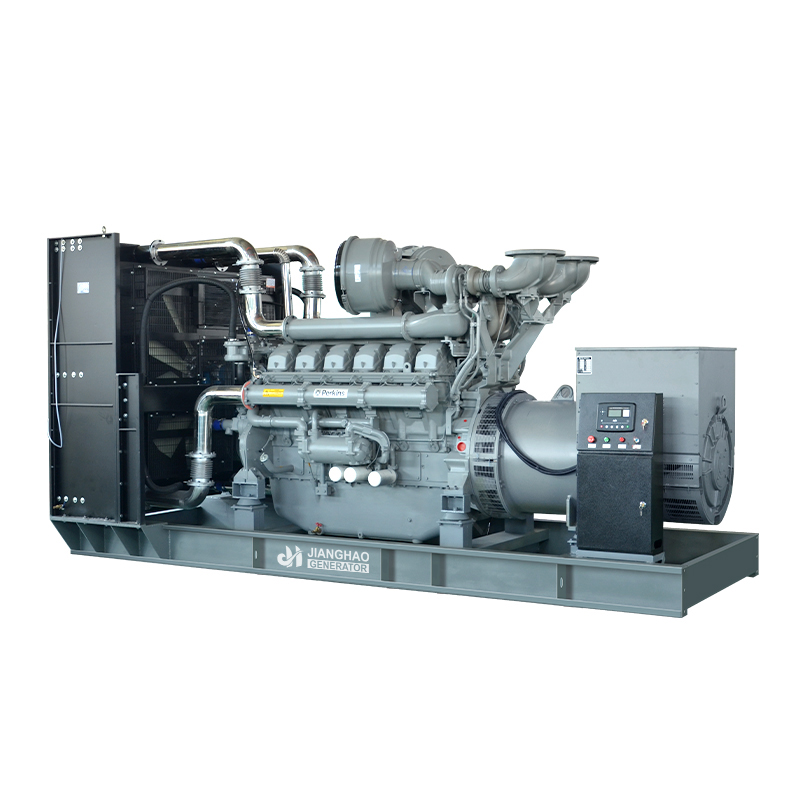
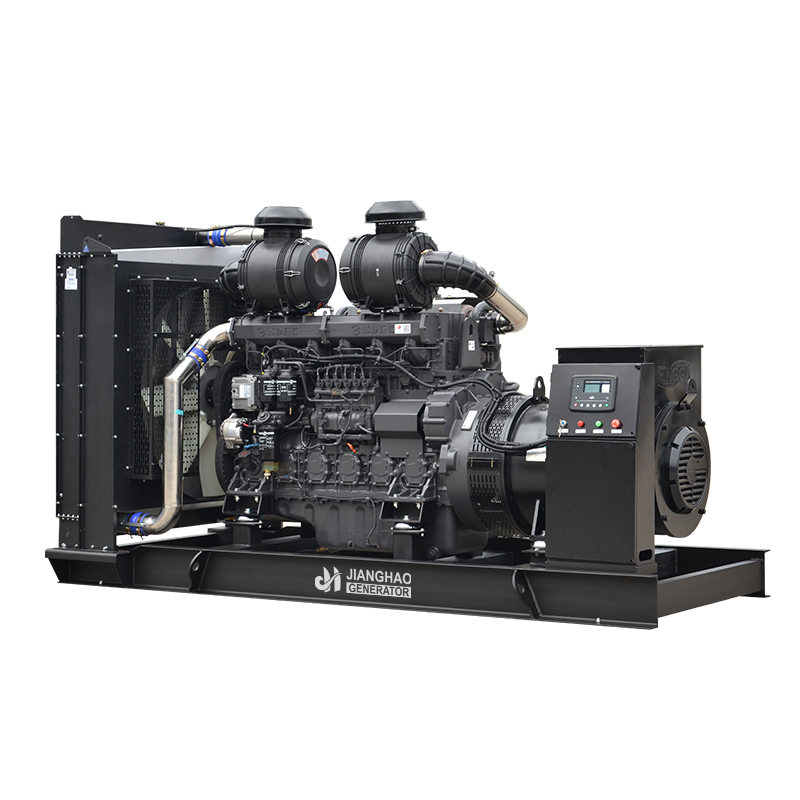
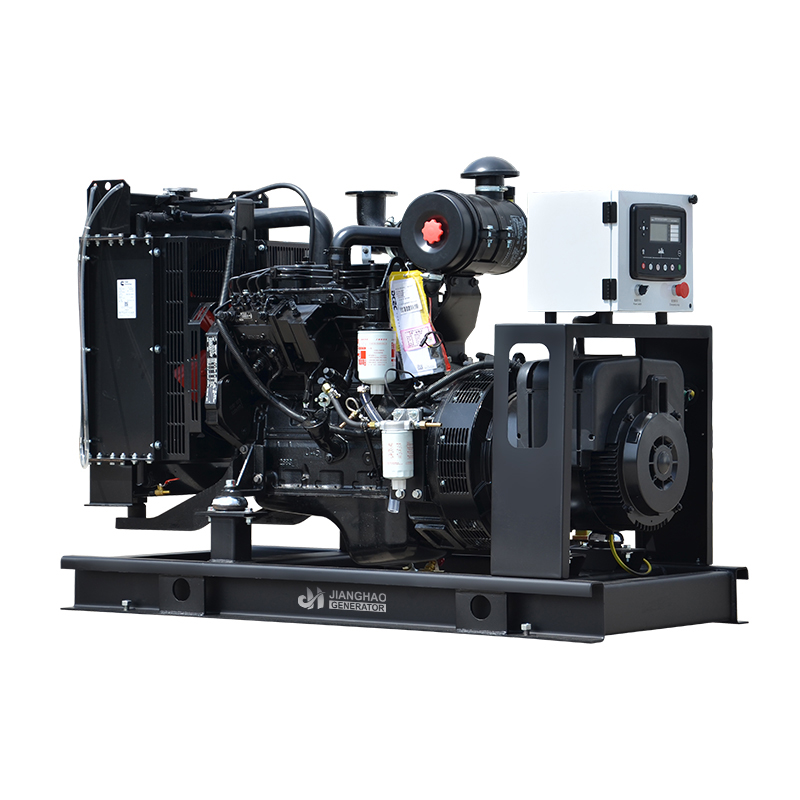 8–100 kVA Diesel Generator Sets by Engine BrandReview prime and standby ratings, engine options, and open, silent, trailer, or mobile configurations to match actual load and site needs.View Product →
How to calculate fuel for a specific 20 kW set
The most reliable calculation uses the engine's BSFC curve and the actual load. The basic formula is: fuel in liters per hour equals load in kW multiplied by BSFC in grams per kWh, divided by fuel density in grams per liter. If the BSFC figure is from a bare engine test and does not include fan, alternator, and pump losses, add 3% to 5% for generator-end parasitic load. For a quick field estimate, 0.25 to 0.30 liters per kWh at the generator terminals is a reasonable planning rule for a small diesel set running between 50% and 100% load.
Worked example: a 20 kW generator runs at 75% load, or 15 kW. The engine BSFC is 235 g/kWh and diesel density is 835 g/L. Fuel = 15 × 235 ÷ 835 = 4.22 L/h. Adding 5% for parasitic losses gives 4.43 L/h. That matches the 4.0 to 4.7 L/h range in the table. At 50% load, the same set would use about 10 × 235 ÷ 835 = 2.81 L/h, plus 5%, or 2.95 L/h. At 25% load the formula gives 1.41 L/h plus 5%, or 1.48 L/h, but real no-load and low-load losses usually push the observed value to 1.7 to 2.2 L/h. The formula is strongest between 50% and 100% load and weakest at the bottom of the range.
To measure rather than estimate, use one of three methods. The first is a calibrated fuel flow meter on the supply line, with a return-line meter if the engine has a common rail or high-pressure return. The second is a gravimetric test: draw fuel from a small weighed container for a fixed period at a stable load, then weigh the fuel consumed. The third is a tank dip before and after a one-hour run at a known load, corrected for tank shape and fuel temperature. For a 20 kW set, a one-hour test at 10 kW and another at 15 kW will reveal whether the set is running rich, whether the load bank is accurate, and whether the fuel system has a restriction or air leak.
Use the load you can defend
Fuel estimates fail when the load is guessed. A 20 kW generator serving a workshop may run at 6 kW during office hours, 14 kW when a compressor cycles, and 2 kW overnight. The correct planning load is a weighted average, not the highest nameplate value. A clamp meter on the main leads and a data logger for one week will give a far better number than a questionnaire. If logging is not possible, build three load cases: base load, normal peak, and emergency peak. Use the base and normal peak for fuel and tank sizing, and use the emergency peak only for alternator and breaker verification.
What changes real-world consumption
Two installations with the same 20 kW generator can differ by 10% to 20% in fuel use. The reasons are usually site conditions, fuel quality, maintenance, and electrical load quality. A fuel estimate that ignores these factors is still useful as a budget, but it should not be treated as a contractual guarantee unless the test conditions are defined.
Ambient temperature and altitude
Hot intake air reduces air density, so the engine can produce less power at the same fuel setting. Turbocharged engines compensate better than naturally aspirated engines, but the intercooler may become less effective as ambient temperature rises. At high altitude, the air is thinner and the engine may need to be derated. A 20 kW set installed at 2,000 meters may only be rated for 16 to 18 kW, and if it is loaded to 20 kW the fuel system may deliver more fuel than the engine can burn cleanly. That increases fuel use per kWh and raises exhaust temperature. Cold ambient air is generally good for power density, but very cold fuel can become cloudy and wax, and very cold lube oil increases friction during warm-up.
Fuel quality and maintenance
Diesel with high water content, sediment, or microbial growth burns poorly and can damage injectors. A clogged air filter raises intake depression and increases fuel consumption. A restricted exhaust or a damaged silencer increases backpressure and reduces efficiency. Worn injectors can dribble fuel, which raises consumption and creates black smoke. Late valve adjustment, low compression, or a dirty cooling system can also move the fuel curve upward. For a 20 kW set, a basic maintenance schedule with oil and filter changes, air filter inspection, fuel filter replacement, and coolant checks will keep the fuel estimate closer to the manufacturer's curve. A set that has sat idle for months should be exercised under load before any fuel test is trusted.
Electrical load quality
Unbalanced single-phase loads on a three-phase generator cause negative-sequence currents and can reduce usable output. A 20 kW three-phase set with 15 kW on one phase and 3 kW on the others is not operating at a balanced 18 kW; the alternator may derate because of phase imbalance. Harmonic loads from variable-frequency drives, rectifiers, and switch-mode power supplies increase alternator heating and can force a larger set or a derated one. Poor power factor has a similar effect: the engine may deliver fewer useful kW while the alternator carries more kVA. Fuel consumption follows the engine load, but the generator may reach its thermal limit before the engine reaches its fuel limit. That is why fuel planning and alternator sizing must be checked together.
Parasitic and transient loads
Block heaters, jacket water heaters, battery chargers, cooling fans, and fuel transfer pumps all draw power. A 1 kW block heater running continuously on a 20 kW set is a 5% load before any useful work is done. Motor starting is another factor. A 7.5 kW motor may draw 45 kW for a fraction of a second during direct-on-line starting. The generator must absorb that transient, but the fuel used during the start is small compared with the steady running load. The bigger risk is oversizing the generator to cover starting surge and then running it at low load for years.
Tank size, runtime, and refueling planning
Runtime is fuel volume divided by hourly consumption, with a usable-volume correction. A 20 kW generator with a 100 L tank and a 10 kW load will run for about 30 to 37 hours on the nominal calculation, but plan for 27 to 33 hours using 90% usable volume. At 20 kW load, the same tank gives about 17 to 20 hours nominal, or 15 to 18 hours usable. If the site needs 48 hours of autonomy at 15 kW, the tank should be sized at 15 kW × 4.3 L/h × 48 h = 3,096 L nominal, plus a margin for unusable fuel and delivery delays. That is a bulk tank, not a day tank, and it changes the fuel storage design, bunding, fire separation, and refueling procedure.
Small generators often use a base tank under the skid, a day tank near the engine, or a separate bulk tank. A day tank is useful because it limits the amount of fuel near the engine and makes refilling easier, but it adds a transfer pump, level controls, and a return line. A bulk tank reduces refueling frequency but requires fuel polishing, water separation, and a planned fuel-testing routine. Diesel stored for long periods can oxidize, form gum, and support microbial growth. Keep water out, use a desiccant breather or proper vent, test the fuel annually, and polish or turn over the stock if the generator is only for standby duty.
- Calculate average load and peak load separately.
- Use 90% of tank volume as usable fuel.
- Add 10% to 15% margin for cold starts, maintenance runs, and delivery delays.
- Confirm that the fuel system can supply the engine at full load without excessive vacuum.
- Check that the return line is sized for the engine and that it does not pressurize the tank.
- Provide spill containment, fire separation, and accessible shutoff valves.
Refueling while the generator is running is possible with the right equipment, but it is not a casual operation. Use a bonded connection, avoid open containers, control static, and follow the site's fuel handling procedure. On a 20 kW set, a small spill can still create a fire risk and an environmental reportable event. If the generator is unattended, an automatic fuel transfer system with high-level and low-level alarms is more reliable than relying on a person to arrive before the tank runs dry.
Fuel cost per hour and per year
Fuel cost is simple arithmetic once the consumption range is known. If diesel costs USD 1.20 per liter, a 20 kW generator at full load using 5.5 L/h costs about USD 6.60 per hour. At 50% load using 3.0 L/h, the cost is about USD 3.60 per hour. At 25% load using 2.0 L/h, it is about USD 2.40 per hour. These are fuel-only figures. They exclude maintenance, oil, filters, coolant, testing, and the capital cost of the generator and tank. For a standby site that runs 50 hours per year, fuel cost is modest. For a prime power site that runs 4,000 hours per year, fuel dominates the operating budget.
Annual fuel use can be estimated as average load in kW × 0.25 to 0.30 L/kWh × annual running hours. A 20 kW set running 2,000 hours per year at an average 12 kW uses about 12 × 0.27 × 2,000 = 6,480 L per year. At USD 1.20/L, that is about USD 7,776. The same set running at an average 6 kW uses about 3,240 L and costs about USD 3,888. The difference is not the generator; it is the load profile. This is why load management, shutdown of nonessential circuits, and replacing oversized equipment can be more valuable than shopping for a slightly more efficient engine.
Do not compare fuel prices without comparing fuel quality and delivery terms. Off-road diesel, taxed road diesel, and delivered bulk diesel can have different prices and different handling requirements. In remote areas, the delivered cost may include transport, lift, and minimum-order charges. A 20 kW generator with a 200 L tank may need a delivery every week at high load, while a 1,000 L bulk tank may need a delivery every month. The storage cost and the risk of fuel degradation are part of the real cost.
Choosing a 20 kW diesel generator for predictable fuel use
A fuel estimate is only as good as the machine and the installation behind it. When comparing 20 kW generators, ask for the prime kW, standby kW, alternator efficiency, fuel consumption at 25%, 50%, 75%, and 100% load, and the allowable continuous load. Confirm whether the fuel curve is based on the engine alone or the complete generator set. A set with a modern electronic fuel system may hold a tighter fuel curve across its life, but it also needs clean fuel, stable voltage, and proper diagnostics. A mechanical fuel system is simpler and often easier to service in remote locations, but it may be less precise at part load.
Enclosure type affects fuel use indirectly. A silent canopy controls noise but can raise intake air temperature if the ventilation is poorly designed. An open set is easier to inspect and service, but it needs a weatherproof room and careful exhaust routing. A containerized set offers better security and climate control but adds weight and cost. For a 20 kW unit, a well-ventilated silent canopy is often the best compromise for urban and rental applications, provided the radiator and exhaust systems are sized for the actual ambient temperature. If the site is hot, dusty, or coastal, specify the appropriate corrosion protection and air filtration rather than accepting a standard package.
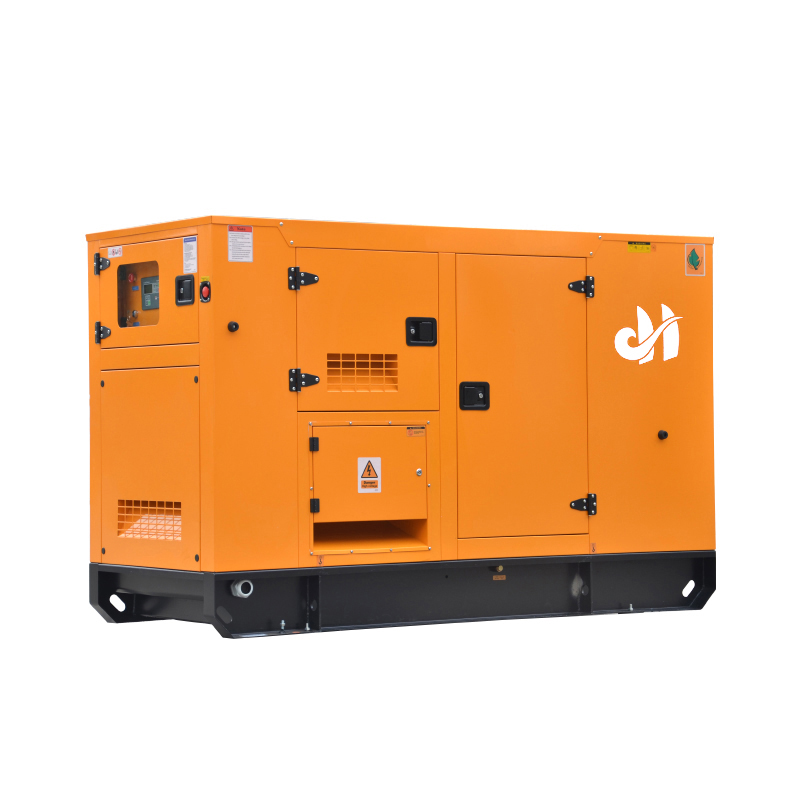
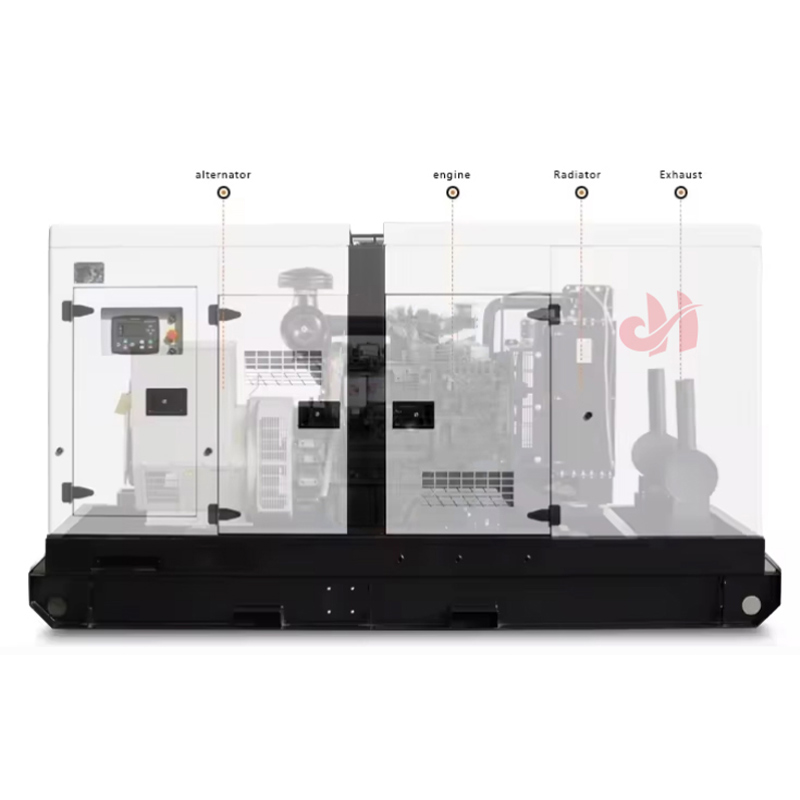 Silent Diesel Generator Sets for Noise-Sensitive Backup PowerFully enclosed low-noise sets from 8–4000 kVA with sound-absorbing materials and weather protection suit urban, medical, commercial, and event installations.View Product →
Fuel system design deserves the same attention as the generator. A 20 kW set may draw only 5 to 6 L/h at full load, but the lift pump and filters still need a clean, air-free supply. Undersized fuel lines, a high tank, or a long suction run can cause hard starting and power loss. A day tank with a low-level alarm, a water separator, and a drain point is a practical upgrade for any critical installation. If the generator is part of a larger project, the custom engineering team can review the fuel storage, ventilation, exhaust, and control interface together rather than treating the generator as a standalone box.
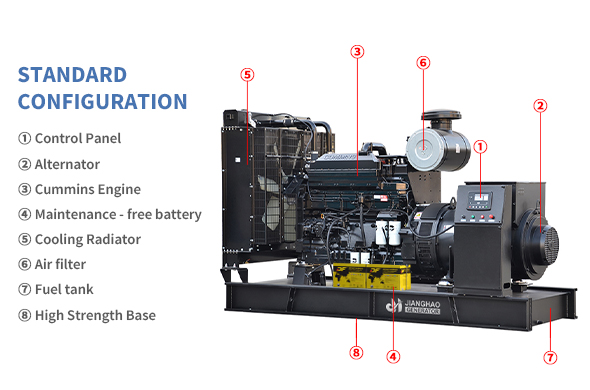 Open Frame Diesel Generator Sets for Maintainable PowerOpen design supports heat dissipation and easy inspection, with integrated or independent fuel tanks and engine options for industrial, construction, and remote sites.View Product →
Finally, insist on a factory load test or a site load bank test. A 20 kW generator should be tested at 25%, 50%, 75%, and 100% load, with fuel consumption recorded at each step. The test should include a cold start, a hot restart, and a check for exhaust smoke, fuel leakage, and abnormal vibration. A set that performs well on a load bank but overheats in the enclosure is not ready for service. A set that burns more fuel than the published curve at 50% load may have a fuel system issue, an intake restriction, or a load bank reading that is not what it appears to be. Testing turns a paper estimate into a site-specific baseline.
Common estimation mistakes and how to avoid them
The first mistake is using the nameplate rating as the running load. A 20 kW generator rarely runs at exactly 20 kW for its whole life. Use a load log or a reasonable duty cycle. The second mistake is ignoring the no-load fuel burn. A generator that runs 24 hours at 2 kW still consumes fuel for cooling, excitation, and friction; the hourly rate may be closer to 1.5 L/h than to 0.5 L/h. The third mistake is assuming that fuel consumption is linear all the way to zero. It is not. The curve is steep at low load and flatter near full load.
The fourth mistake is comparing liters per hour without comparing load. A seller may quote 3.0 L/h for a 20 kW set, but that figure may be at 50% load. Another seller may quote 5.5 L/h at 100% load. Both can be correct. The comparison only works when the load, rating, and fuel density are stated. The fifth mistake is sizing the tank from nominal volume. A 100 L tank does not deliver 100 L of usable fuel if the pickup is 10 mm above the bottom. Use 90% and add a margin. The sixth mistake is forgetting maintenance runs. A standby generator may run 30 minutes per week for exercise, which is 26 hours per year before any outage. That fuel should be in the annual budget.
- Use average load, not peak load, for fuel and tank sizing.
- Confirm prime kW and standby kW before comparing curves.
- Correct for usable tank volume and fuel temperature.
- Allow for exercise runs, block heaters, and fuel transfer pumps.
- Test at two or more loads rather than trusting a single brochure number.
- Keep maintenance records so a rising fuel rate can be diagnosed early.
If the generator is intended for a critical site, add a fuel polish and testing schedule to the maintenance contract. A 20 kW set is small enough that a contaminated tank can shut it down quickly, and a shutdown at a remote telecom site or a cold-storage warehouse can cost far more than the fuel itself. The diesel generator range includes air-cooled and water-cooled options, but the fuel system and load profile still determine the real operating cost.
Final takeaway
For a 20 kW diesel generator, plan on 5.0 to 6.0 L/h at full load, 2.7 to 3.3 L/h at half load, and 1.7 to 2.2 L/h at quarter load. No-load fuel use is typically 0.7 to 1.2 L/h. In gallons, full load is about 1.3 to 1.6 gal/h. These figures assume a healthy engine, reasonable ambient conditions, and a load that is actually measured in kW rather than guessed from kVA. A 25 kVA set at 0.8 power factor delivers 20 kW, so the label matters. A standby-rated set used for continuous duty may not hold the same efficiency or warranty terms as a prime-rated machine.
The reliable method is to combine a published fuel curve with a site load log and a one-hour fuel test. Use 0.25 to 0.30 L/kWh as a planning rule between 50% and 100% load, add a low-load correction below 40%, and correct tank volume to 90% usable. Then size the tank, fuel lines, and refueling interval around the real duty cycle. A 20 kW generator can be a fuel-efficient workhorse when it is loaded properly and maintained well. It can also be an expensive way to make a small amount of electricity when it is oversized and run at light load. The difference is in the load profile, the rating, and the discipline of the fuel plan.